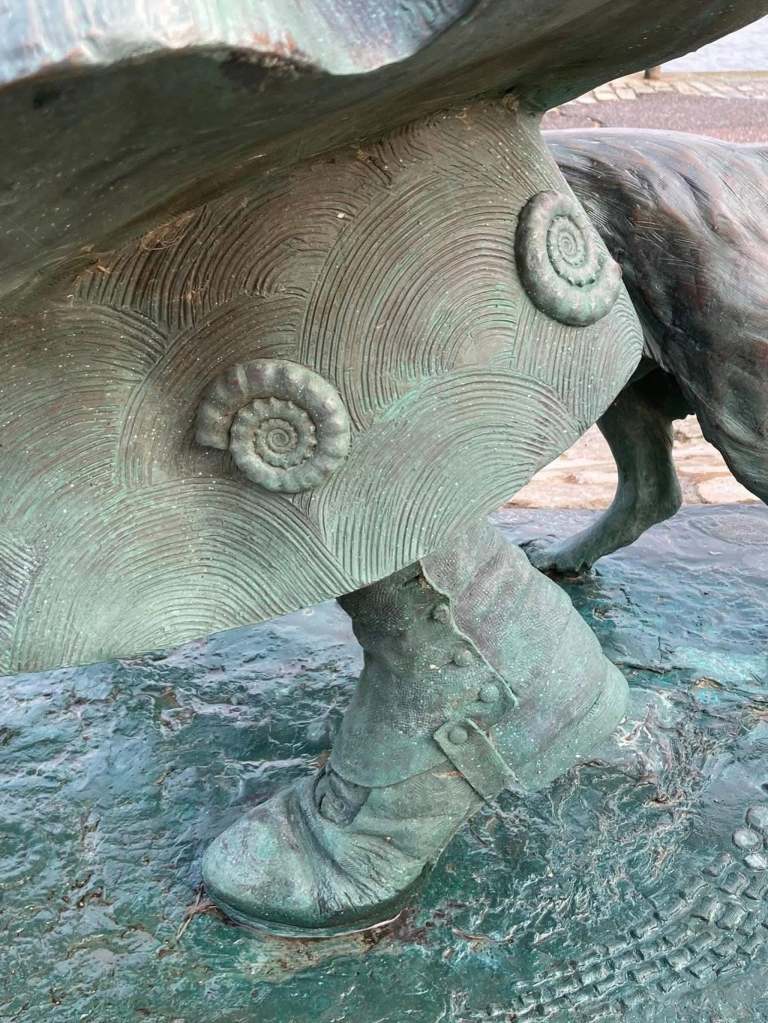
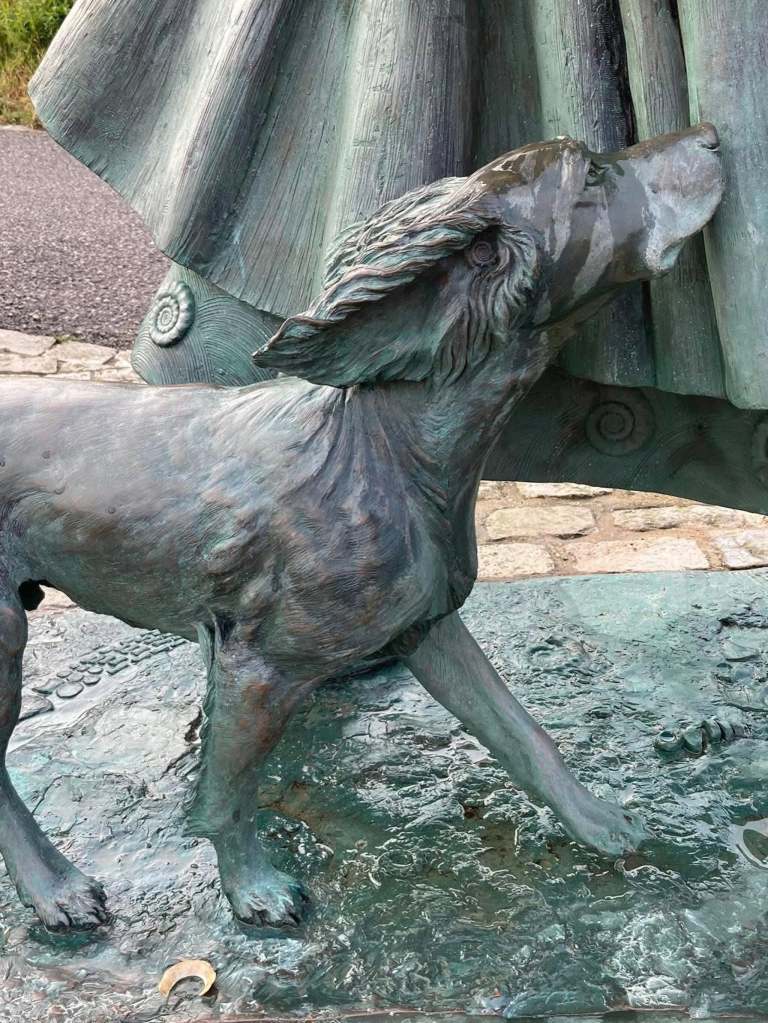
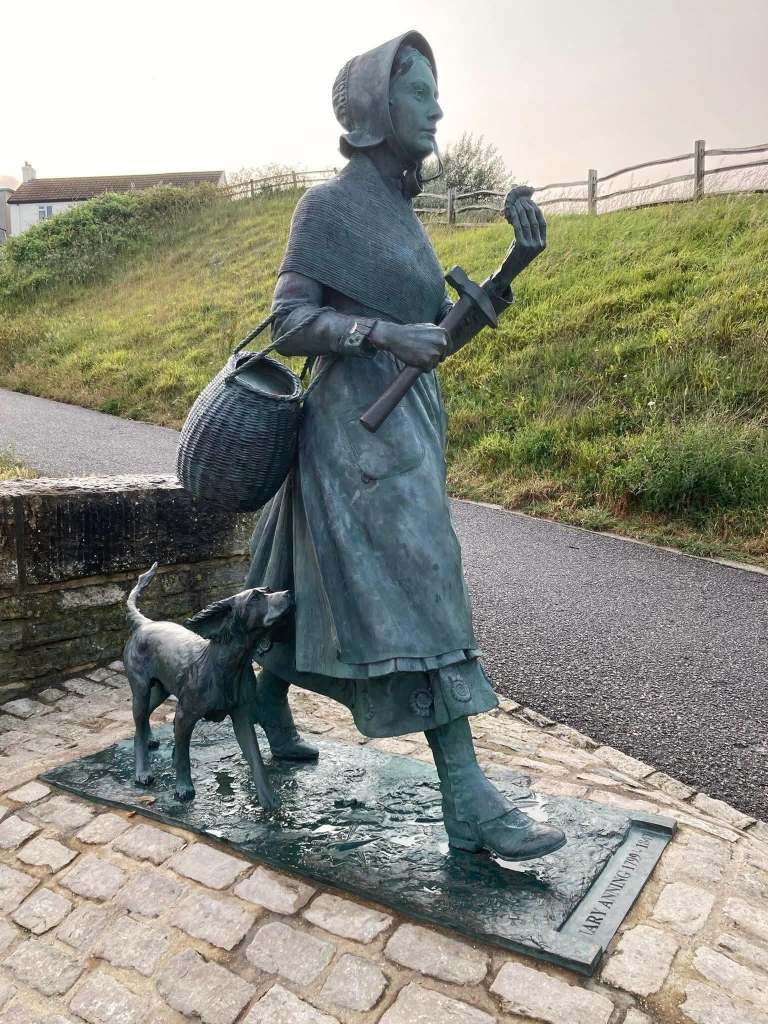
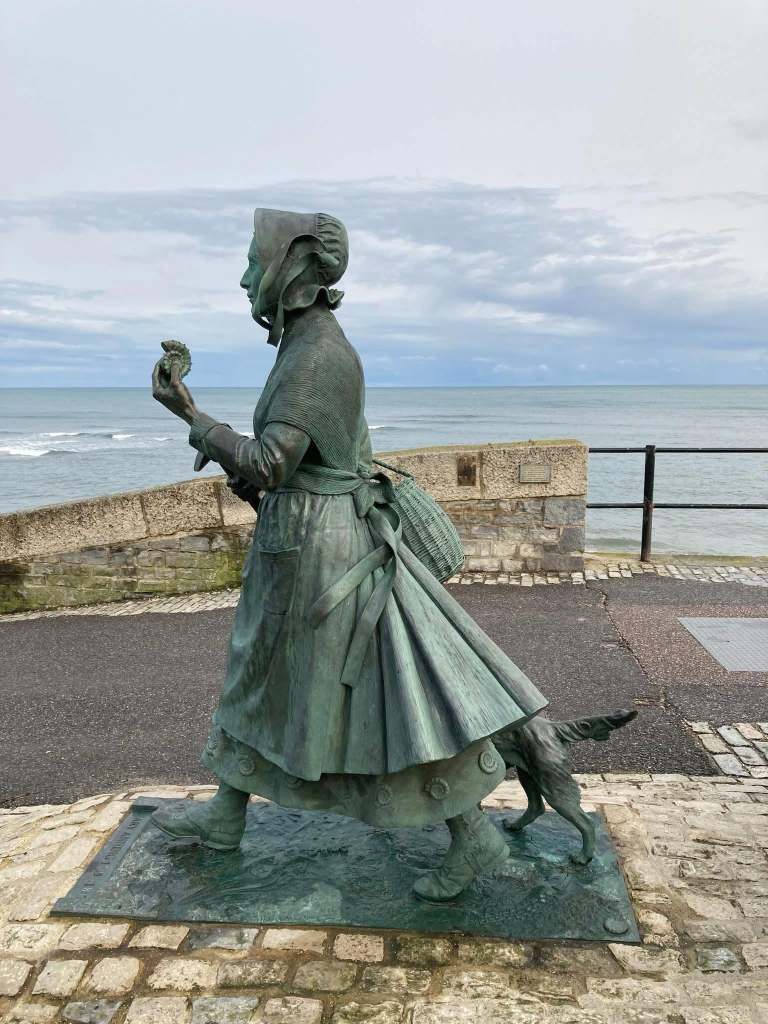
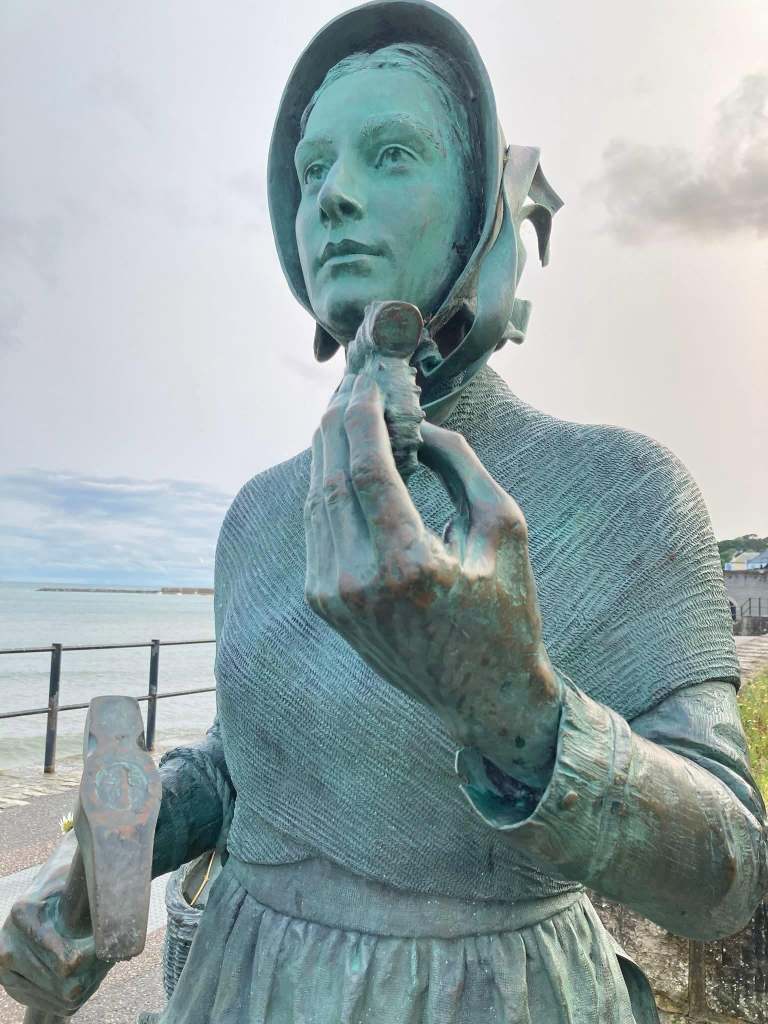
This bronze statue of palaeontologist Mary Anning strides off towards the cliffs she once explored with great success at Lyme Regis, Dorset.
It was created by sculptor Denise Dutton and unveiled in 2022 on the anniversary of Mary’s birth in Lyme in May 1799.
The story behind the statue is very inspiring. It’s all down to a 11-year-old girl, Evie Swire, who started a campaign, with the help of her mum, for a monument to the 19th century scientist. The campaign highlighted the bias of UK statues of men to women (more than 85% men).
Despite false starts during the COVID-19 pandemic, a crowdfunding campaign was eventually launched. The Mary Anning Rocks group also sold T-shirts to raise money to commission a statue in honour of the scientist, whose discoveries in the Jurassic marine fossil beds at Lyme brought her to international attention and contributed to changes in thinking about prehistoric life and the Earth’s history.
Mary discovered the first correctly identified ichthyosaur skeleton when she was just 12.
The statue was unveiled by Evie and Professor Alice Roberts.
It beautifully captures determined movement. The level of detail is astonishing.
It’s behind the Marine Theatre overlooking Black Ven.
We’re off to see the new film, The Odyssey, on Monday night.
I’m very excited – and a bit relieved too.
It’s the kind of epic that needs to be seen on the big screen but I’m currently in south west France, so where to see it as VOST (original version with French subtitles)?
The town Cahors is about fifty minutes away but there’s a cinema there, the film is on so I’ve booked tickets to see it.
It tells the ancient Greek myth of Odysseus and his epic ten-year voyage from Troy to his island kingdom of Ithaka. I know know it’s a Hollywood blockbuster treatment of the story and the characters will all be speaking with American accents, but I really don’t care.
Homer’s Odyssey is, in my opinion, the greatest story ever told but it’s one of those movies that directors have shied away from making for far too long.
Director Christopher Nolan (Oppenheimer, The Dark Night and the wonderful Interstellar) has already caused controversy among people who haven’t even seen it yet, mainly because a Black woman (Lupita Nyong’o) has been cast as Helen of Troy.
The Odyssey is, of course, a classic Greek myth – probably grounded in some historical truth but lots of it made up and embellished along the way. It’s a story.
I suspect the ranting against the film tells us more about the people complaining and their lack of imagination than it does about the director’s casting choices.
And anyway, in Homer’s Odyssey, Helen doesn’t have much of a part to play – that’s all done and dusted in The Iliad (which was reflected in the film Troy, with Brad Pitt as Achilles and Sean Bean as the wily Odysseus rather than Matt Damon who takes the lead role in this latest film).
Greek mythology has been told and retold ever since ancient ‘Greek’ tribes first sat round a fire and listened to a storyteller taking them on a magical journey.
My first brush with Greek mythology was through Enid Blyton’s Tales of Long Ago, a literary gem (not) but, as a child, I loved it. The stories sparked an obsession with the ancient Greeks, leading me to quietly convince myself that Jason and the Argonauts was the best film of all time.
I loved this film!
Much later, as a confirmed landlubber, I learned how to sail so I could act as Mr Grigg’s first mate and potter around the Ionian just so I could feel part of ancient Greek mythology or at least its landscape.
He’d bought a share in a yacht called Nestor, the elderly warrior who features in both The Iliad and The Odyssey, in partnership with the aptly-named Odysseus Sailing.
Sailing towards the wild pig island of Atokos. I’m not sure where from, it could be Ithaca.
We – and family and friends – had many happy weeks over the years on this boat, until she sank in 2020 in a rare medicane – a tropical-like cyclone – called Ianos. She had been tied up to a jetty in Kioni, Ithaka. Luckily, we weren’t on her at the time and neither was the family that chartered her. But Nestor was unsalvageable.
Before then, in 2012, not long after Mr Grigg retired, we let our house in Dorset and went to live in Corfu for a year, close to the beach that lays claim to being the one where a naked Odysseus washed up and was taken in by Princess Nausicaa.
Sunset over Corfu.
Thanks to a laptop and an internet connection, I could carry on working and swan around during my coffee break, imagining myself in a diaphanous gown like a Greek goddess.
Blatant plug alert, I wrote a book about our twelve month adventure: Good Morning Corfu: A Year on a Greek Island. (Living the dream was great but not quite like I imagined. Be careful what you wish for.)
The view from our house in Corfu.
Later, we renamed our new rescue dog Artemis after the goddess of hunting, wild animals and nature and then wondered why she’d wander off in the olive groves at the first opportunity.
We’ve gone up the River Acheron (near Parga) towards the entrance to the Underworld. We ducked under a fence to visit the then-closed Necromanteion and imagined Odysseus summoning up the spirit of the blind prophet Tiresias to tell him how to get home.
We’ve visited the oracle at Delphi, the royal tombs at Vergina – the site of ancient Aigai, final resting place of Philip II, the father of Alexander the Great – and trudged up Mount Olympus almost as far as the Plateau of the Muses but were thwarted by deep snow.
We went on a cheap coach holiday to Turkey just so I could visit the site of Troy. We went on a similar tour to Sicily mainly for the Greek temples.
Mr Grigg knows I get much more excited wandering around a hot amphitheatre than going to a fancy restaurant.
In 2011, I even studied classics and ancient history at graduate level as a mature student. This was a mistake, to be fair, as I really struggled with learning ancient Greek. I was in over my head, the other students at Exeter University were way too clever and I realised with a heavy heart that I wasn’t up to it and that academia was just not my natural neighbourhood.
But I still love anything to do with Greek mythology. I’m particularly taken with modern interpretations and retelling, particularly novels by women like Margaret Attwood (The Penelopiad), Pat Barker (The Voyage Home) and Natalie Haynes (A Thousand Ships), and also Claire North and The Songs of Penelope trilogy.
My favourite poem is Ithaka by C P Cavafy, a metaphor for savouring life’s journey. I read it at my nephew’s wedding last year.
The Odyssey is an adventure story. It’s full of monsters, trials and tribulations, desire, determination, courage, folly and the burning need to get back home. There is something in it for everyone. And that’s the whole point.
The story has been – and will continue to be – presented in so many ways. This fantastic tale is kept alive by the retelling and reshaping.
There is no ‘right’ interpretation.
I hope I will enjoy this almost three-hour film on Monday. I’m sure I will as long as the seats are comfortable. I’ll just suspend my disbelief, immerse myself in a powerful soundtrack and let the story take me to Ithaca.
I’ve been out of the blogging loop lately, focusing on a writing project which is going to keep me busy for the next couple of years.
However, there is lots going on in the world (earthquake, heatwave, violent death and political farce) but I’m choosing not to obsess about these subjects and am trying (not very successfully) to stop doomscrolling on Facebook and Instagram, which is a complete waste of time and just feeds massive egos and conspiracy theories and lines the pockets of the megarich.
And news websites and a constant diet of updates and cliches are leaving me cold.
The reading is going well, but not in terms of me writing reviews. I’ve had some real duds in recent months, which has been incredibly disappointing.
I had high hopes for The Calamity Club (2026), by Kathryn Stockett, the author of The Help (2009), but it wasn’t for me. I gave it two stars out of five.
I didn’t fare much better withUnder Story. I devoured an earlier Chloe Benjamin novel, The Immortalists (2018), but really struggled with this new book, which comes out later in the year.
The very science-based science fiction of Under Story is sweeping in its ambition. Set in the hostile, surreal world of Antarctica, it’s essentially a love story with two central protagonists who take their time to reconnect.
It’s beautifully written but moves forward at too slow a pace for me. I gave it three stars.
Having encountered a reader’s block with new novels other people seem to adore, I had a bit of a book break and then started reading narrative nonfiction, if nothing else but to help with the current writing project, to see how it’s done when done well.
The last bit of nonfiction I read was probably The Salt Path (2018), billed as memoir, nature and travel writing and definitely not fiction. I gave up after two chapters because I liked neither the style nor the whining presence of the author, who irritated me from the start. Well, we all know how that book panned out. Maybe I am more discerning than I think.
I’ve done a bit of research and have started giving nonfiction another go. Mixed results but I completely fell in love with the Bruce Chatwin’s groundbreaking travel writing classic, In Patagonia (1977).
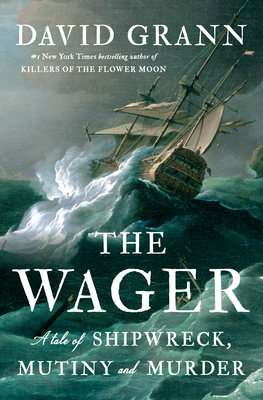
Similarly, The Wager: A Tale of Shipwreck, Mutiny and Murder(2023) by David Grann is unputdownable, telling the true story of what happened when a naval vessel hit rocks off the South American coast in 1740. Piecing together the story through solid historical research and strong primary sources, Grann has produced a knockout of a book. I was hooked by it.
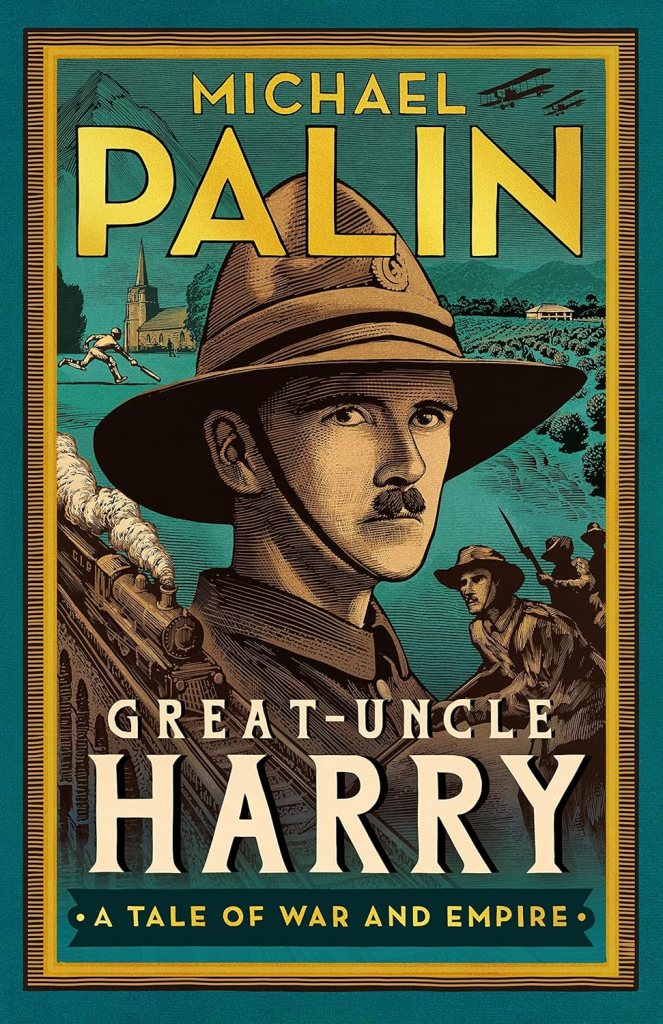
After failing to ‘get’ an award-winning memoir that had been recommended to me (too highbrow and about a wealthy family I didn’t care much about), I was delighted to then plunge into Great Uncle Harry: A Tale of War and Empire (2024) by Michael Palin, a writer who takes a family story and turns it into a search for answers in this compelling biography, travelogue and history book. Palin is such an empathetic and kind sort of a chap and his writing reflects his humanity.
I’m now reading two novels: A Gentleman in Moscow (2016) by Amor Towles (my day book) and the beautiful There Are Rivers In The Skyby Elif Shafak (2024), which I turn to at night because I have a back-lit Kindle so I don’t disturb Mr Grigg when he’s trying to sleep.
So, you can see I haven’t been completely idle in this ennui-inducing heatwave, which is turning us all into gibbering wrecks.
More from me later in the week, I think. In the meantime, if you have any narrative nonfiction recommendations, I’m all ears.
Did you see that news story about scientists claiming to have discovered the ‘real’ face of Anne Boleyn?
Now that would be some feat, because her real face would have been on the head cut off by a French swordsman in 1536 at the behest of the corrupt court sycophants surrounding Henry VIII.
She was executed for adultery, incest and treason – charges which paved the way for Henry to dump rather than divorce Anne and make room for wife number three, Jane Seymour, and the potential for a male heir.
It was typical of this tyrant king.
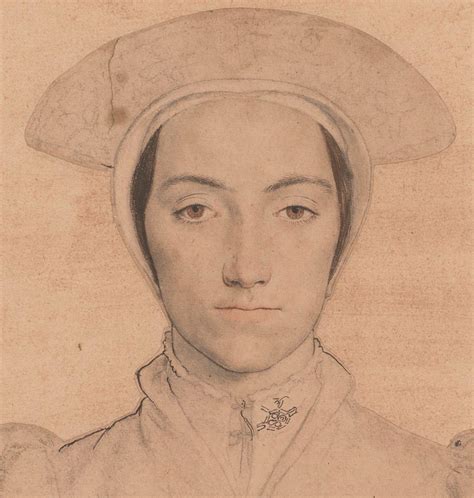
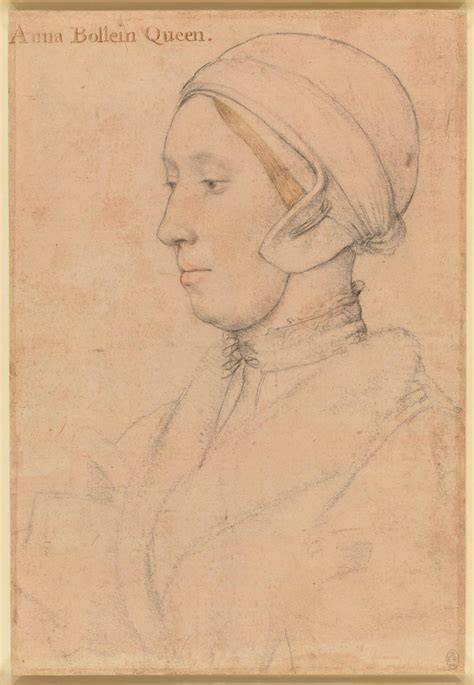
No, this ‘real’ face is a previously unknown sketch by Hans Holbein the Younger in the Royal Collection.
The finding is the work of a computer science team from the University of Bradford, which used modern facial recognition techiniques to come up with the controversial theory.
They believe another sketch below in The Royal Collection was mislabelled and is more likely to be of Anne’s mother, Elizabeth (nee Howard).
It doesn’t really fit with the description we have of Anne with a long and slender neck and dark hair.
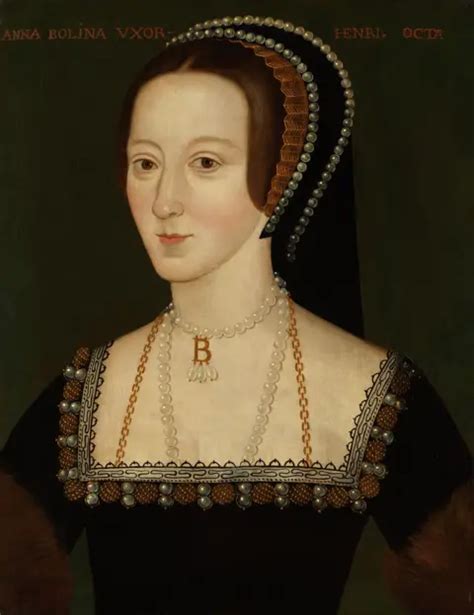
Up until now, the painting below, from The National Portrait Gallery, is the one that has informed the modern world what the doomed queen might have looked like. It’s not contemporary, it’s Elizabethan, but it’s the one we all know.
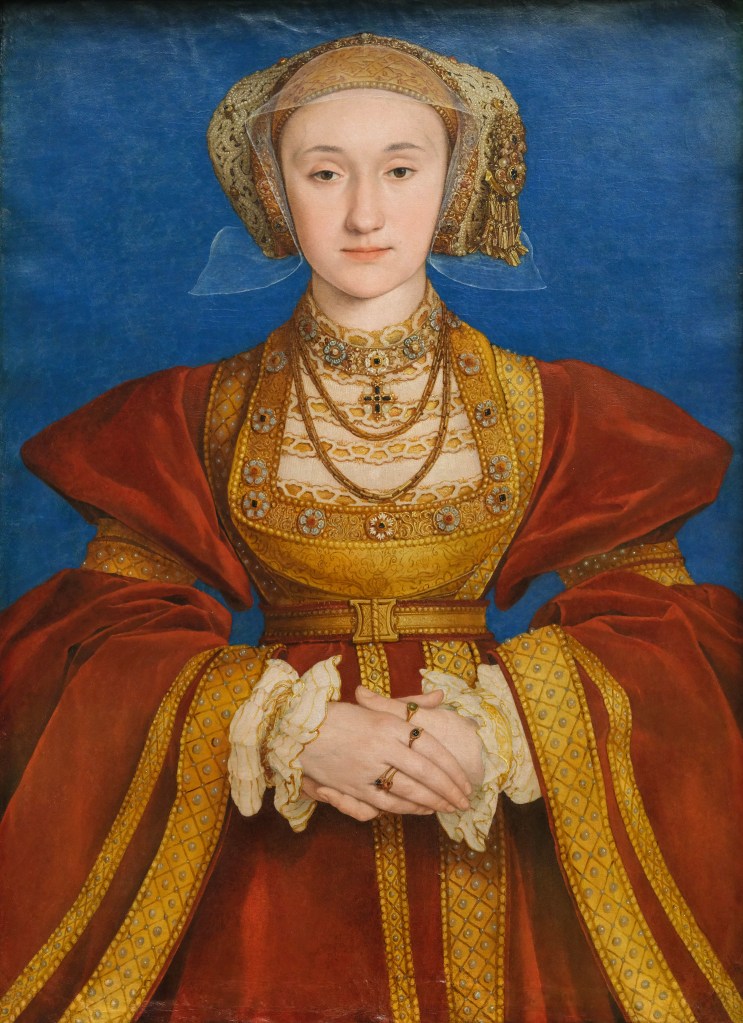
So are we any closer to the truth? Beauty is in the eye of the beholder – as we know from the famous Holbein painting of a sweet Anne of Cleves. We are told Henry was rather taken with the portrait but, apparently, when he saw the lady in real life, his reaction was that she was the spitting image of a “Flanders Mare”.
And looking at this image now again, could the ‘discovered’ portrait be, in fact, a sketch of Anne of Cleves?