International Women’s Day

Reently, a close friend asked me which women inspired me when I was growing up.

I had to think hard because there are lots of women (and men) who are inspirational figures.

I suppose my late mother, who died last summer at the grand old age of ninety-nine, is probably my leading light.

Unassuming, a quiet thirst for knowledge and a calm, kind wisdom were her standout features, along with a ‘just-get-on-and-do-it’ approach to life.

A strong sense of community, a love of the rural landscape and a curiosity and desire to keep up with new technology if it meant improved communication with her family of children, grandchildren, great grandchildren and far-flung relatives in Canada, Australia and the USA.

Another inspiration for me was my mum’s older sister, my late Auntie Marj. She was my favourite of the aunts – flamboyant, community-minded, kind and an unapologetic love for fashion and frippery. She once gave me an 1950s Hardy Amies dogtooth check suit, with a velvet-collared jacket and a nipped-in waist.

I wore it to work in the 1980s and 90s, and, later, it took pride of place in my wardrobe until the moths got hold of it.

But I still have the original 1920s flapper dress Auntie Marj was given by two elderly neighbours I called the Dilly Sisters after the duo that were on The Banana Splits and sang The Mexican Hat Dance and Ta-ra-ra Boom-de-ay.

From the Dilly Sisters to women from history (sorry, it’s how my mind works).

One woman who was an unlikely inspiration for me was Anne Boleyn, the second wife of Henry VIII, who was beheaded because the tyrant king wanted a son and heir, and someone else (Jane Seymour) had already taken his fancy.

I always felt history treated her very badly and that one day a more sympathetic portrait of her might emerge.

My interest stemmed from her portrayal by Dorothy Tutin, second left below) in The Six Wives of Henry VIII on BBC in early 1970.

I was eight. It made a great impression on me.

A few years later, probably on television, I saw the 1969 film, Anne of the Thousand Days, in which the beautiful Canadian actress Geneviève Bujold took the lead role opposite a handsome Richard Burton as Henry VIII.

It was a strange obsession, taking the side of this unpopular queen, but I’ve always been a sucker for an underdog. And even though Anne had a terrible death, she had the last laugh in the afterlife when her daughter Elizabeth went on to become the longest (and last) reigning monarch of the House of Tudor.

The idea of a woman being as powerful, if not more powerful, than her late ‘great’ father is extremely satisfying.

In all seriousness, International Women’s Day (March 8) is a global day celebrating the social, economic, cultural, and political achievements of women. The day also marks a call to action for accelerating gender equality.

It began in 1911 yet there is still such a great need to shout out against bias, stereotypes and discrimination. Despite great worldwide strides, inequality exists everywhere, in so many walks of life.

Incidentally, International Men’s Day is on 14 November.

World Book Day

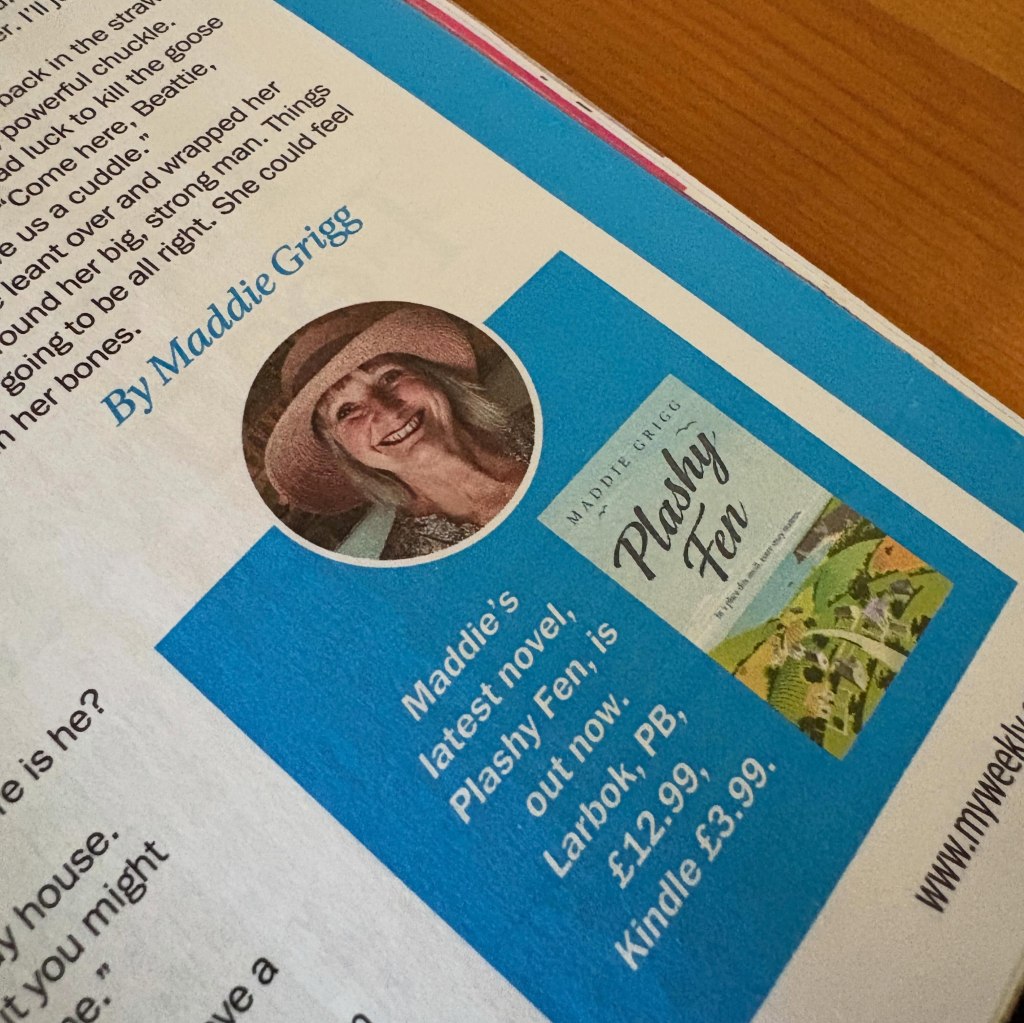
As a columnist for The People’s Friend, I was asked to contribute to a feature about World Book Day.

The Friend, the world’s longest-running weekly magazine for women, is supporting the National Year of Reading campaign and did I have a favourite children’s book I’d like to share?

My first thought was The Lion, The Witch and The Wardrobe by C S Lewis (1950).

The idea of entering new lands through the portal of an ordinary piece of bedroom furniture was pure magic. I’m still convinced Narnia was modelled on my part of Dorset.

Sadly, another contributor had already chosen that book, so I had to come up with another.

As the youngest of five, I had free access to books handed down by my older siblings. My mother also took me to the town library every few weeks, as a reward for visiting an elderly great-aunt who lived in dark rooms behind a shop in the main street.

Enid Blyton’s Tales of Long Ago fuelled my interest in ancient mythology, particularly the Greek stories.

I loved The Hobbit and still have a ragged copy I received for a prize at school speech day. The little person embarking on a perilous journey, triumphing and returning home to the easy comfort of the Shire.

Anything that took me to magic lands, like Alice’s Adventures in Wonderland (1865) by Lewis Carroll, and The Water Babies by Charles Kingsley (1863). Mrs Do-As-You-Would-Be-Done-By is still, for me, the most influential character in the history of children’s literature.

But, of all the books I’d read as a child, which one inspired me the most?

And then it came to me.

There it was in the glass-fronted cupboard, sitting next to its sequel.

A hardback book called Clover Magic (1955) by Victoria Stevenson and sumptous illustrations by Pauline Baynes, an artist who became well known for her cover illustrations for The Hobbit and The Lord of the Rings, and for her map of Middle Earth. 

It’s a children’s time travel story in which, with the help of Fairy Queen Titania and a four-leaf clover, two young sisters meet great women of English history, including Boadicea, Elizabeth Fry and Florence Nightingale.

A few years ago, I found a copy of this book online so I snapped it up, along with its sequel, The Magic Footstool.

It’s a book I treasure and, looking at it now, I realise it sparked my interest in history and the role of strong women through the ages.

So, if you had to choose one book from your childhood, which one would it be and why?

I’ll give it foive

For just shy of a year, I’ve been doing a daily pop quiz online called Popquizza.

I can’t be bothered with Wordle (sorry!) and Sudoko brings me out in a rash (maths?) but give me ten random questions on pop music and it gets the old brain cogs whirring every morning.

Depending on the era, I usually manage to do reasonably well, my pop music knowledge informed by being the youngest of five and the child of parents who liked anything from the musicals of Rodgers and Hammerstein and Gustav Holst’s The Planets to Joan Baez and Elias and his Zig-Zag Jive Flutes.

In our house, it was anything from The Everly Brothers, Joni Mitchell, Lou Reed, The Brothers Johnson, Somerset folk songs and Steely Dan, depending on the sibling.

And then I came along, loved all of it and added my own punk and ska twist and then, latterly, techno and electronica.

So when a friend put me on to the daily quiz, it seemed like a good idea at the time. But I realise now that I have whole gaps in my pop music knowledge, which corresponds with being a grown-up and not caring very much.

I’ve had a few ten out of tens but, for some unknown reason, I keep getting a five or, as I like to say ‘foive’ in honour of Janice Nicholls who said famously ‘oi’ll give it foive’ on Thank Your Lucky Stars, a remark which apparently catapulted the 16-year-old Black Country clerk to fame.

According to Nostalgiacentral.com, she remained a regular on Thank Your Lucky Stars for three years, and her phrase entered British colloquial speech.

The show concluded in the summer of 1966, when I was coming up to foive. I don’t even remember it. But clearly it entered my family’s colloquial speech, because we’re still saying it now.

I’m sure you’ll be thanking me for that earworm today. You’re welcome.

Love, Maddie x

Mr Blue Sky

The sun came out yesterday.

It was such a momentous sight and feeling – that blue sky, the light bringing pizzazz to the flower border and the warmth chilling even the coldest of hearts.

The daffodils seemed to be laughing with joy. The hellebores were positively gloating.

The roses said ‘prune me, prune me!’ and I managed to fill up the garden waste bin with ease.

The dogs chased each other round the garden and then lay, exhausted, on the chippings on the path, Edgar popping up only when he thought I might have a biscuit to share (I didn’t).

And, then, today, we’re back to normal, with grey skies, driving drizzle and worldwide horrors taking centre stage.

It’s the kind of Sunday- in this part of deepest Dorset at least – to listen to the gentle tunes of Cerys Matthews and Guy Garvey on BBC 6 Music.

Ian Dury’s just struck up Hit Me With Your Rhythm Stick, which has to be a good sign.

According to the weekly weather forecast, Wednesday’s looking promising.

In the meantime, I’m putting off putting away the winter woollies to make way for the palette of spring, which was one of my jobs today. It just seems too soon.

Anyway, have a great week.

Love, Maddie

Fade to grey

Earlier this week, it felt like spring had sprung.

But now it’s recoiled and we’re back to winter again.

Slightly warmer, milder, but drizzly rain and grey, grey skies.

I’ve always been surprised that grey seems to be an on-trend colour for interior design and fashionable for work suits. Is it still? If so, I have no idea why.

For me, grey equals dull. It summons visions in my head of concrete tower blocks on a wet day, tarmac roads awash with surface water hiding potholes the size of Brazil.

Grey is the colour of unhealthy pallour, ashtrays, taps, the ubiquitous ‘silver’ of most people’s cars and knitting needles.

But, then again, I have streaks of grey at my temples which some people would pay good money to have put into their hair. And I’ve just bought a White Stuff grey gilet in a sale which goes perfectly with pink and maroon and is the antidote to feeling cold in the house.

So, horses for courses – and grey mares at that. Spring will suddenly arrive and bask us all in its beauty and we’ll forget what all the fuss was about.

This week, I’ve been mostly filling in grant application forms (grey-ish), putting off a major editing job (far too grey), going to a matinee of Hamnet at the local cinema (surrounded by grey-haired people), attending a meeting about an exciting exhibition (red) coming to a town near me and watching the deeply disturbing Channel 4 docudrama, Dirty Business (definitely my colour of brown, but not in a good way). If this doesn’t shake up the water industry like ITV’s Mr Bates vs The Post Office then nothing will.

Uncomfortable viewing. No shades of grey in this series, all very black and white, and told and acted in a way which the audience can follow easily but with increasing dismay and anger. The scale of the scandal of untreated sewage pumped knowingly into our rivers and oceans is monumental, especially when set against the fact that profits come before public health.

Dirty business indeed.

And still it goes on. Something must be done.

I’m not sure how I got from grey to the devastatingly beautiful Hamnet and then to sewage pollution, but that’s my week so far. How about yours?