I’m ploughing my way through another long book, which I’m enjoying but haven’t finished yet.
It’s The Calamity Club by Kathryn Stockett, who wrote The Help. It turns out her latest novel, which has just been published, is longer than I first thought.
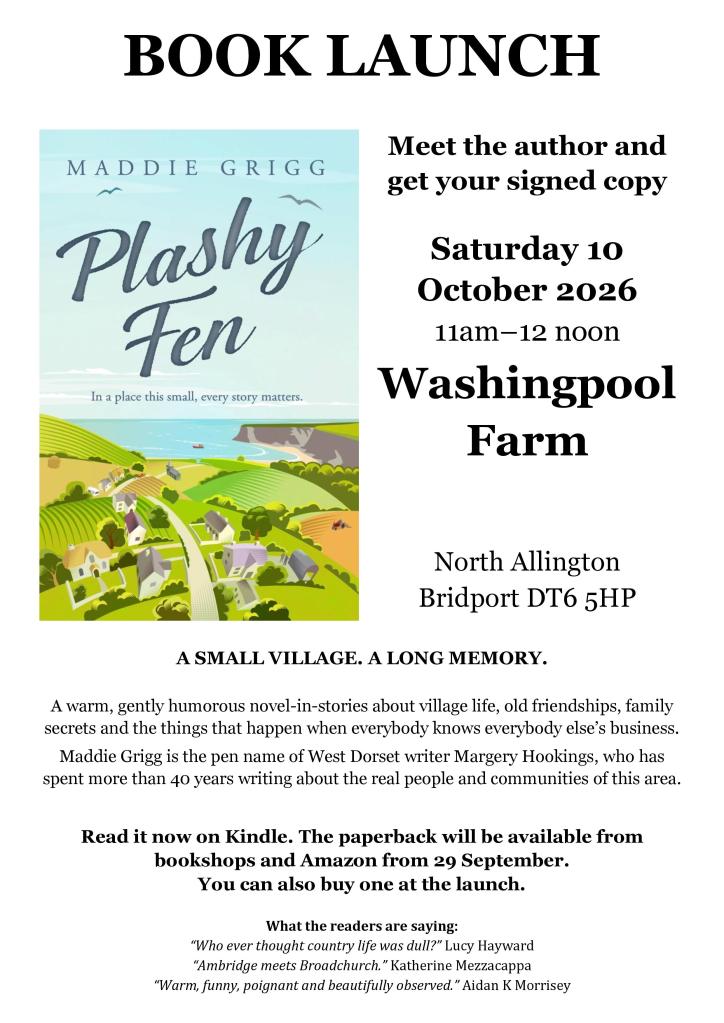
I’m also in the final copy edit stage of my own novel, which is being published in the autumn. Can’t say too much about it yet but I will reveal all in due course.
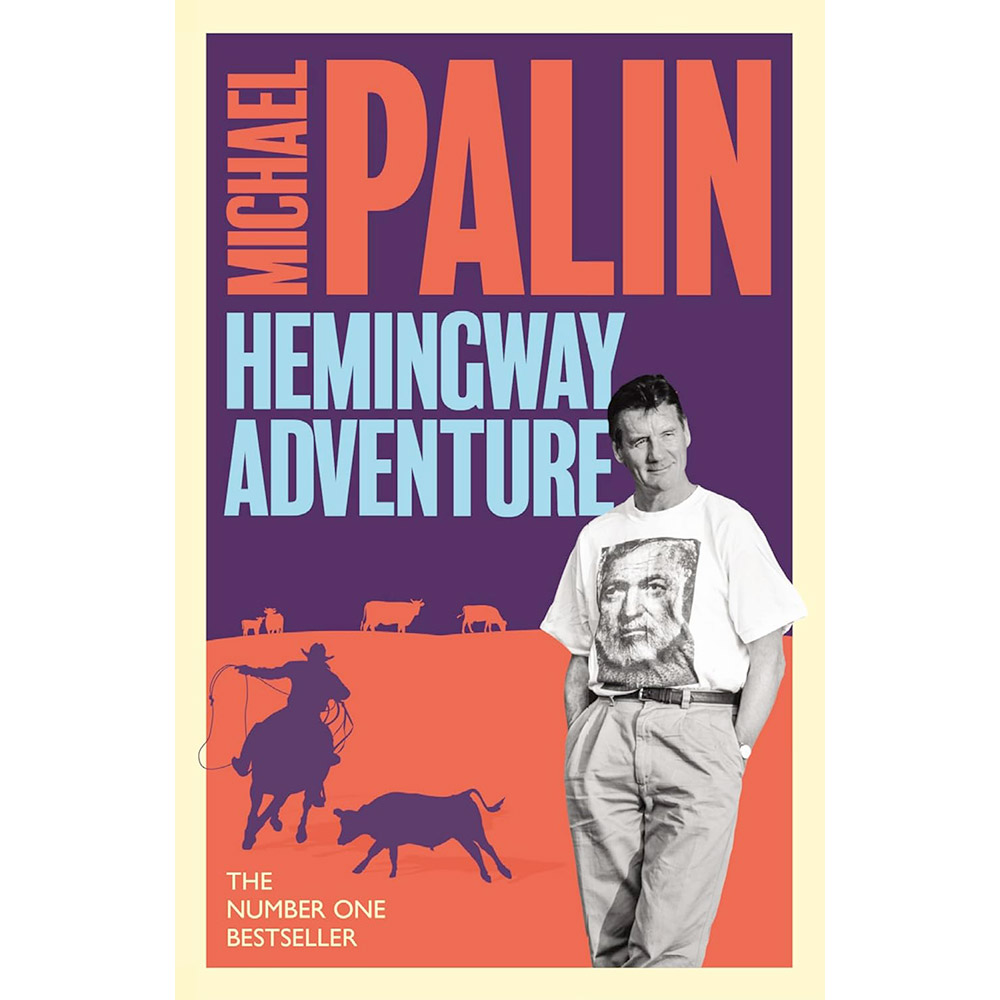
At the same time, I’m doing some in-depth research for a narrative non-fiction story where the ancestor I share with Ernest Hemingway will take centre stage. This is a project involving a half-circumnavigation of the world so will take a few years.
I’ve read three books this month but only one of them is worth telling you about. The other two were thrillers but not very thrilling.
Contemporary fiction (304 pages).Publication date expected 2 June 2026
A chance meeting in a New York art gallery leads the fifty-something protagonist into a myriad of memories in this quietly reflective novel about family, relationships and love.
English teacher Daphne and her husband realise the elderly man who appears to be stalking them is, in fact, her ex-stepfather, book editor Eddie Triplett, who she hasn’t seen since she was nine. The encounter sends Daphne down unexpected paths, sifting through a painful period in her childhood and a dramatic incident she’s never really talked about with anyone else since.
Her conversations and interactions with Eddie – a lovely, kind man – enable Daphne to think about her past and make sense of everything that happened all those years ago and the complex layers – and people in her life – that underpin it.
It’s an astonishing novel and Patchett is an astonishing writer, who takes something so relatively simple and transforms it into a deep and meaningful story about what it is to be loved and respected. I coldn’t put it down.
Thank you to NetGalley and the publishers for an advance review copy of Whistler.
Two standout books this month, a pretty good one and two stinkers.
I won’t be reviewing that last pair here – they have a connection in that they are just far too long. I don’t mind 600 pages when the story and characters are compelling but get bored when the writer takes ages to get to the point while all along the way trying to impress the reader with style over content.
I admit to having the attention span of a goldfish. The sweet spot for me is around the 300-page mark, but I’m not averse to an immersive, long novel, such as The Goldfinch by Donna Tartt (771 pages), Demon Copperhead by Barbara Kingsolver (560) and The Dovekeepersby Alice Hoffman (504).
How about you?
This month, as well as putting page length under each title, I’m taking a leaf out of the blog, Is This Mutton, by one of my oldest friends, and classifying the book according to genre.
Thank you to NetGalley and the publishers for advance review copies of these novels.
I’m hoping for good things next month, with Elizabeth Strout, Colm Tobin and Ann Patchett on my to-be-read pile.
(Literary, historical fiction, 284 pages. Expected publication 26 March 2026)
After reading A Place Called Winter several years ago, I wondered what might have happened to the central character, Harry Cane. He was the young man shunned by his family for his homosexuality and exiled to the Canadian prairies from Edwardian England to make a new life for himself.
Love Lane revisits Harry as an older man, who, cruelly, has to head back home after a lifetime in Canada and now, in effect, exiled to England.
You don’t need to have read the first book to enjoy this sequel but I think it probably helps.
Harry is now older and wiser and, back in England, meets his daughter, her husband and grandchildren.
Through their stories, we get to know more about life before and after the Second World War and the social hardships faced by the characters. Theirs are ordinary lives, but there is no such thing as ‘ordinary’, everyone has a story to tell, secrets to keep or confide in others.
Patrick Gale writes beautifully and Love Lane does not disappoint. This is a gentle story of heartbreak, horror, love and the bonds that bind families together.
The novel centres around one day in the life of a young mother of two. But it’s not just any day – it’s the last one before she goes back to her job after maternity leave.
Our heroine decides to make it a special day for the children – precocious Felix, aged four, and his baby brother, Rudy. However, all is not sweetness and light and the day deteriorates almost as soon as it starts, especially as she finds a female ‘item’ in her husband’s bag which is not hers.
She battles through the day alone, because he is working away, and everything seems to go wrong. She wants it to be a lovely day for both of her children but reality strikes, over and over again.
Some very funny scenes in this novel, especially the struggles in a corner shop with a double buggy and storytime in the local library.
The book will appeal to all parents – especially to mothers of children who were born close together but are now perhaps a bit older and don’t require the constant supervision and stimulation needed for younger ones.
I think if you have children of this age, the frustration and difficulties could be too raw and just hit home a little too hard.
Well written, funny, with a likeable central character who bears the guilt of working mothers everywhere and trying to do the right thing for her children.
(Literary, historical fiction – 288 pages. Publication date 14 April 2026)
This is an extraordinary novel. I didn’t expect to enjoy it but I was completely hooked by the characters’s journey and the quality of the writing.
Based on the true story of the author’s grandparents, the novel is about David, a handsome Catholic priest, and Margaret, a progressive theology teacher, who find themselves falling in love.
It’s a slow-burning, intense novel but beautifully written, particularly the later parts where they ‘find’ each other and the sections where Margaret is remembering, through the haze of old age and dementia, her past life.
The two main characters are very well drawn and we empathise with them in their struggle against forbidden love. There were stories from David’s public school background which were truly heartbreaking.
This was a tender, sensitve and terrific story. I would have given it five stars but felt perhaps the in-depth research was a little intrusive and felt slightly forced during their many conversations.
I’ve not done very well with books this month. This is a shame because the weather outside is frightful and there’s nothing better than curling up with a good book when the rain is lashing against the windows.
There were two novels I abandoned after a couple of chapters and then a three-star which was all right, but not that enjoyable.
However, there is one stand-out book for me and I’m still reading it. It’s A Private Manby Stephanie Sy-Quia, due to be published in April. I didn’t expect it to be my thing at all, but it’s captivating. I’ll reveal more in next month’s reviews.
One of my next reads will be the new novel by Elizabeth Strout, the author of Olive Kitteridge. But I have a few more to get through first, including my first purchase in a long time, Rogue Male by Geoffrey Household, published in 1939 and set around these parts, yet I’ve never read it.
In 1976, it was made into a television film starring Peter O’Toole.
A murder rocks a small community in southern USA and threatents to blow apart the impending marraige of Rhett and Lucinda and their future happiness together. We think we know who did it and what and why it happened, but do we?
There are twists and turns galore in this thriller/whodunnit/domestic drama and I did not see the end coming. The story is told from various viewpoints, including the voice of the murdered woman, a device I always find difficult to take on board because how can she tell a story in the first person, past tense, when she’s dead?
I also didn’t much like any of the characters through which the tale unfolded.
Anyway, that aside, this was a tense and generally fast-paced novel which would be an ideal basis for a Netflix adaptation in the Harlan Coben mould.
Two teenage girls are on trial in Scotland for the killing of one of their friends. As the court case unfolds, primarily through the eyes of one of the burnt-out jurors – a heart surgeon – a ritualistic sisterhood is exposed, each one of the accused blaming the other, with witchcraft at the centre of it all.
This is a very difficult book to review without spoilers so I won’t ruin the unexpected twist. Suffice to say that this is a thrilling thriller, with viewpoints shifting like sand and the reader questioning what is real and what is fantasy.
An easy-to-read crime novel and highly recommended.
Wow! What an imaginative use of one of the two small islands just opposite Corfu Town, the capital of the Ionian island. This was an intricate, exciting thriller set in a place I know so well.
Alex Preston envisages Vidos as the home – or sanctuary? – for compromised or spent MI6 agents. It’s not long before something happens and a tangled web of deceit begins to unravel as the body count stacks up.
I won’t say much more than that for fear of spoilers but this is a well-researched (both in terms of spyland and Corfu) novel which is multi-layered.
Very well written, easy to lose yourself within its pages and duplicitous characters.
This is my first taste of Gwendoline Rlley and, despite the lack of a hard plot or storyline to the novel, I loved it.
Two forty-something Londoners, Laura and Putnam, have been friends for years. The contemporary story begins when Putnam loses his writer job at Sequence magazine. This is the springboard for a tale of friendship, with respective pasts and presents and ponderings about the future intertwining, like a commentary on midlife and how they got there.
It’s not a novel that goes anywhere much but the wit, matter-0f-fact descriptions and use of language make this a joy to read.
Thank you to NetGalley and the publishers for an advance review copy of this novel.
Detective Sam Hansen comes back to work after a period of extended leave when she stumbles across a murder scene. A teenager has been killed in a London park and a copy of a book, How To Get Away With Murder, has been left next to the body.
This is a tense and witty crime thriller, with alternating chapters from Sam’s point of view and then chapters of the book written by a person called Denver Brady, who describes himself as a serial killer.
It’s a really clever premise, tautly written, well-plotted and with a self-deprecating lead character, who is easy to like. I was very suprised this is a debut novel. I hope it will be the start of a series.
An easy, page-turning and satisfying read. Recommended.
Natalie is a God-fearing, clever woman who is married into a patriarchal political family in the USA.
She’s an egotistical bitch who devises a plan to become an ‘influencer’ when the money runs dry. She sets up home with her handsome but stupid husband as a ‘trad wife’ on a ranch out in the middle of nowhere, raising her many children and working the farm in a wholesome, simple way remiscent of the pioneer men and women who ‘made America great’.
But it’s all a sham – no-one sees the nannies, the pesticides and the immigrant workers whose labour keeps the facade from falling down.
And then Natalie finds herself in the actual past, where the reality of her life on Yesteryear Farm is far, far different from the picture she has painted her adoring public.
Will she be able to get back into her present? And what’s behind her terrifying time travelling journey?
I romped through this book, and thoroughly enjoyed it. Razor sharp, a very unlikeable heroine and dystopian in the mould of Margaret Atwood.
Constantina Costa is an angry teenager living with her Greek Cypriot father in 1970s UK. She plots to kill him, referring to him as The Fat Murderer because she holds him responsible for the death of her British mother and two younger brothers.
Connie finds solace in her love for Marc Bolan and David Bowie, whose posters she frequently consults in her bedroom about her miserable life, which has been so touched by tragedy and darkness. She develops a loving relationship with Vas, a Greek Cypriot boy who ‘gets’ her and is a ray of sunshine in a world where Greekness threatens to suffocate her.
I absolutely adored this sweary and nostalgic coming-of-age novel (which is totally from my era) and was cheering Connie on from the sidelines.
The scenes in which Connie is enveloped by her Greek heritage and ‘aunties’ were incredibly warm and funny, and I loved the music, food and pop culture references.
This would make such a great television series. The sassy Connie deserves her moment on the small screen.