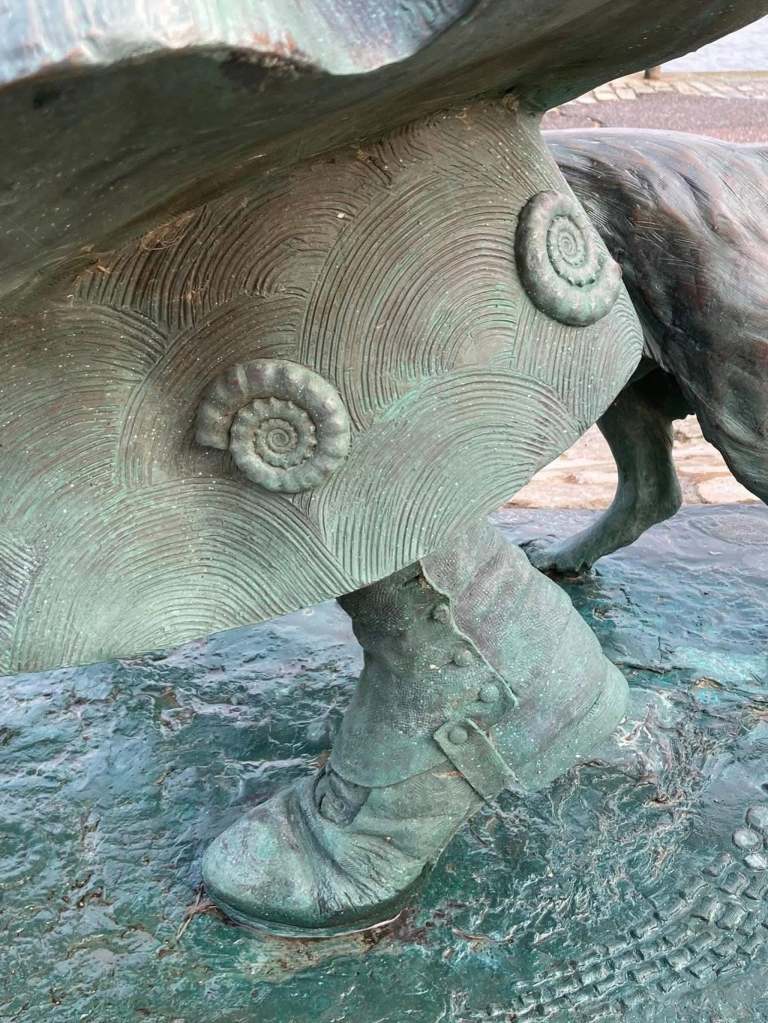
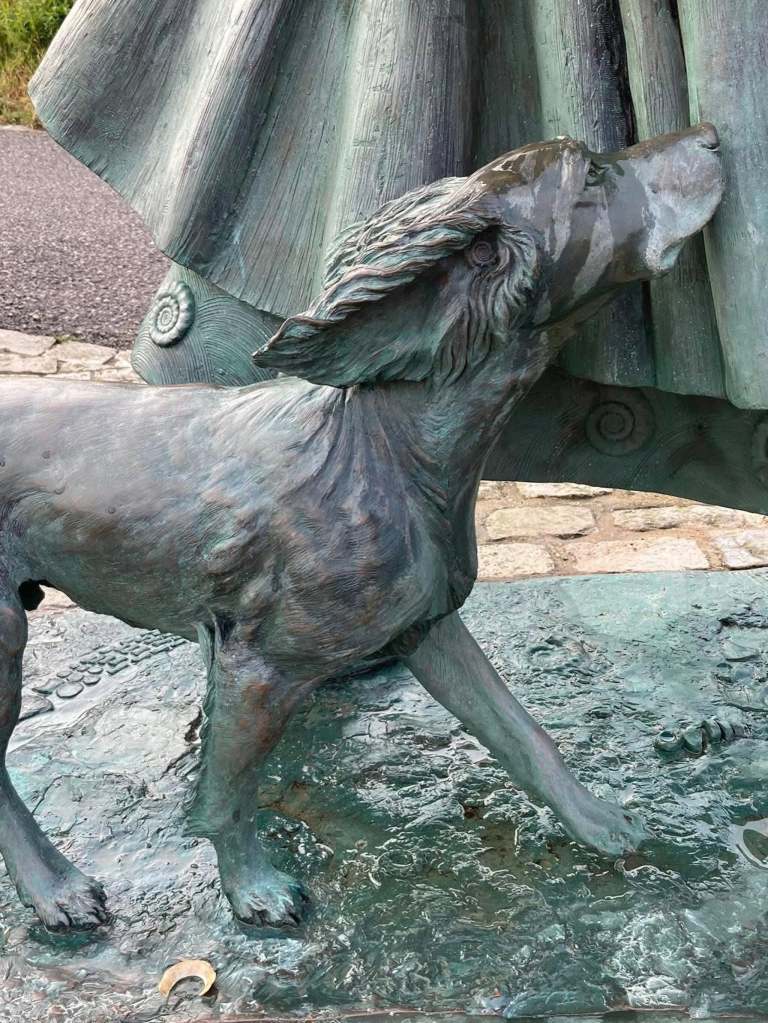
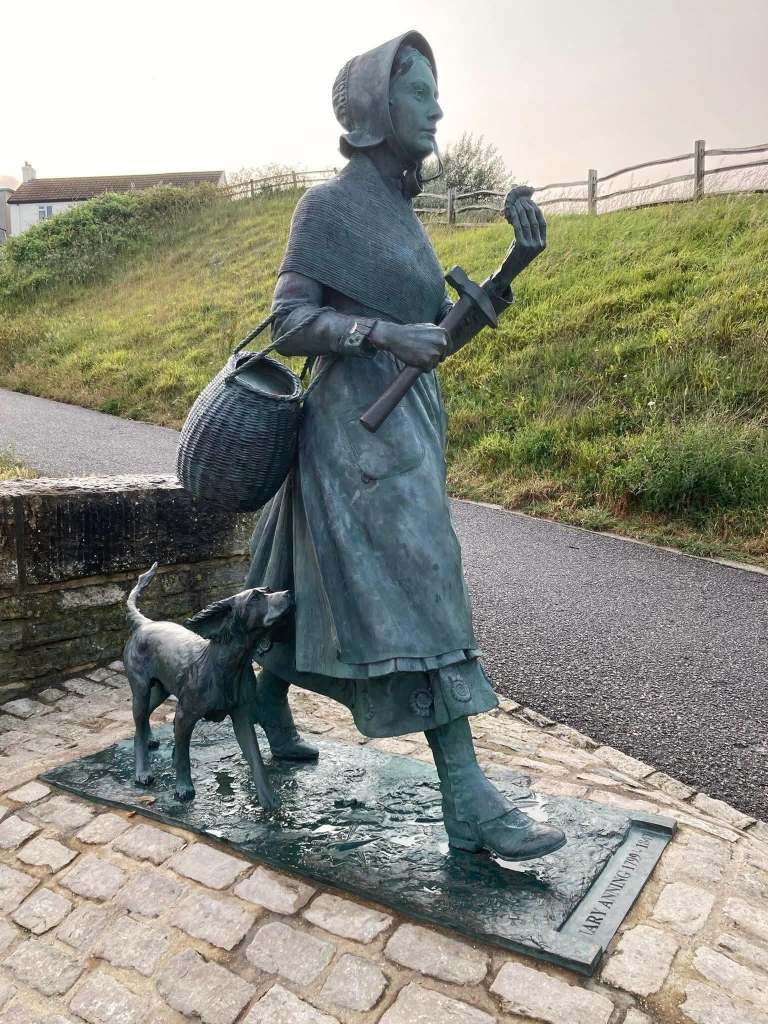
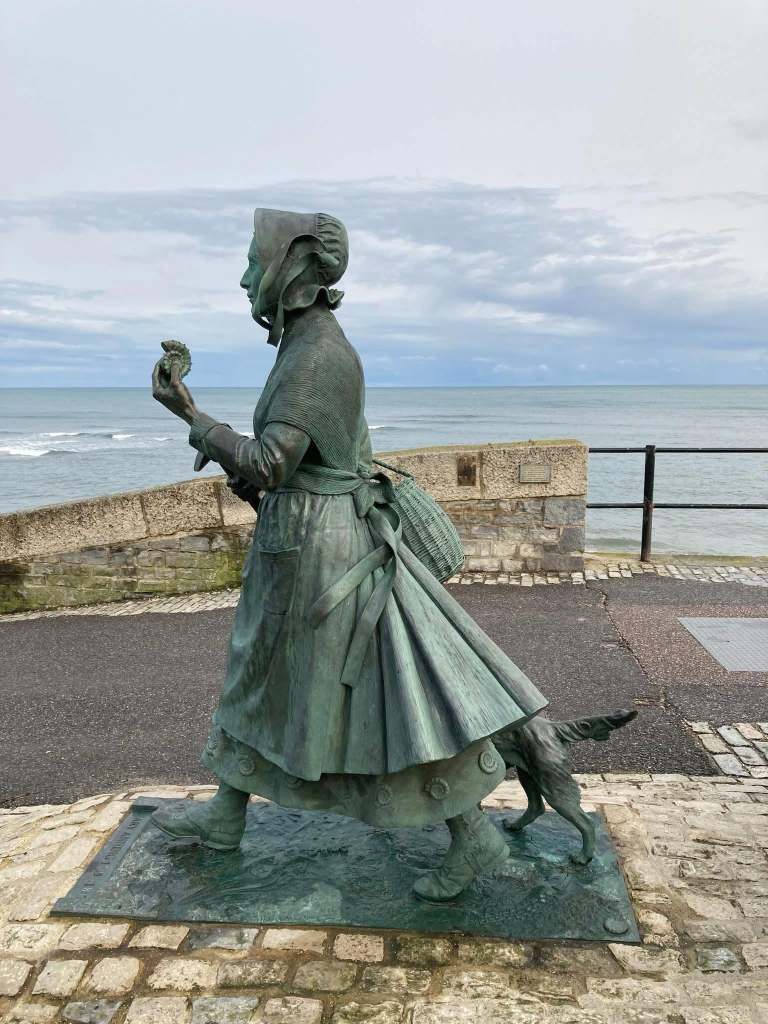
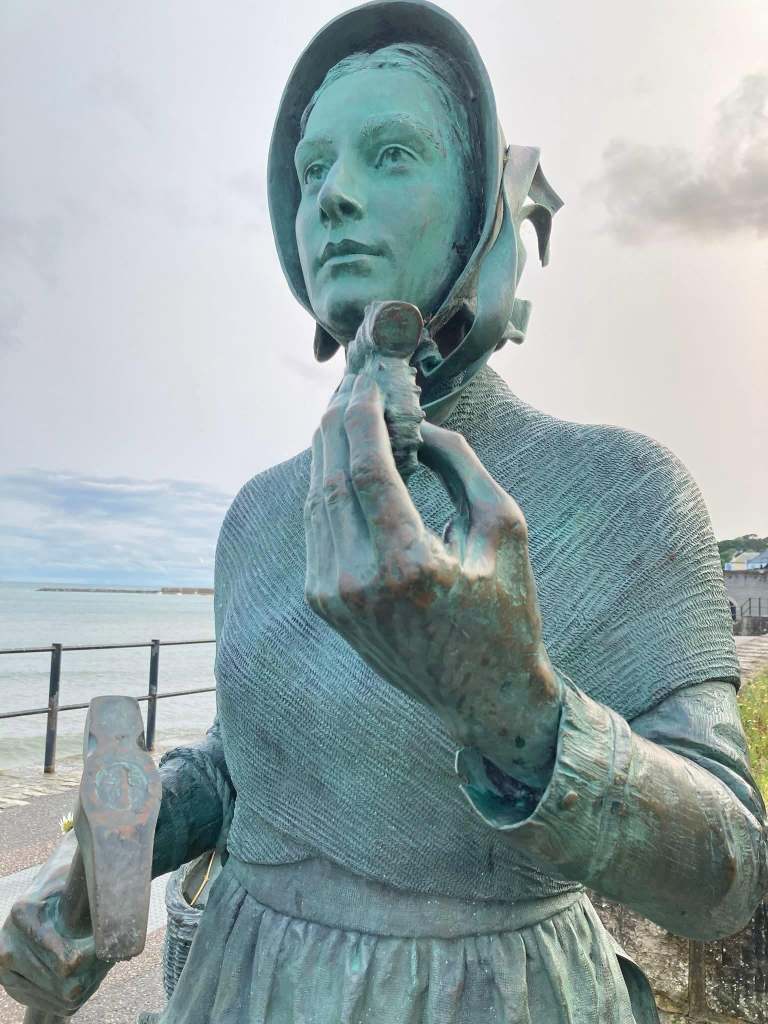
This bronze statue of palaeontologist Mary Anning strides off towards the cliffs she once explored with great success at Lyme Regis, Dorset.
It was created by sculptor Denise Dutton and unveiled in 2022 on the anniversary of Mary’s birth in Lyme in May 1799.
The story behind the statue is very inspiring. It’s all down to a 11-year-old girl, Evie Swire, who started a campaign, with the help of her mum, for a monument to the 19th century scientist. The campaign highlighted the bias of UK statues of men to women (more than 85% men).
Despite false starts during the COVID-19 pandemic, a crowdfunding campaign was eventually launched. The Mary Anning Rocks group also sold T-shirts to raise money to commission a statue in honour of the scientist, whose discoveries in the Jurassic marine fossil beds at Lyme brought her to international attention and contributed to changes in thinking about prehistoric life and the Earth’s history.
Mary discovered the first correctly identified ichthyosaur skeleton when she was just 12.
The statue was unveiled by Evie and Professor Alice Roberts.
It beautifully captures determined movement. The level of detail is astonishing.
It’s behind the Marine Theatre overlooking Black Ven.
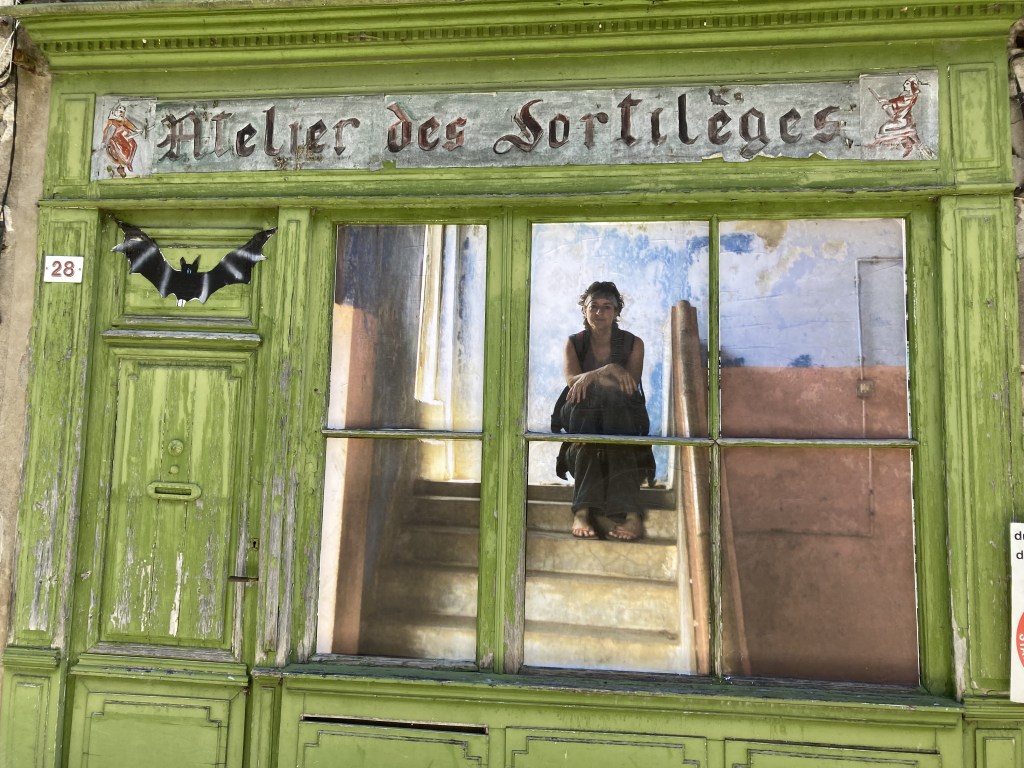
I went to a wine festival a few years ago in a village in south west France and passed this most wonderful shop front.
The shop itself had been closed for some years – or so it seemed – but the faded, beautiful paint on the doors and fascia led into this most marvellous mural.
A thoughtful, serene woman looked back at me. She sat on a flight of stairs, her bare feet pointing at each other in a comfortable, pigeon-toed pose, arms and hands across her knees.
I don’t know who she was but she had the sort of face you felt you’d known for years. A woman with a calm, kind disposition. A friend. In my head, I named her Estelle.
You could share a glass of wine with Estelle outside a laid-back cafe. You could have a moan about something tricky in your life and then both roar with laughter at the sight of a cowboy-hatted passerby dressed in triple denim in a heatwave, trying hard to swagger but looking more a constipated fool than the epitome of cool.
I’ve thought a lot about that woman in the window ever since. When I revisited the village a few weeks ago for another wine festival, I was looking forward to renewing our acquaintance.
Sadly, the shop front is now completely boarded up. The bat above the door has flitted off and Estelle has been erased forever from her staircase perch overlooking the street.
I didn’t take a photo, it was too sad.
I wanted to remember Estelle as she was when we last met.
As it happens, it was just in the nick of time because it ends at the weekend.
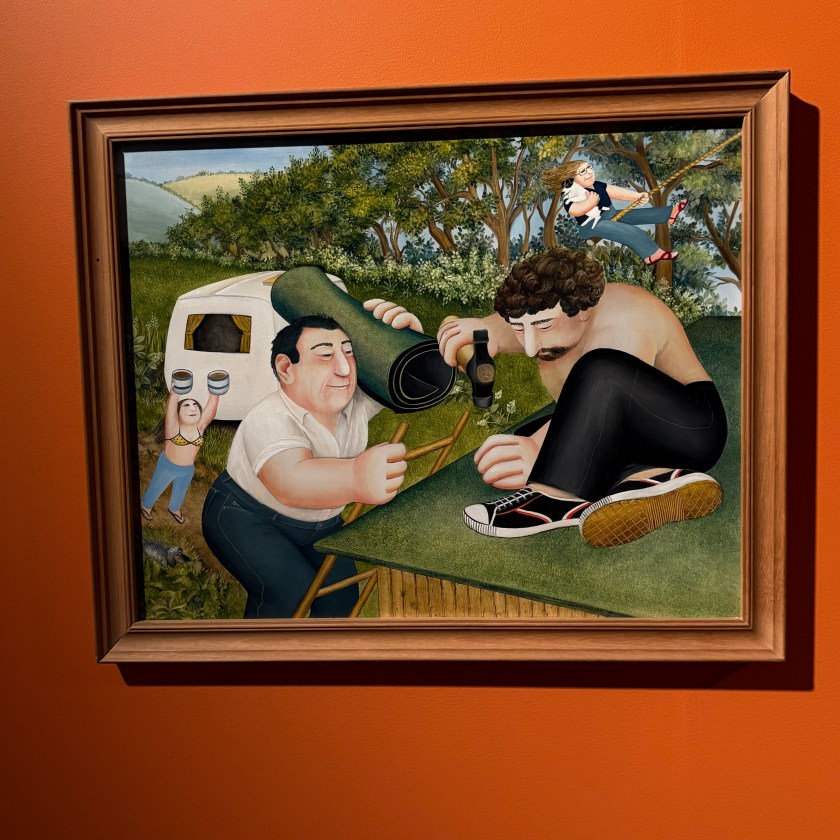
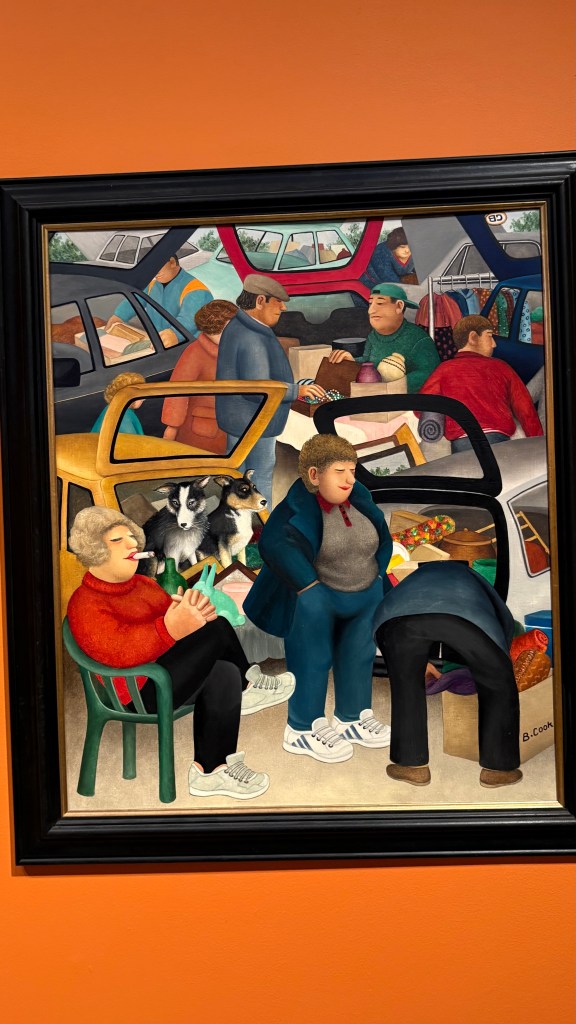
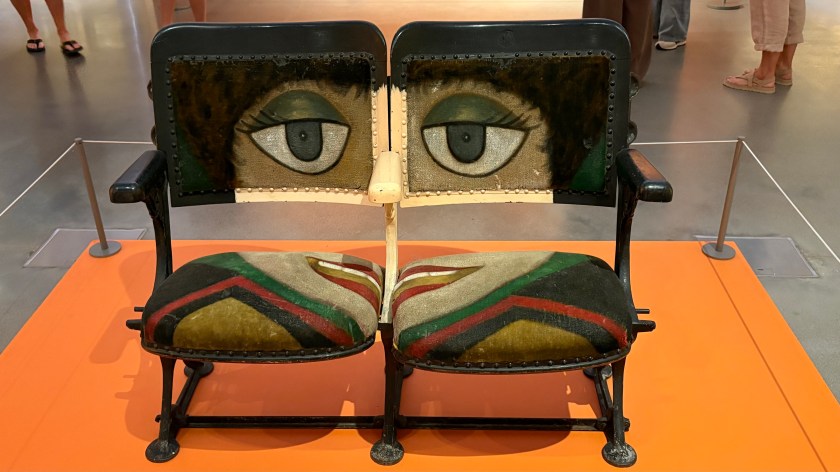
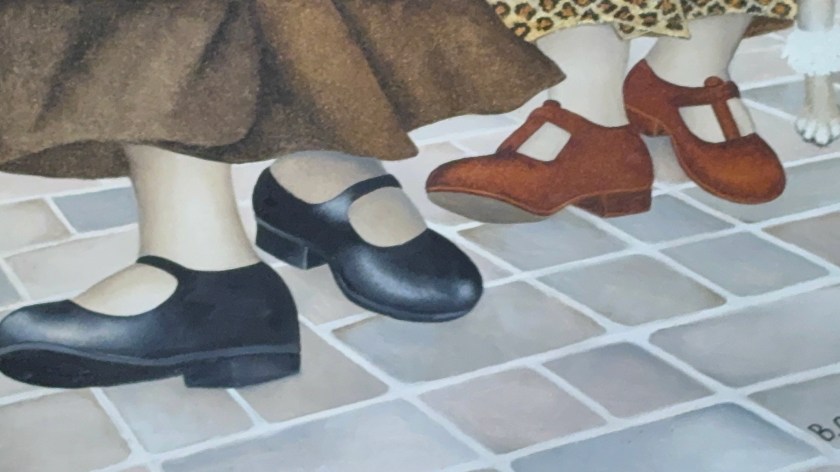
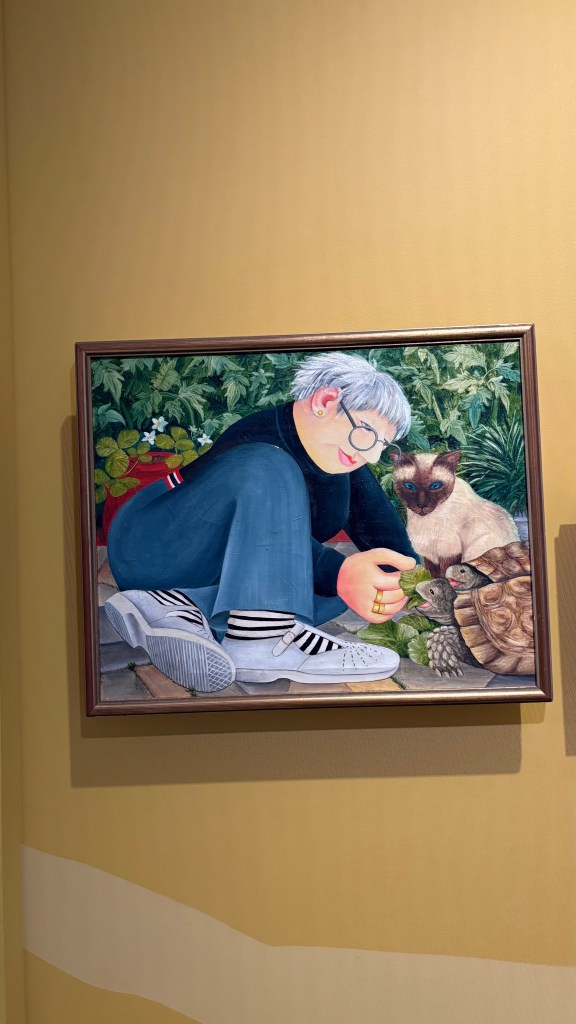
It’s a wonderfully thought-out display of Cook’s work. It makes you appreciate her influences and great skill as an artist.
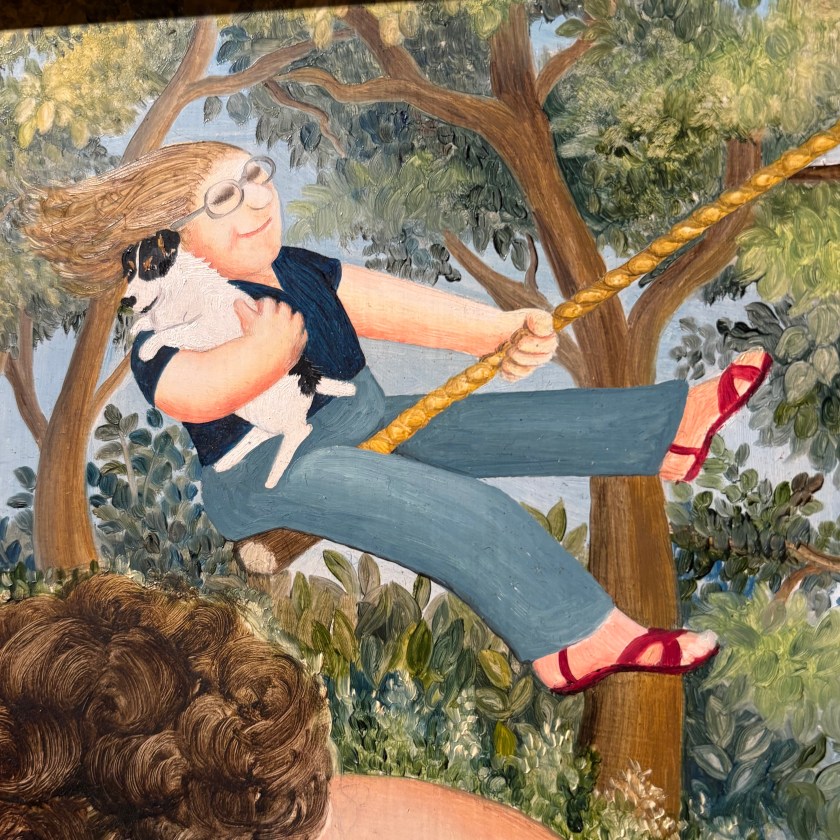
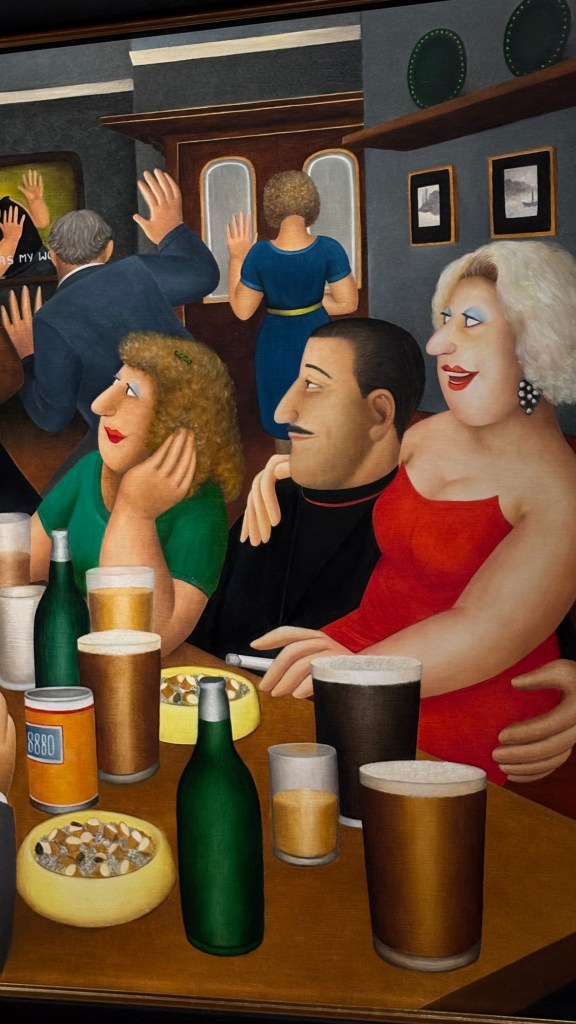
I loved the paintings of her family in particular and everyday scenes like the market and a car boot sale. The details in some of the paintings are tremendous. Little warm and comedic asides playing out alongside the main event.
I have never seen so many people smiling and giggling as they walk around an art exhibition. Sheer joy.
Beryl Cook (1926-2008) was a quiet, private person but one of life’s great observers, going out and about from her Plymouth guest house and finding inspiration in pubs, clubs and on the seafront.
Plymouth was my stomping ground from 1979-1982 when I was doing my training. It was fascinating to think I might have seen some of these real-life tableaux unfolding around me.
But back then I was coming up to twenty and only interested in live bands and having fun with my fellow trainees.
When we left the exhbition yesterday, I followed my memories to drive along the back of the Hoe, turning left into Lockyer Street where I remembering once sitting one of many Teeline shorthand exams until I hit the magic spot of one hundred words a minute which meant I’d passed.
At the junction, we had to wait while a Beryl Cookesque woman – large and colourful – crossed the road. It was perfect timing.
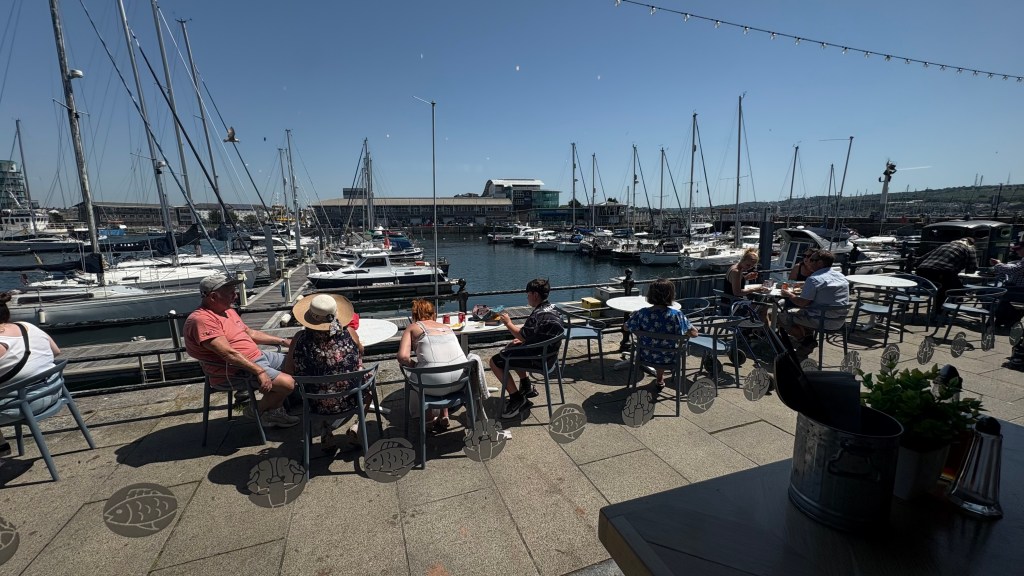
Down at the Barbican, we strolled to our lunch stop overlooking the boats in the harbour.
At one point, I was sure I’d spotted a fellow trainee, wandering around the Barbican in shorts and a sun hat.
I chased after her, shouting ‘Susan, Susan!’ but it wasn’t Susan, which is not surprising because Susan lives in Scotland and would not be in Plymouth unless we were having a reunion.
The thing is, this Susan looked like my Susan only maybe thirty or forty years younger, just as I remembered her.
I even asked the woman if she was sure she wasn’t Susan but she didn’t understand me because she was Spanish.
Then it was a fish and seafood lunch overlooking the boats and a stroll to see the work of another Plymouth artistic genius, Robert Lenkiewicz (1941-2002).
Like Cook, his work at the time was unfashionable in high art circles but popular with the public.
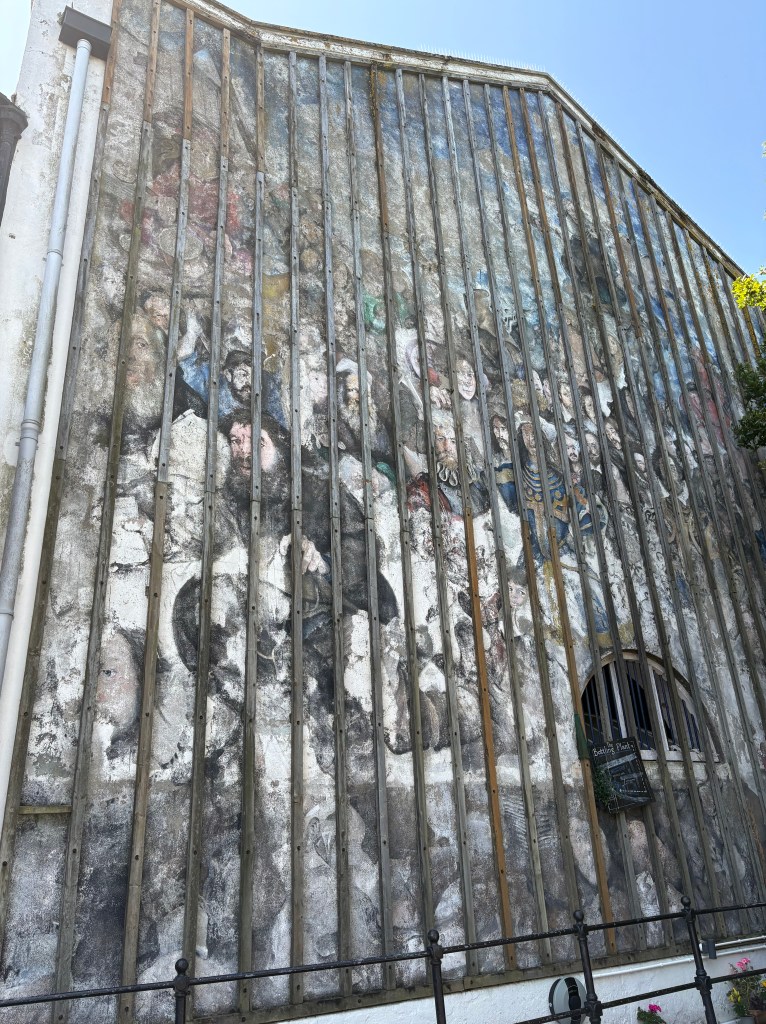
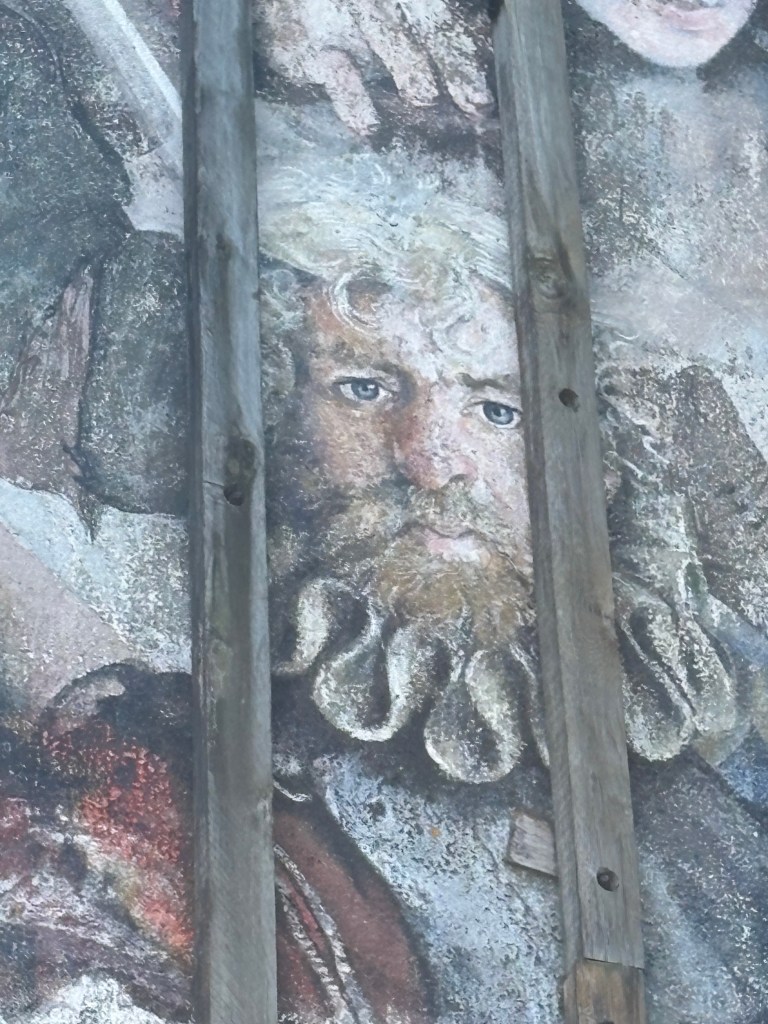
When I was in Plymouth in 1979, the Barbican Mural next to his studio – where a fellow trainee the year above me had a flat – was truly wonderful.
Now, it’s been allowed to fade and rot, which is an absolute travesty and so very sad.
My paternal grandfather was born in a pub run by his parents in Martin Street, Plymouth, just off Union Street. Family legend has it that, as a child, he set the cannon balls that formed part of a monument on the Hoe rolling down the hill. This can’t be true because they are glued together, or maybe it is and the glueing happened after Grandpa’s childhood exhuberance.
So what with my grandfather’s Janner status and my own connection to Britain’s Ocean City, Plymouth holds a very special place in my heart.
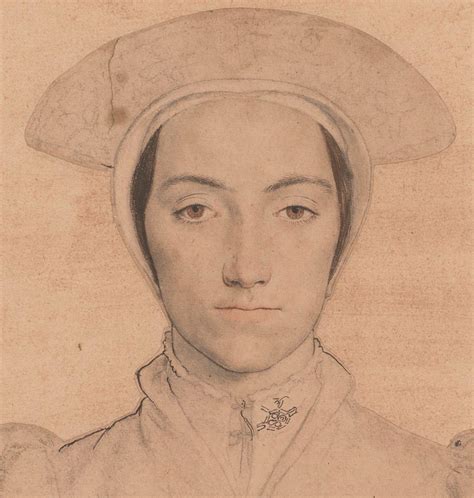
Did you see that news story about scientists claiming to have discovered the ‘real’ face of Anne Boleyn?
Now that would be some feat, because her real face would have been on the head cut off by a French swordsman in 1536 at the behest of the corrupt court sycophants surrounding Henry VIII.
She was executed for adultery, incest and treason – charges which paved the way for Henry to dump rather than divorce Anne and make room for wife number three, Jane Seymour, and the potential for a male heir.
It was typical of this tyrant king.
No, this ‘real’ face is a previously unknown sketch by Hans Holbein the Younger in the Royal Collection.
The finding is the work of a computer science team from the University of Bradford, which used modern facial recognition techiniques to come up with the controversial theory.
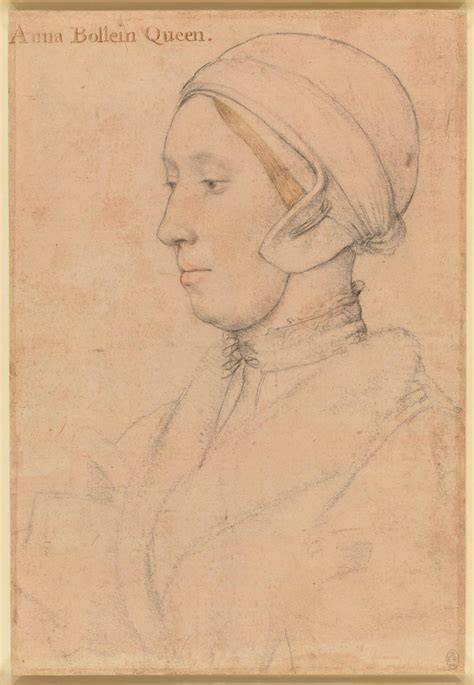
They believe another sketch below in The Royal Collection was mislabelled and is more likely to be of Anne’s mother, Elizabeth (nee Howard).
It doesn’t really fit with the description we have of Anne with a long and slender neck and dark hair.
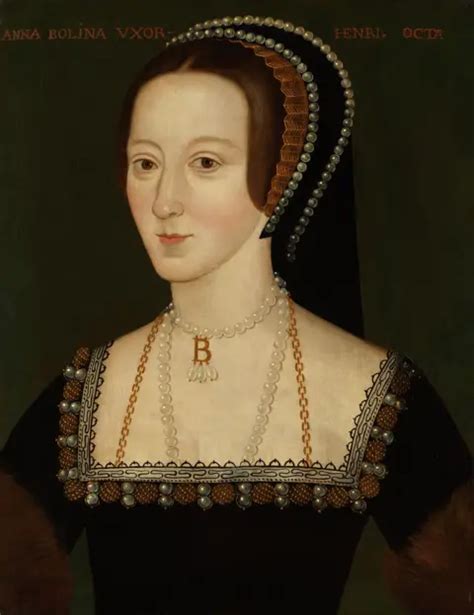
Up until now, the painting below, from The National Portrait Gallery, is the one that has informed the modern world what the doomed queen might have looked like. It’s not contemporary, it’s Elizabethan, but it’s the one we all know.
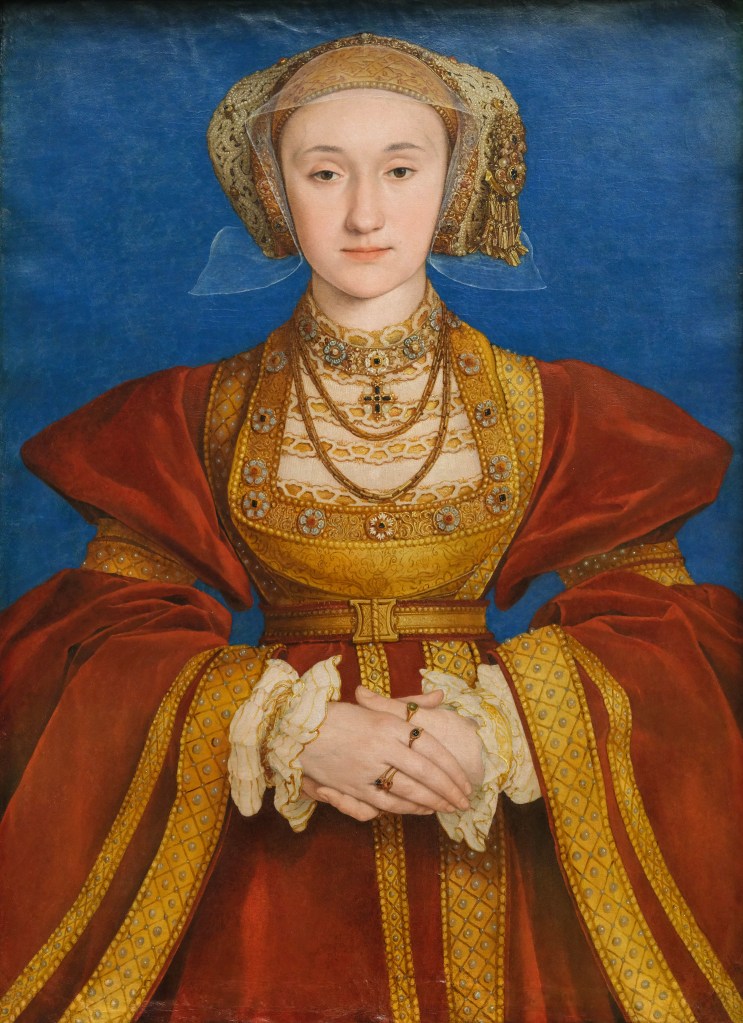
So are we any closer to the truth? Beauty is in the eye of the beholder – as we know from the famous Holbein painting of a sweet Anne of Cleves. We are told Henry was rather taken with the portrait but, apparently, when he saw the lady in real life, his reaction was that she was the spitting image of a “Flanders Mare”.
And looking at this image now again, could the ‘discovered’ portrait be, in fact, a sketch of Anne of Cleves?