And rather a lot of people I’ve been carrying in my head for several years.
Welcome to Plashy Fen.
If you prefer the paperback – and I know most of my readers do – that’s coming out on Michaelmas Day, 29 September. There is a reason for that date, which will soon become clear.
* (This is the Amazon.com link, do a search for Maddie Grigg, Kindle, Plashy Fen in the relevant country’s platform and you should find it.)
There have been some stinkers in my reading material of late, so I’m delighted to share with you two five star reviews for two very different novels.
Books have taken a little bit of a back seat in recent months as I put the finishing touches to my own novel, Plashy Fen, which will be out very soon, and research a narrative non-fiction story about the ancestor I share with that titan of 20th century American literature, Ernest Hemingway.
But it gives me great pleasure to recommend both these novels, which are well worth a read.
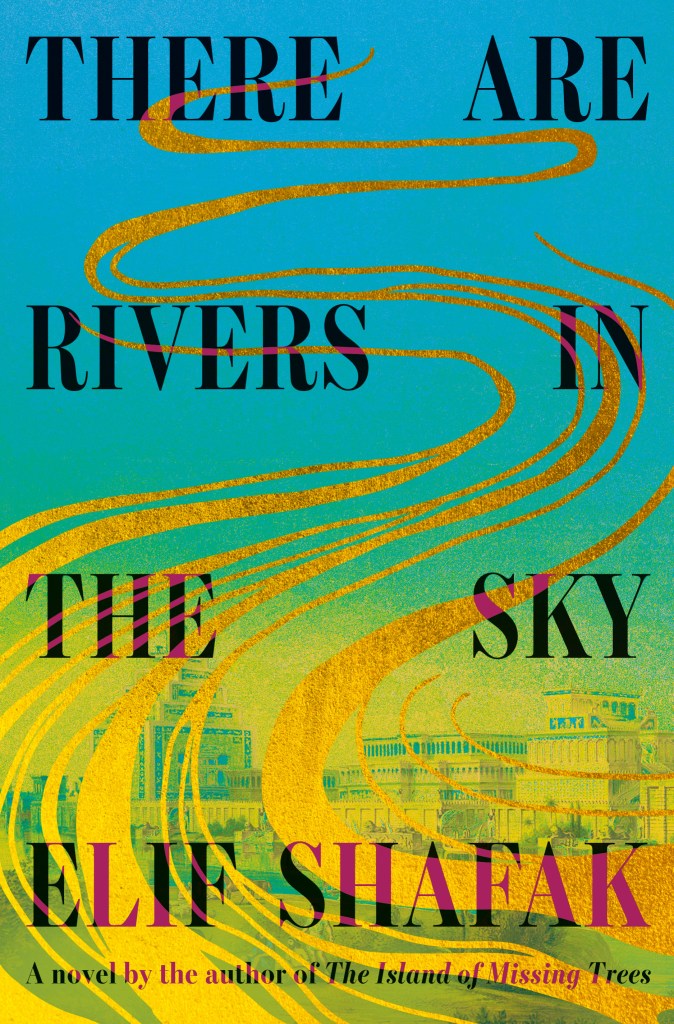
This is the most extraordinary book – and a long one for me to find myself completing with great relish.
It’s difficult to summarise the plot but here goes:
After a prologue set in the ancient past, the novel follows three timelines focusing on three characters inexorably linked by a single drop of water.
We have Arthur, who was born and raised in the Victorian slums next to the Thames but possesses an incredible mind. He learns how to decipher ancient texts at the British Museum and becomes obsessed with the Epic of Gilgamesh, a poem written in Mesapotamia during the late 2nd millennium BC. He makes it his life’s quest to find the poem’s missing pieces, out in the dusty field.
And then there is Narin, a Yazidi girl living in Turkey in 2014, and Zaleekhah, a hydrologist who lives on a houseboat in London in 2018.
They lead entirely different lives but their stories are intertwined, with the past catching up with them all.
This is such a big concept book, but told intimately through the stories of the three protagonists. Beautifully written -a novel which will stay with me for a long time.
Katherine Mezzacappa is a voracious writer who has a real knack for finding fascinating true stories and characters from the past and turning them into literary gold, as her novel, The Virgin of Florence (2024), demonstrates.
Lucie Dumas was a real person, a young woman we would never have known were it not for Mezzacappa’s meticulous research and imaginative storytelling skills.
And it’s a good job, because Lucie’s story is important, particularly in an age where misogyny is still alive and well and living like a king, even in 2026.
Lucie is a ‘fallen’ woman, cast out of her native France and separated from the child she bore to become a prostitute in 19th century London.
She encounters many hardships and is then ‘rescued’ by a famous writer, Samuel Butler – to whom she refers as The Monsieur – who ‘keeps’ her in a modest house (with a maid) where she entertains him and other gentleman callers.
Lucie is never a victim but her tale unfolds quietly and with great dignity, a pawn in a world where men take centre stage and women are meant to fit in as they should.
The storytelling and writing are remarkable. I’d gone off historical fiction a bit but Mezzacappa has restored my faith in the genre.
This is a novel which means a great deal -it gives Lucie Dumas a voice and one with which we, the reader, empathise, giving us an unusual and important insight into the place of women in Victorian society.
So, was it worth driving an hour there and back to see The Odyssey on the big screen?
Yes. A definite yes.
I thoroughly enjoyed this Christopher Nolan version of Homer’s epic, with its monster-laden voyage to mythical Ithaka led by a grizzled Matt Damon.
When I read The Odyssey many moons ago, I really felt that yearning for home, the pull of place. However, in the film, Odysseus is reluctant to return, his battle scars heavy and his guilt at the decisions he has made pulling at his internal heart strings.
Classicists will point out deviations from the original poem but you wouldn’t know if you hadn’t read it. And it’s a film, which has a totally different way of telling a story.
Personally, I felt sorry for poor old Corfu in that the hero’s penultimate destination and the delightful Princess Nausikaa don’t put in an appearance.
Scheria, the home of the seafaring Phaeacians, is widely thought to have been Corfu and the Ionian island makes no secret of this connection with one of the greatest stories ever told.
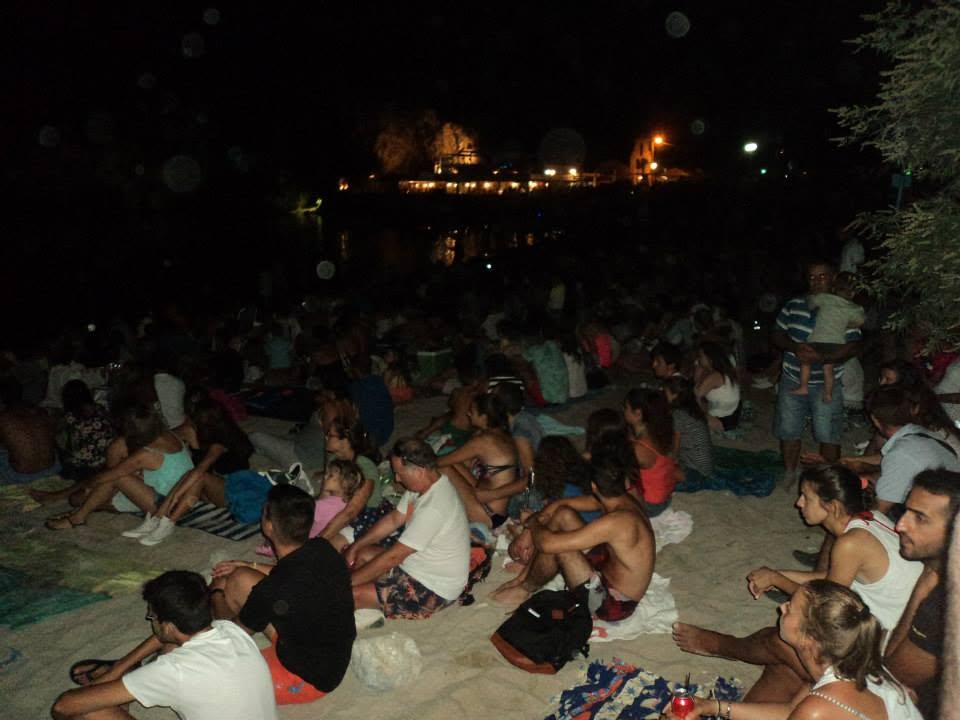
The beach at Paleokastritsa, Corfu, in August 2015 for the Varkarola re-enactment of Odysseus shipwrecked on Scheria
So Corfu won’t benefit from the film at all, while tiny, rocky, inaccessible Ithaka must be preparing itself for an influx of movie fans.
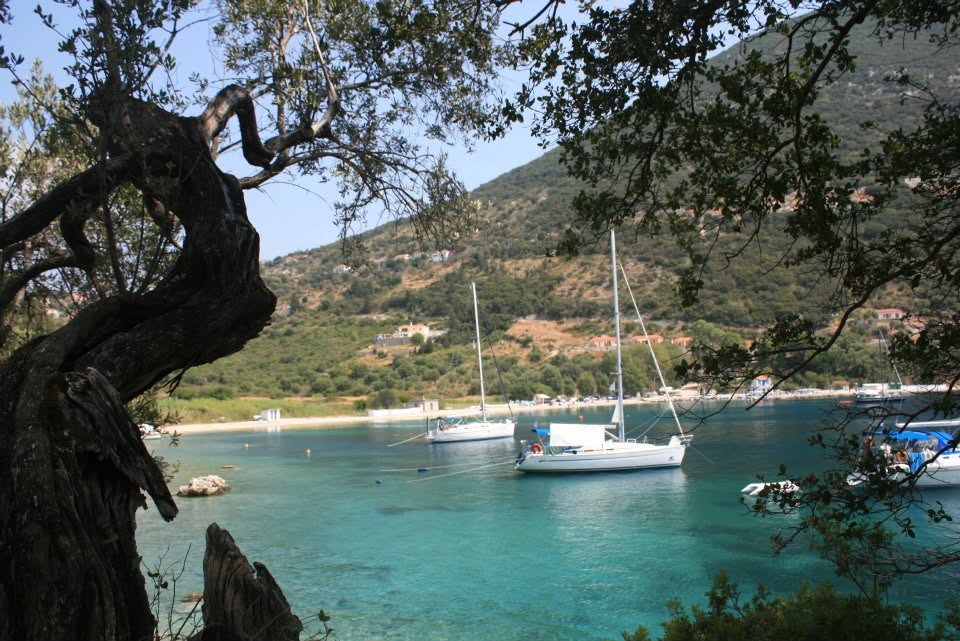
The beach at Polis, Ithaka.
There are many five stars reviews of The Odyssey and discussions over the peripheral role of women in the movie. I’m giving it four because nothing is perfect.
I take on board the complaints about the subordinate depiction of the female sex in the film and jettisoning some of Homer’s nuance, but it was ever thus.
If you went looking for a feminist angle in Nolan’s film then you’d be looking in the wrong place. However, I adored Samantha Morton’s portrayal of Circe and the way she dealt with Odysseus’s greedy crew. I won’t spoil it but the scene is a satisfying shocker.
While the women in the film don’t actually do very much, I did get the overriding sense of male selfishness, power and the endless search for dominance through senseless war, which hasn’t changed since ancient times.
There were a couple of wincing moments for me, such as Odysseus’s son talking about ‘my dad’ and the Laestrygonians emerging through the tall trees in the forest in a scene worthy of Monty Python and The Holy Grail and the Knights who say Ni.
But, all in all, The Odyssey is a story well told, both visually and orally, with the poem’s episodic scenes all working seamlessly from the outset, with Odysseus telling the tale of his voyage to Calypso until he is finally ready to leave her island after seven long years.
And despite the film lasting nearly three hours, the time just romped by.
If you do go and see it, let me know what you think.
I’ve been out of the blogging loop lately, focusing on a writing project which is going to keep me busy for the next couple of years.
However, there is lots going on in the world (earthquake, heatwave, violent death and political farce) but I’m choosing not to obsess about these subjects and am trying (not very successfully) to stop doomscrolling on Facebook and Instagram, which is a complete waste of time and just feeds massive egos and conspiracy theories and lines the pockets of the megarich.
And news websites and a constant diet of updates and cliches are leaving me cold.
The reading is going well, but not in terms of me writing reviews. I’ve had some real duds in recent months, which has been incredibly disappointing.
I had high hopes for The Calamity Club (2026), by Kathryn Stockett, the author of The Help (2009), but it wasn’t for me. I gave it two stars out of five.
I didn’t fare much better withUnder Story. I devoured an earlier Chloe Benjamin novel, The Immortalists (2018), but really struggled with this new book, which comes out later in the year.
The very science-based science fiction of Under Story is sweeping in its ambition. Set in the hostile, surreal world of Antarctica, it’s essentially a love story with two central protagonists who take their time to reconnect.
It’s beautifully written but moves forward at too slow a pace for me. I gave it three stars.
Having encountered a reader’s block with new novels other people seem to adore, I had a bit of a book break and then started reading narrative nonfiction, if nothing else but to help with the current writing project, to see how it’s done when done well.
The last bit of nonfiction I read was probably The Salt Path (2018), billed as memoir, nature and travel writing and definitely not fiction. I gave up after two chapters because I liked neither the style nor the whining presence of the author, who irritated me from the start. Well, we all know how that book panned out. Maybe I am more discerning than I think.
I’ve done a bit of research and have started giving nonfiction another go. Mixed results but I completely fell in love with the Bruce Chatwin’s groundbreaking travel writing classic, In Patagonia (1977).
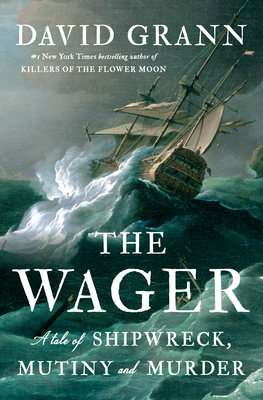
Similarly, The Wager: A Tale of Shipwreck, Mutiny and Murder(2023) by David Grann is unputdownable, telling the true story of what happened when a naval vessel hit rocks off the South American coast in 1740. Piecing together the story through solid historical research and strong primary sources, Grann has produced a knockout of a book. I was hooked by it.
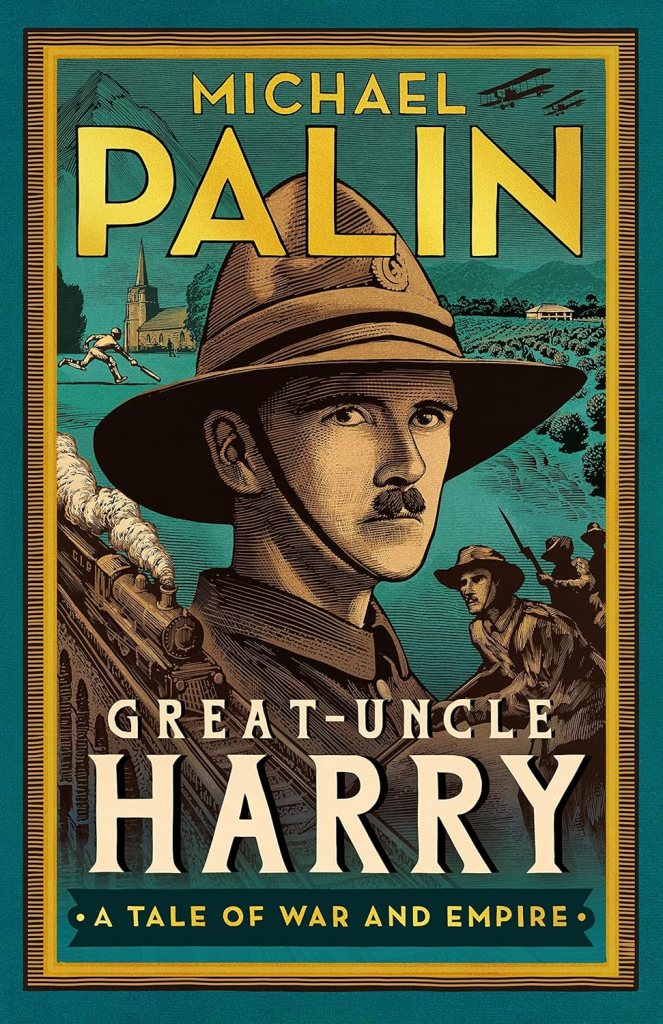
After failing to ‘get’ an award-winning memoir that had been recommended to me (too highbrow and about a wealthy family I didn’t care much about), I was delighted to then plunge into Great Uncle Harry: A Tale of War and Empire (2024) by Michael Palin, a writer who takes a family story and turns it into a search for answers in this compelling biography, travelogue and history book. Palin is such an empathetic and kind sort of a chap and his writing reflects his humanity.
I’m now reading two novels: A Gentleman in Moscow (2016) by Amor Towles (my day book) and the beautiful There Are Rivers In The Skyby Elif Shafak (2024), which I turn to at night because I have a back-lit Kindle so I don’t disturb Mr Grigg when he’s trying to sleep.
So, you can see I haven’t been completely idle in this ennui-inducing heatwave, which is turning us all into gibbering wrecks.
More from me later in the week, I think. In the meantime, if you have any narrative nonfiction recommendations, I’m all ears.
Just to let you know, the blog is taking a back seat for a while.
I’ve had lots of things going on and I’m currently knee-deep in work around the publication of new novel by an indie press. It’s due out in the autumn – more news to follow.
Have a lovely summer, and maybe catch up with you through posts on my Instagram and Facebook pages, although these will also be a bit sporadic over the coming months.