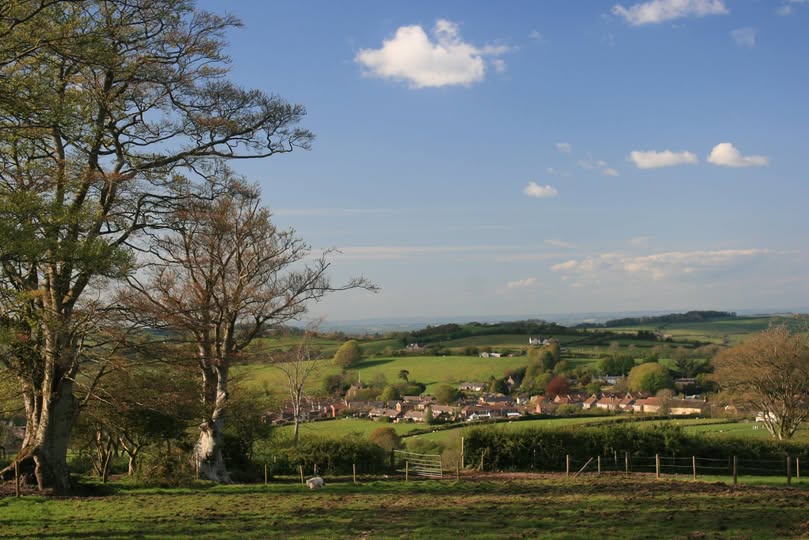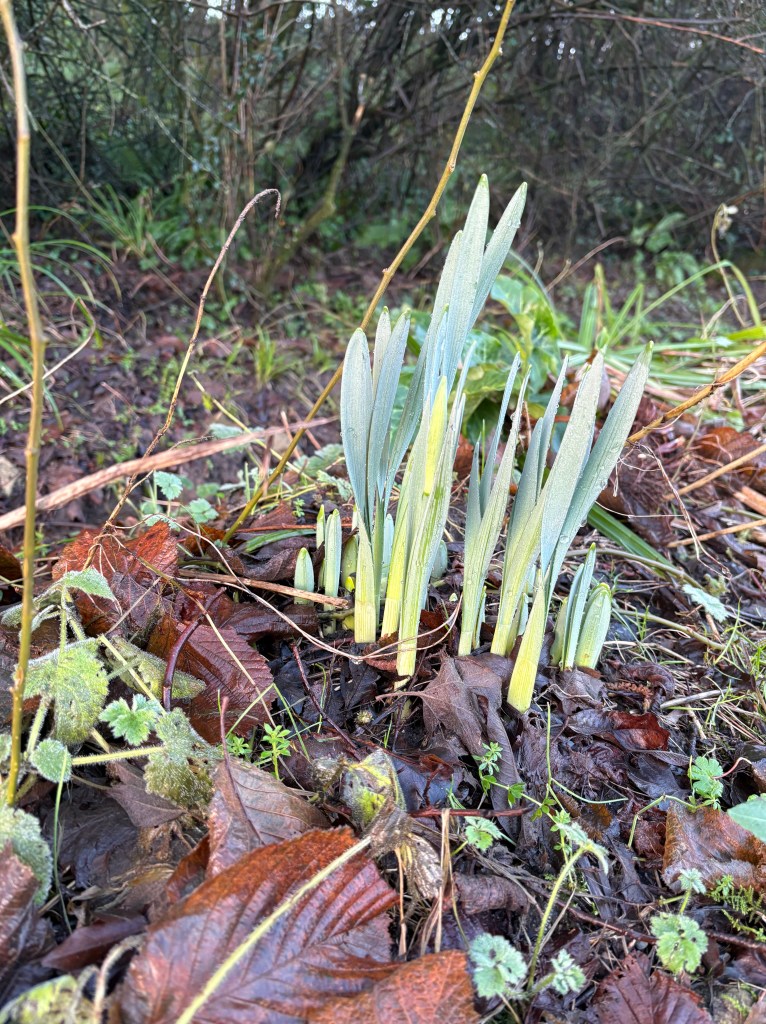
After a grey, grim old day yesterday, we have blue skies and signs of spring here in West Dorset.
There’s mud everywhere and it’s squelchy underfoot but the many puddles are reflecting the changing of the seasons.
We’re not there yet but it won’t be long.
On my morning walk, I glanced up when I heard the corvid call of rooks building nests in the tall trees in the copse.
And then a deer scuttled through the undergrowth.
‘The longer days are coming,’ said my farmer friend as he came down the hill from the community shop with his newspaper under his arm.
“But I fancy the daffodils are a bit early.”
I met a man in the lane who I thanked for his expertise in the community pub the other night when our very own Celebrity Farmer and his sidekick regaled the gathered throng with tales from their escapades on the Channel 4 show, Hunted.
(They should have done Bake Off.)
The man in the lane had provided his sound and vision expertise for the talk, which was just as well because the place was packed and none of us would have been able to hear it otherwise.
He told me he’s going to be at the village hall next weekend to help when I put on an archive film show as part of a project recording the memories of older people born and bred here in Lush Places.
It’s people like him who quietly get on with helping others who are the unsung heroes among us.
The international stage is a frightening place and there are personal situations all around where people are suffering.
But to be dragged down by all of that means the extinguishing of hope. We have to celebrate the small big things that make a difference.
I thought about all the volunteers in our pub who are keeping it going while we interview for a new manager. I thought about the volunteers in the shop who man the till.
The people who run the village hall, the people who keep our lovely church up and running, the people who lock and unlock the gate everyday on the multi-use games pitch, the people who listen to children reading at school and those who give up their time to look after our communal open spaces.
So many people, in small and big ways, doing their bit and keeping the community from coming unstuck.
To steal a well-known slogan, every little helps. And it really does.
It’s been a busy old few weeks – nay months – in the Grigg household.
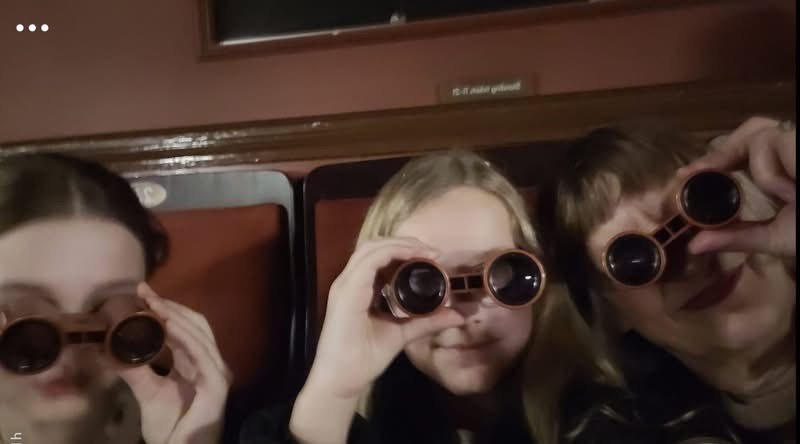
Alongside freelance work, there’s been a weekend away in London with the granddaughters for The Lion King, an overnight stay in Bournemouth to see The Human League with my flatmate from forty-three years ago, a school nativity play, the village carol service and putting on an archive film show to a packed audience in Bridport.
And that was just in the past week.
I’m not sure where the time goes but the year’s gone by so fast, I had a devil of a job keeping up with it.
The Christmas cards, bar a few, are nearly all delivered, presents bought and wrapped and a couple of days have been set aside over the weekend to prepare for Christmas next week and the big day that is Boxing Day when the hordes descend on our little house.
A New Year’s Eve playlist needs to be compiled and fine tuned for the party in the community pub, where, at just before midnight on 31 December, we all go out in the village square and sing Auld Lang Syne, and the traffic has to stop, whether it likes it or not.
A manuscript of mine has been shortlisted for The Eyelands Book Awards, which is very exciting and still is, even if I don’t win the competition. The unpublished novel – a cosy crime set on a Greek island (a kind of Bridget Jones-meets-Death In Paradise-meets-Mamma Mia!) had already been shortlisted in two other prestigious writing contests this year so I’m crossing my fingers, toes and eyes for this one.
I’ll be pursuing my search for a literary agent with renewed vigour in the new year, as well as working on the sequel, with a writing buddy from Australia who I ‘met’ on an online crime writing course run by Curtis Brown Creative.
Last year, we exhanged 5,000 words a week for critiquing, which was helpful in giving us the push we both needed to get our novels finished.
If you’re a budding writer and looking for impetus, I’d recommend the CBC courses wholeheartedly. Seven years ago, I signed up for one and I’m still in touch with group members, many of whom are now published writers. The support and encouragement we give each other is brilliant.
I’m not much of a one for new year’s resolutions but I’m endeavouring to get on with things, ticking off my copious to-do lists and living life to the full.
Blogging might take more of a back seat than usual, and how I use this website in the future is still up for debate, but you can find my column each week in The People’s Friend, the world’s longest-running magazine for women.
So Merry Christmas to you and yours and here’s to a peaceful, healthy and happy 2025.
With Covid or whatever it was having only just flown the nest (it took nearly a whole month), we’re now back in Dorset to lovely weather (I jest) and a warm welcome (I do not jest).
This morning, I walked out along the lane with Ruby and Edgar to a gate which reminded me of a poem by the Dorset dialect poet William Barnes (1801-1886).
The Geate A-Vallen To was apparently Barnes’ last dialect poem and it’s one I love because it was a favourite of older family members who, although from rural south Somerset, could do a pretty good rendition of the Dorset dialect.
There’s a YouTube link at the end of this blog to a chap reading the poem. His voice is far too posh but you get the gist. But I recommend trying it out yourself first by reading it aloud:
In the zunsheen of our zummers Wi’ the hay time now a-come, How busy wer we out a-vield Wi’ vew a-left at hwome, When waggons rumbled out ov yard Red wheeled, wi’ body blue, And back behind ‘em loudly slamm’d The geate a’vallen to.
Drough daysheen ov how many years The geate ha’ now a-swung Behind the veet o’ vull-grown men And vootsteps of the young. Drough years o’ days it swung to us Behind each little shoe, As we tripped lightly on avore The geate a-vallen to.
In evenen time o’ starry night How mother zot at hwome, And kept her bleazen vier bright Till father should ha’ come, An’ how she quicken’d up and smiled An’ stirred her vier anew, To hear the trampen ho’ses’ steps An’ geate a-vallen to.
There’s moon-sheen now in nights o’ fall When leaves be brown vrom green, When, to the slammen o’ the geate, Our Jenny’s ears be keen, When the wold dog do wag his tail, An’ Jean could tell to who, As he do come in drough the geate, The geate a-vallen to.
An’ oft do come a saddened hour When there must goo away One well-beloved to our heart’s core, Vor long, perhaps vor aye: An’ oh! it is a touchen thing The loven heart must rue, To hear behind his last farewell The geate a-vallen to.
Well, it seems neither the local newspapers nor the BBC is interested in the village bells debacle in my village.
It’s no longer newsworthy.
This is probably because the silencing of church clocks chiming is now commonplace all over the country. More of that later.
You’ll recall from my blog post of 18 March that the church clock stopped its hourly chiming, just two days after it was repaired.
A village resident complained about the hourly chiming – possibly having moved in when the clock wasn’t working – so the church stopped it completely.
The parochial church council has now reached a compromise solution to fit a silencer so that the clock chimes only between the hours of 6am and 9pm. This will be at a cost of around £800 rather than the original estimate of well over £2,000.
‘The feeling by many members of the PCC that, although the aim of the Church in the village was to “make Jesus known,” it was not felt necessary to remind everybody of his presence throughout the night,’ the PCC said in a statement.
So all’s well that ends well. Or not, as many local people are still unhappy that one complaint can stop the village clock chiming at all.
Without getting all Wicker Man and pitchforks at dawn – and there are far bigger problems and threats to democracy in the wider world – it can seem like rural life is under threat when some newcomers complain about things like the sound of church bells, animal smells, mud on the road and farmers working through the night.
All over the country, the church powers-that-be are worried about being slapped with noise abatement orders by their local councils. More and more clocks in towns and villages have stopped chiming .
June Summerhayes saw my blog and asked me to support her petition to the government calling for clock chimes to be exempt from noise abatement regulations.
I’ve signed it and told her I would help publicise her campaign. Understandably, she’s rather dismayed that, at the time of writing, only 85 people have signed so far.
Mrs Summerhayes says: ‘Recognise the special place that clock chimes have in British life and history. Many churches have had to silence night time clock chimes because a single person, or a few people have complained. We believe this is unjust if the majority support the chimes.
‘We want noise abatement regulations to be amended so that they do not apply to clock chimes. This should also mean that any previously issued noise abatement orders in respect of clock chimes cease to have effect.’
At 10,000 signatures, the government will respond to this petition. At 100,000 signatures, the petition will be considered for debate in Parliament.