Let’s See What The Earth Has To Say

Today is Earth Day, an annual event aimed at supporting the environment.

But is it the day when individuals and companies can declare their love for the earth while ‘greenwashing’ their personal and corporate credentials?

Lordy, the problems facing the planet are massive and what can we, as little people, do to make a difference?

Well, we can cut down our consumption and go for renewables where possible. But all that is fraught with problems, paradoxes and gobbledygook. One man’s electric car utopia is another person’s complex environmental footprint.

Back during covid times, it was a terrible period for many. But some of us were living our best lives in glorious weather and with no vapour trails in the sky nor traffic on the roads.

Here’s a video by my friend Emma Gale, from her debut single Let’s See What The Earth Has To Say, written in and inspired by lockdown.

Back then we were all kind to each other, knowing our daily lives had changed massively.

But that love for one another didn’t last very long. Humans became angrier and nastier as a species, led by self-serving, arrogant politicians, many of whom were in it for their own gain.

We became cynical and mean about everything.

And still it continues. Callous and flippant put-downs, lies and an insatiable desire for personal wealth have become common currency for world leaders.

So, on Earth Day, how can we put our fragile planet at the forefront of everything we do?

Protest when and where we can (and when it’s safe to do so) but not through futile, silly arguments with acolytes of megalomaniacs. That way insanity lies.

The only thing I can suggest is to immerse ourselves in the natural world and and get out in the garden to plant and nurture something in peat-free compost. And teach our children (they could teach us a thing or two for sure) the importance of kindness, courtesy and care for others.

Earth Day feels so massive. But it’s about baby steps, small big things to make – and be – the change.

It’s the best we can do.

See you later in the week.

Love, Maddie x

How did you use that extra hour?

It’s the day after the clocks went back and it’s one of those Sundays that seems to have gone on and on.

I was up early and did all the ironing, fed the dogs, order a dog harness, water bowl, poo bags and three motion sensor lights for the landing, made a pot of tea, scored eight on my daily popquiz – Popquizza.com – and finished an episode of The Rest Is Politics US before the clock showed seven-fifteen.

By eight o’clock, I’d walked the dogs and was ready for breakfast.

I’ve managed to tick loads of things off my to-do list, although by three o’clock this afternoon I was flagging and the dogs were doing circles because they were so hungry.

Mr Grigg has dug up four lots of leggy lavender for me to replace, and there is more planting to come.

I’ve also gone mad with the bulbs again, ordering with gay abandon from Farmer Gracy and then bricking it when a massive box the size of Matabeleland arrived on the doorstep with a smug look on its face.

It’s half term in Dorset this coming week but no doubt the weather will be dreadful, so the chance of me finding room for 90 narcissi bulbs is pretty remote.

Two years ago, I ordered so many tulips I had to enlist the support of Number One Son and the tiny grandson who waddled around in dear little wellies and was armed with a lethal dibber.

We managed to plant them all but, of course, I was away when they flowered, so I missed the lot.

With just five days of October left, it’s been a busy month.

And now the nights are darker, it’s time for slowly simmered stews, log fires and a ridiculous binge on all four series of Stranger Things to remind myself of the plot and premise before the new one drops at the end of November.

I’m going to try to pull my socks up and blog at least twice a week, but as my late mother used to say, the road to hell is paved with good intentions.

That’s about it.

Maddie x

The autumn equinox

It’s the autumn equinox, the time of year that looks ahead to the dark days and nights of winter, and glances back, just a little bit wistfully, to the glory days of June, July and August.

Here in the northern hemisphere, it’s the last day of summer – autumn has finally arrived. For friends and family in the southern hemisphere, it’s reversed, so it’s the first day of spring.

Confusingly though, for meteorologists, autumn begins on 1 September, making the autumn months September, October and November.

On the equinox, day and night are roughly 12 hours long.

In the agricultural calendar, we have to wait until Michaelmas – 29 September – for the quarter day.

Years ago, a traditional meal for Michaelmas was goose, raised in the stubble fields. If you were a tenant farmer, you might have given the goose to your landlord. Which is a shame, because you, being poor, probably needed it more than them, being rich and powerful.

Still, it was ever thus.

But whatever you do, don’t pick blackberries after Michaelmas because apparently it’s the day the Devil spits on them.

Whatever, whenever, the equinox marks that turning point of the seasons.

School has started, university freshers’ weeks are upon us and it’s a time of change.

Short sleeves and flimsy linen dresses are put back in the cupboard, but within easy reach should we get an Indian Summer in October, and the DM Chelsea boots are given a spit and polish and you thank goodness that years ago you bought the ones with zips now that you’re finding it ever harder to pull them onto your feet.

It’s a time of discovery, when you find you actually do have more coats and jackets than there are days of the week and, in actual fact, they’re not bad, not bad at all.

It’s a time to top up the wood pile, order the heating oil and start knitting again.

Cosy nights in, stews that stick to your ribs and cocoa instead of coffee.

Watching some brilliant drama – old favourites like the latest series of Slow Horses, due any moment now, and the finale of Stranger Things, where the child actors are now grown up but the story is still (I hope) as gripping, and then new shows too, which will unfold as the months unfurl.

Curling up with a good book without feeling guilty about it, and leaving the garden a bit overgrown for the wildlife, ready to attack it properly at a much later date.

And enjoying the wonderful spectacles of the night sky.

I don’t know about you, but I like the autumn equinox.

The Geate A-Vallen To

With Covid or whatever it was having only just flown the nest (it took nearly a whole month), we’re now back in Dorset to lovely weather (I jest) and a warm welcome (I do not jest).

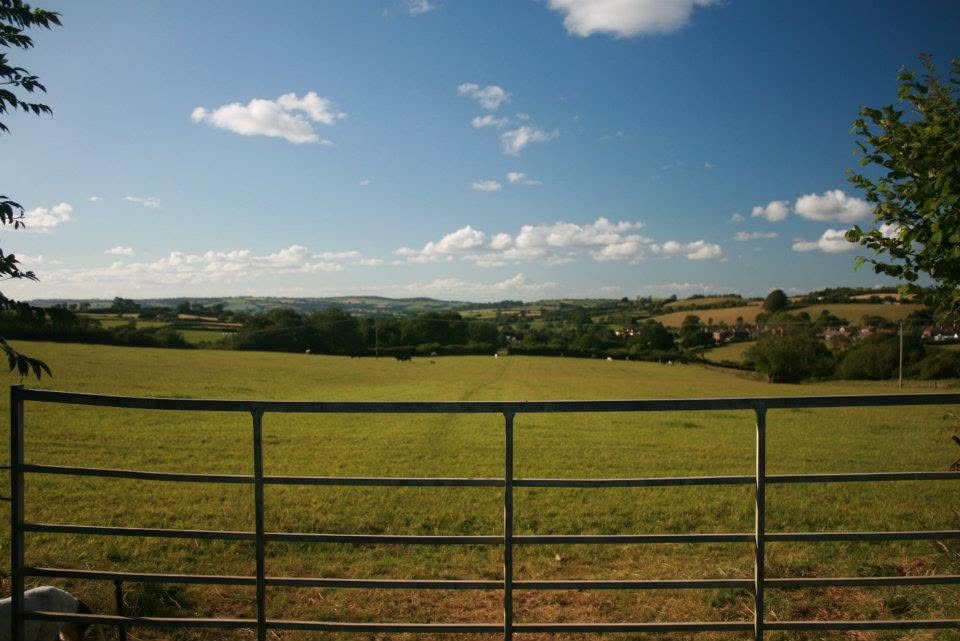
This morning, I walked out along the lane with Ruby and Edgar to a gate which reminded me of a poem by the Dorset dialect poet William Barnes (1801-1886).

The Geate A-Vallen To was apparently Barnes’ last dialect poem and it’s one I love because it was a favourite of older family members who, although from rural south Somerset, could do a pretty good rendition of the Dorset dialect.

There’s a YouTube link at the end of this blog to a chap reading the poem. His voice is far too posh but you get the gist. But I recommend trying it out yourself first by reading it aloud:

The Geate A-Vallen To

In the zunsheen of our zummers
Wi’ the hay time now a-come,
How busy wer we out a-vield
Wi’ vew a-left at hwome,
When waggons rumbled out ov yard
Red wheeled, wi’ body blue,
And back behind ‘em loudly slamm’d
The geate a’vallen to.

Drough daysheen ov how many years
The geate ha’ now a-swung
Behind the veet o’ vull-grown men
And vootsteps of the young.
Drough years o’ days it swung to us
Behind each little shoe,
As we tripped lightly on avore
The geate a-vallen to.

In evenen time o’ starry night
How mother zot at hwome,
And kept her bleazen vier bright
Till father should ha’ come,
An’ how she quicken’d up and smiled
An’ stirred her vier anew,
To hear the trampen ho’ses’ steps
An’ geate a-vallen to.

There’s moon-sheen now in nights o’ fall
When leaves be brown vrom green,
When, to the slammen o’ the geate,
Our Jenny’s ears be keen,
When the wold dog do wag his tail,
An’ Jean could tell to who,
As he do come in drough the geate,
The geate a-vallen to.

An’ oft do come a saddened hour
When there must goo away
One well-beloved to our heart’s core,
Vor long, perhaps vor aye:
An’ oh! it is a touchen thing
The loven heart must rue,
To hear behind his last farewell
The geate a-vallen to.

The Summer Solstice

It’s the summer solstice today, when the path of the sun in the sky is farthest north in the northern hemisphere.

It’s the longest day and the shortest night.

I’m in France at the moment and the scene yesterday evening was the calm before the storm.

Last night, it chucked it down, enough to fill up the wheelbarrow in the garden.

And it’s been raining on and off all morning. Not just drizzle but great big stair rods, drumsticks and knitting needles.

In England, there are blue skies and warmth, which makes a change from the wet conditions and cold nights that have resulted in a deluge of slugs and snails.

Strange happenings with the climate have got everyone talking, all over the world.

Yesterday at Stonehenge – the creation of which is inextricably linked to the summer and winter solstice sunrises – the ancient monoliths were sprayed in orange powder paint by climate activists demanding that the new government elected on 4 July legally commits to phasing out fossil fuels.

The climate emergency and the role of humankind in doing something about it is the biggest crisis facing our world today.

But to deface an ancient monument, albeit temporarily (protestors say the paint will wash off in rain) is probably not the best way of getting people to sit up and take notice. It’s counterproductive. All it does is outrage people, which is actually how we should be feeling about the climate crisis and the inability of our so-called leaders to save the world.

We must all do our bit. Rather than glue myself to a motorway, I’m currently allowing great swathes of mullein to grow in the garden in the most inconvenient places.

‘They’re weeds!’ a friend scoffed.

‘A weed is just a plant in the wrong place,’ I replied, rather self-righteously, gazing at all the mullein moth caterpillars chomping on the leaves and the bees buzzing around it in total ecstasy.

I’m lucky to have the space for the mullein but I think anyone with a garden does their bit for nature, with proper grass (not fake turf), flowers that the bees and butterflies love and inventive ways of dealing with slugs and snails rather than using the dreaded blue slug pellets, which killed off Edgar’s little sister when she was only a pup.

It’s easy to be overwhelmed with the magnitude of the climate crisis. But small things can make a difference, and do.

On the summer solstice, here’s to peace and harmony between nations, individuals and to all of us who want to leave the planet in a better state for the generations that follow us.