The Light of Experience

Today would have been my father’s ninety-ninth birthday.

He died in 2016, not long after he was ninety-one. It was a year my family won’t forget. We lost three close members in almost as many months.

It’s a sombre, sobering experience when that kind of thing happens. Makes you count your blessings for happier times and live for the day rather than dwelling in the past or worrying about the future.

My dad was a second generation tenant farmer from south Somerset, the middle of three sons. He was quiet, wiry and strong. He worked so hard it did his back in. He had an unbreakable connection to and affinity with the landscape, which he passed on to me and my four older siblings through osmosis.

We didn’t have many acres but he knew those fields like a dressmaker knows fabric and thread. Our small herd of Friesian cattle all had names – that was my mother’s doing, naming them after Native American tribes, exotic flowers and women from I Claudius.

He bred poultry – the rare breed Plymouth Barred Rocks, Barnevelders and Welsummers. His calves fetched top price at Taunton Market and he could spot a good heifer from a mile away.

My father was a prolific trickster, doing that thing people do with their thumbs, pretending to have sliced off the tip of his nose and then putting it back on again. He’d frighten me with spiders and challenge primary school friends to punch their way out of a paper bag by putting them into an animal feed sack.

He never went abroad until he retired, yet he hankered constantly for adventure. My mother told me that Dad had wanted to emigrate to Tasmania before I was born, but he never did. Too busy on the farm and with his growing family, I suppose. His younger brother was a Ten Pound Pom and emigrated to Australia in the 1960s, where their uncle had lived since the 1920s.

In the 1970s, my father somehow got the romantic notion that he wanted to be a tenant farmer in Ireland. During this period, he was an avid reader of the Irish Farmer magazine and the cow stalls hummed to the sound of Radio Athlone. But Ireland didn’t want him.

I’d forgotten this but my father was into world music before it was a thing. He loved The Chieftains (naturally, they were Irish) and the Romanian pan pipe player Gheorghe Zamfir, who came to prominence in the mid-1970s for the haunting theme to The Light of Experience, a BBC religious programme.

Gheorghe Zamfir in a video that could have come straight from The Fast Show.

Years before, I remember being in the kitchen at home and asking nobody in particular who it was that was playing Tom Hark on the radio.

Without hesitation, my father replied: ‘Elias and his Zig-Zag Jive Flutes.’

He was great at baking cakes. And his grandchildren will tell you that his egg and chips were the best we’ve ever tasted.

His shoes were the shiniest I’ve ever seen – ‘you can tell a lot from people’s shoes‘ – and he always wore a German belt that my grandfather had brought home from the First World War.

He loved the comedian Dave Allen (Irish again), boxing and Joan Bakewell.

Happy birthday, Dad.
A bit of a ding dong

The church bells are still silent in Lush Places.

Meanwhile, I’m in France where the church bells in our village chime the hour twice, every hour (it’s about to strike three o’clock and they’ll go dong, dong, dong. And then a break and then dong, dong, dong again).

But the bells here do shut up at night. However, during the day, at noon and at seven o’clock, they chime until they’re fit to burst, calling in the workers from the fields for lunch and evening meal respectively.

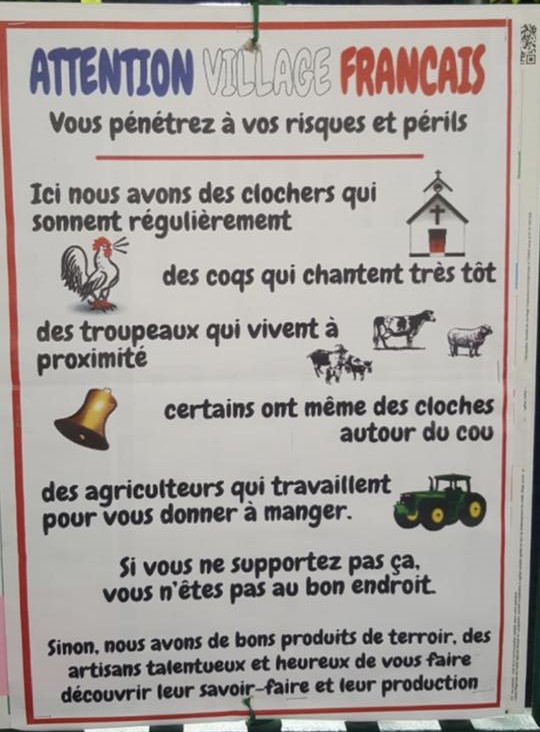
Last week, a former colleague reminded of a notice I’ve seen in many French villages, drawing outsiders’ attention to the perils of rural life.

This is the country where village signs up and down the land have been turned on their heads. This latest farmers’ protest alludes to having their own lives turned upside down by contradictory instructions. See the BBC story here.

I hope a solution can be found to the silencing of our village bells back in Dorset.

And wouldn’t it be wonderful if, in addition to the automatic hourly chiming being restored, a new team of bellringers steps forward to pull the ropes on Sundays and high days and holidays?

The bells aren’t rung on a Sunday at the moment because there’s no tower captain nor regular team of ringers.

It would be lovely if the positive outcome of the silence of the bells story was that volunteers joined forces for bellringing to happen once again.

The sound of silence

Well, that didn’t last long, did it?

This time last week, I was waxing lyrical about the arrival of spring and the long-missed sound of the chiming of the church clock on the hour.

I even wrote about its repair for my not-yet-published editorial in the parish magazine, which has gone to press but isn’t out yet:

It is a joy to see it working again and chiming the hour, too. It’s been a part of village life for so long, it’s like welcoming back an old friend.

And then that ‘old friend’ promptly turned around and fled.

You see, after just two days, the church clock was stopped from chiming.

Apparently, someone new to the village complained that it was keeping them awake.

I’m not angry but I am saddened and upset. Village life is precious and the clock has been there for generations, an aural reminder of the passing of time. It takes one person to complain and then the bell is cancelled.

Now I know there are more important things in the world to worry about right now, and I don’t wish to go all Wicker Man, but the chiming on the hour, all day and all night, has been part and parcel of this village for years.

Which is why it was such a delight to hear it again.

Could there be a compromise? Maybe the clock could chime the hour only during the day. Apparently, though, that comes at quite a cost. I’ve heard £2,000-plus mentioned. And I’m not happy that the church would have to pay that just to satisfy one complainant. I’m not prepared to chip in, either.

I live near the church and I can honestly say that the hourly chiming has never kept me awake. You become accustomed to the sound. Your brain tunes out.

I do hope church leaders can resolve the problem swiftly.

The arrival of Spring

There are rooks flapping overhead, twigs in their beaks and heading for nest-building central.

A pair of male blackbirds are sparring vigorously, spiralling in an upward and downward dance which goes unnoticed by drivers on their way to work and children who are late for school.

The daffodils and narcissi proclaim ‘we are here‘ and the tulips emerge from the soil, ready for their chance to shine further down the line.

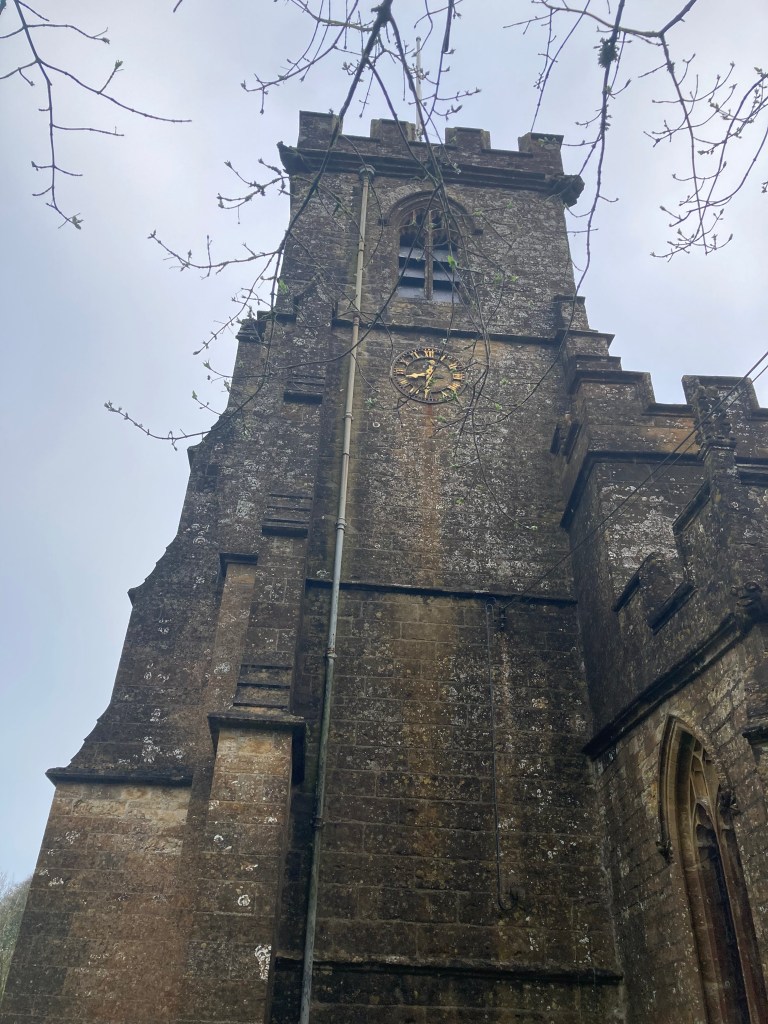
In Lush Places, someone has mended the church clock. It’s been stuck at the same time for ages and its chiming of the hour has been a thing of the past.

But then, on Sunday morning, I passed by just as it struck nine o’clock. It was if I’d suddenly been hurled into the present, the bell an aural reminder of the arrival of Spring.

After a sunny day here yesterday, with garden clearing a priority before the waste bin is collected this morning, the weather has turned grey and dismal. A meh sort of day.

But still the blackbird sings his joyful and mellow song, ostensibly to impress potential lady friends but, in our world, causing us to stop, close our eyes and soak up the sounds of nature.

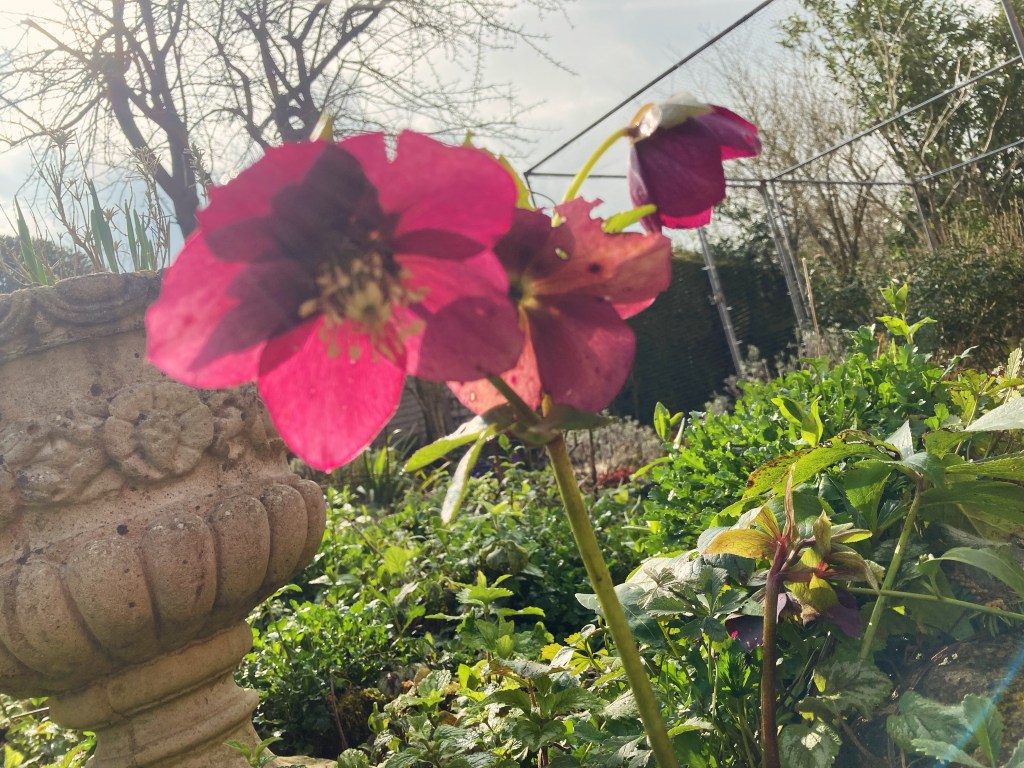
In the garden, the hellebores are doing their thing, which is truly wondrous.

Books: which are your favourites?

World Book Day was created by UNESCO on 23 April 1995 to celebrated books and reading.

It’s marked by more than a hundred countries.

In the UK and Ireland, the charity celebrates World Book Day on 7 March – today!

‘Our mission is to promote reading for pleasure, offering every child and young person the opportunity to have a book of their own. Reading for pleasure is the single biggest indicator of a child’s future success – more than their family circumstances, their parents’ educational background or their income. We want to see more children, particularly those from disadvantaged backgrounds, with a life-long habit of reading for pleasure and the improved life chances this brings them.’

World Book Day

It’s great to get children into books from an early age. Books take the young – and the old – to new worlds. The printed word and writers’ imagination allow us to go backwards or forward in time, and meet fictional and real-life characters from history.

There’s nothing quite like curling up with a good book.

As a child to my early twenties, I was an avid reader. And then life got in the way, until, about ten years ago, I reignited my love affair with books, and novels in particular.

Back in the day, I read Enid Blyton’s Tales of Long Ago, which filled me with a longing for stories from Greek mythology. And then it was magical things like The Lion, The Witch and The Wardrobe, The Princess and the Goblin and The Hobbit.

At school, I loved Under Milk Wood by Dylan Thomas. Still do.

In my early twenties, it was anything by Ray Bradbury, John Steinbeck or F. Scott Fitzgerald.

My two favourite novels are Fitzgerald’s The Great Gatsby and Bradbury’s Something Wicked This Way Comes. And I love the Steinbeck collection of linked short stories, The Pastures of Heaven.

These days, I’m into witty and thoughtful reinterpretations of the Greek myths, such as Natalie Haynes’s Stone Blind: Medusa’s Story and Madeline Miller’s Circe, historical fiction like The Bookbinder of Jericho by Pip Williams and Once Upon A River by Diane Setterfield.

I’m very keen on Elizabeth Strout, Stephen King, Rachel Joyce and Barbara Kingsolver and literary fiction by John McGregor and Max Porter.

I love a good thriller, I’m not at all keen on chick lit or romance, and, most of all, I adore a quiet, coming-of-age novel set in small-town settings, such as Ordinary Grace by William Kent Krueger, To Be Sung Underwater by Tom McNeal, Go As A River by Shelley Read and Black Swan Green by David Mitchell. Although I hated Where The Crawdads Sing. I think it was the melodrama I didn’t like.

At the moment, I’m reading an advance reader copy of Sarah Perry’s Enlightenment. So far, it’s a good ‘un.

What’s on your reading list?