A quirky charity shop find and rising Facebook ‘likes’

I have writer profiles on both Facebook and Instagram.

I used to have Twitter but evacuated that platform after You-Know-Who took it over and it became a hate-filled place. It’s a shame because I’d had some very pleasant years when I actually met really nice people in actual person at local ‘Tweet-ups’.

I toyed with Threads for a while but couldn’t really see the point. I’m pretty sure my Instagram posts are shared there automatically but I never look to check.

I like Instagram and the pretty grid of photoes but I don’t have many followers. And a lot of the things I follow seem vacuous and self-indulgent, a carefully-curated ‘country life’ style that’s not really for someone like me. I’m from a rural working class background in south Somerset and can spot a London luvvie fake a mile off.

It’s my Maddie Grigg Facebook page where the feedback magic seems to happen.

And why does this matter? Because I need to spread the word now I have an indie-published novel out. (Plashy Fen, in case you missed it.) And it’s good to engage with my reader base where they hang out and have a conversation.

This week, I was astonished when a picture and a story about a cute charity shop purchase hit more than one hundred ‘likes’ on my Facebook page and generated some warm-hearted comments.

It’s still going up.

Have I been targeted by good natured bots? I don’t think so, but who knows the vagaries of algorithms and what jumps out at Facebook users as they scroll past all the rubbish adverts on their feed.

Anyway, I’m reproducing the words and picture below. If you’re reading this, maybe you can tell me how I can keep up this engagement, because I’m darned if I know how to do it.
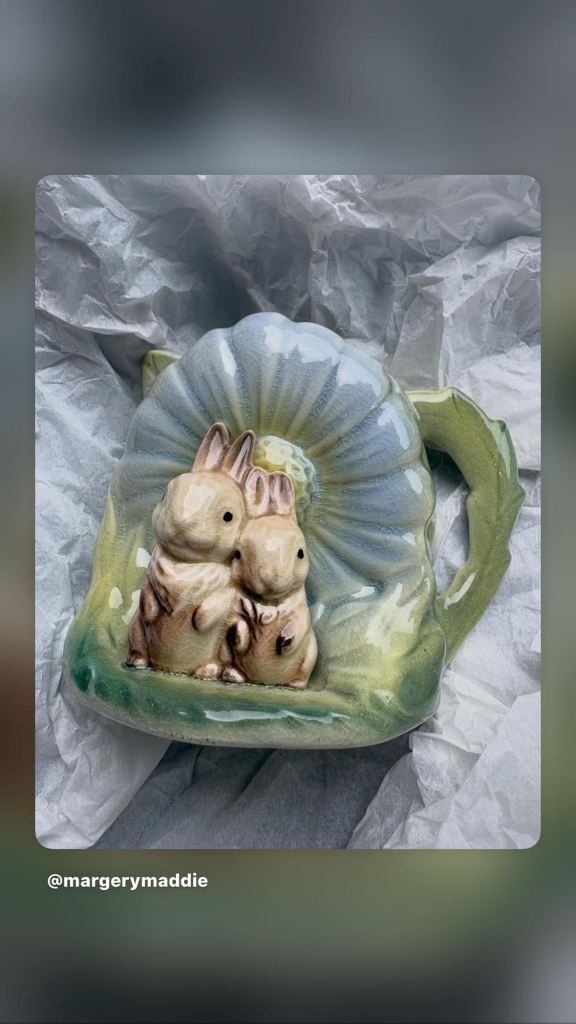
I saw this in a charity shop window in Ilminster and bought it for someone as a Christmas gift – but then decided to keep it myself. 🤣 Well, it is so sweet and reminds me of a vase we used to have at home when I was growing up.

It was an interesting morning in the town – just a mile or so from the farm where I was born and brought up. I saw an older woman in the most fantastic outfit, which included trousers in a leopard skin print. I commented on her fabulous ensemble and she promptly returned the compliment with a smile.

I then saw a couple of older ladies chatting outside the wonderful Ilminster Emporium (which used to be Dyers’ drapery and clothing shop, and still has the Pretty Polly parrot I remember from childhood). Anyway, they both looked very pretty in pink and I politely interrupted their conversation to compliment them on their incredible coats.

We then began rabbiting on and they told me they were 85 and had known each other since they were very small children. I asked them if they were brought up around Ilminster and they both were. So when I said I was too, they asked my family name. Turns out they remembered my late aunties and my mum. It it was just lovely. Sometimes you just have to stop and talk to people at random. It’s good for the soul.

And the rabbit jug will always remind me of a cheerful day.

#charity #charityshopfinds #rabbit #somerset #china

If you have ideas on how I can follow this Facebook post, please let me know. In the meantime, have a good week.

Love, Maddie x
Apple Day

There are Apple Days being advertised here in West Dorset and, of course, just over the border in Somerset.

The tradition dates to 21 October 21 1990 when the first Apple Day was held in the old Apple Market in London’s Covent Garden, bringing fruit back there for the first time in 17 years.

The idea was developed by Dorset-based charity Common Ground, as a way of celebrating our most versatile fruit.

It’s a scrumptious time of year and sends me back to my childhood days when we had an orchard on the farm in South Somerset.

Most of the trees had been planted by my grandfather for cider, although there was the odd one or suitable for eating.

In the Second World War, the farm was a bit of a magnet for American soldiers keen on sampling the amber nectar.

In later years, when Grampa stopped making his own, the apples were sent to Perry’s Cider, at nearby Dowlish Wake.

If you’re ever down this way, it’s definitely worth visiting Perry’s. It has a small museum, cider tastings, a great cafe and a farm shop.

There is an orchard in my novel, Plashy Fen, next to a field where the three Symes brothers live in separate caravans. Dave goes rabbiting with his ferrets up on Bluebell Hill, Jacko is silent and bedbound and looked after by village heroine, Lindy Vickery. The eldest of the three, Tom Symes, is the nurturer of the apples.

Back in the Eighties, their father had resisted all attempts to grub out the orchard like the other farmers had done. People had laughed at their father then, calling him old-fashioned and lazy. Old-fashioned, maybe, but you could never call Adam Symes lazy. Just respectful of the old ways. And now people, new people, were emulating that approach to farming as if no one had ever thought of it before. Bloody blow-ins.

I’m grateful for the help of local cidermaker Nick Poole, who wrote a book with Liz Copas called The Lost Orchards: Rediscovering the Forgotten Cider Apple of Dorset.

Nick – who I’ve known for years – was so generous in sharing his knowledge and love of apples local to the West Dorset area. And he allowed me to use his own words – verbatim – to describe the apples that he – and Tom- love the most.

Here’s a passage from the novel, with Nick’s words incorporated:

One of the family’s favourites was the Symes Seedling, which Great-Grandpa had invented. Like a Tom Putt for cider making but closer to a King’s Favourite in shape, its skin a yellowish green with red streaks most dense around the stem.

Best of all, though, was Golden Ball. Tom always felt a bit bad for thinking that, as his loyalty should have been with the Symes Seedling. But there you were, there was no accounting for taste. Golden Ball was the stuff of legend, standing head and shoulders above all other apples known to mankind.  It was a properly handsome apple, changing through the season from dull greens to red flush, finally arriving in all its glory as a true golden orb with a delicate brown latticing by late October. It made excellent cider.

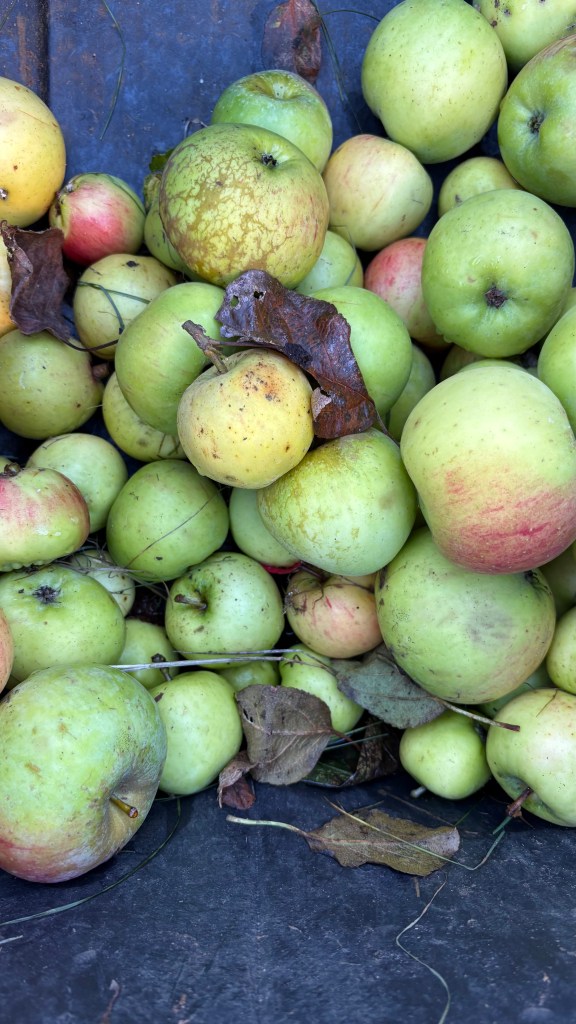
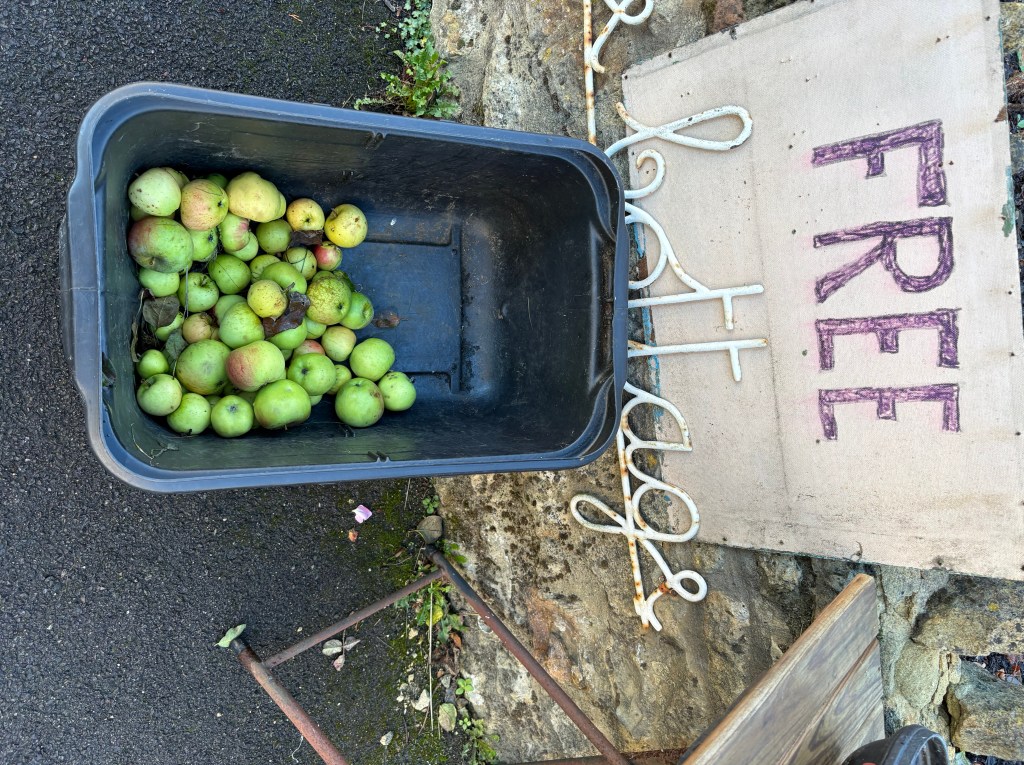
I’ve just picked up some cooking apples from the top of my village. Not scrumped, you understand, but to make the most of a box marked ‘FREE’.

Time to make apple crumble, I think.

Have a great weekend.

Love, Maddie x

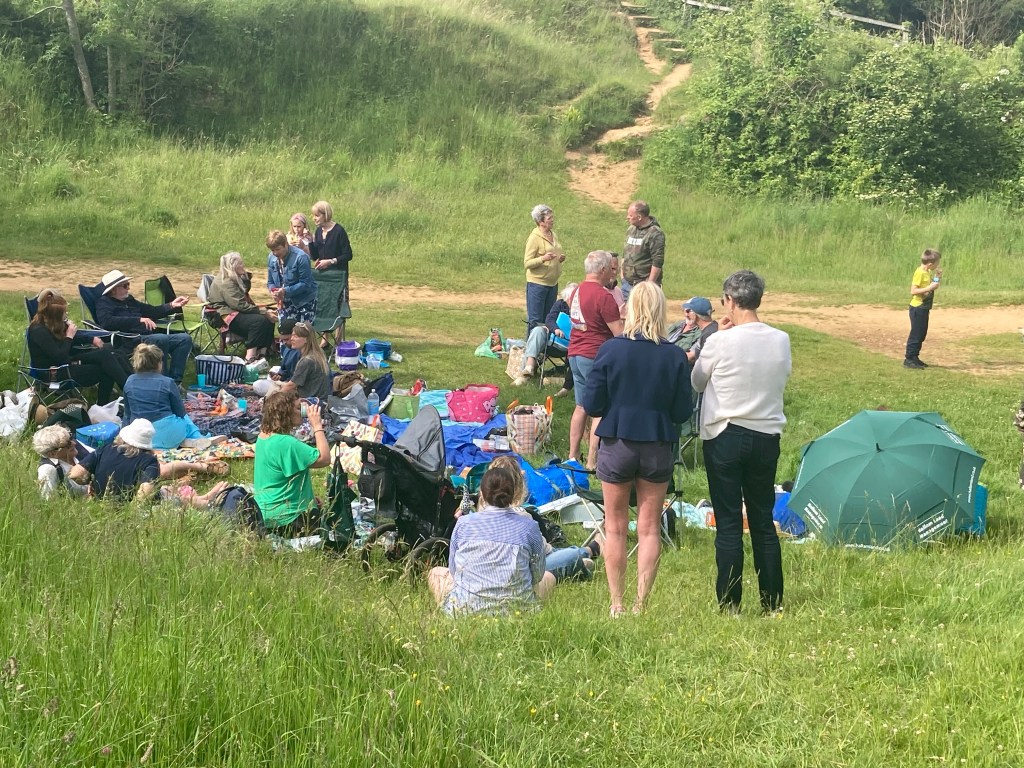
The annual family picnic

One day, many years ago, we were at a family funeral on my mother’s side when one of my cousins made a suggestion.

Instead of meeting up with our extended family only at weddings and funerals, why not have an annual family reunion?

Many people do something similar but it’s usually in someone’s garden or house, which can mean that one person or family spends hours getting the place spick and span and is then chained to a teapot all afternoon.

My cousin’s idea was to meet on the second Sunday in June for a picnic each year at Ham Hill Country Park in South Somerset.

This was always a favourite spot for us as children in the 1960s, back in the days when it wasn’t even called a country park but was just a place we knew where we could go and have fun, running up and down the paths or sliding down the hillocks in animal feed bags.

This ancient disused quarry, which was famous for its honey-gold hamstone, is now very popular, but there’s still plenty of space for everyone to enjoy.

My mother, who is 98, presides in a picnic chair over the proceedings, and hands around a clipboard for us to ‘sign in’. This year there were around forty of us in attendance.

Numbers have fluctuated over time – apparently seventy went one year -but there is no pressure. If you can be there, great. But if you can’t, it doesn’t matter.

All that’s required is for you to bring your own picnic, chairs or a rug, and make sure you’re wearing a hat, sunglasses and sun cream. We always meet in the same spot in a grassy hollow. Woe betide any outsider sitting there before the family arrives, like a Greek chorus emerging on to a stage in twos and threes and fours.

There have been years when we’ve shivered in the cold, sheltered under a gazebo in the rain or just chilled out.

This year, the weather was just right – cloudy sun, according to my weather app – and instead of molassine meal and cow cake sacks, the dog food bags came in handy for a bit of imprompt sledging down the hillocks

Every year I’m asked what time the pincic starts and every year I forget and have to ask my mum.

It’s a highlight of early summer, and I’m hoping that with new additions joining the extended family each year, we’ll all want to continue this very special tradition.

It’s very special to see second cousins being coy at first and then cosying up like they’ve known each other forever.

We are family.

The Light of Experience

Today would have been my father’s ninety-ninth birthday.

He died in 2016, not long after he was ninety-one. It was a year my family won’t forget. We lost three close members in almost as many months.

It’s a sombre, sobering experience when that kind of thing happens. Makes you count your blessings for happier times and live for the day rather than dwelling in the past or worrying about the future.

My dad was a second generation tenant farmer from south Somerset, the middle of three sons. He was quiet, wiry and strong. He worked so hard it did his back in. He had an unbreakable connection to and affinity with the landscape, which he passed on to me and my four older siblings through osmosis.

We didn’t have many acres but he knew those fields like a dressmaker knows fabric and thread. Our small herd of Friesian cattle all had names – that was my mother’s doing, naming them after Native American tribes, exotic flowers and women from I Claudius.

He bred poultry – the rare breed Plymouth Barred Rocks, Barnevelders and Welsummers. His calves fetched top price at Taunton Market and he could spot a good heifer from a mile away.

My father was a prolific trickster, doing that thing people do with their thumbs, pretending to have sliced off the tip of his nose and then putting it back on again. He’d frighten me with spiders and challenge primary school friends to punch their way out of a paper bag by putting them into an animal feed sack.

He never went abroad until he retired, yet he hankered constantly for adventure. My mother told me that Dad had wanted to emigrate to Tasmania before I was born, but he never did. Too busy on the farm and with his growing family, I suppose. His younger brother was a Ten Pound Pom and emigrated to Australia in the 1960s, where their uncle had lived since the 1920s.

In the 1970s, my father somehow got the romantic notion that he wanted to be a tenant farmer in Ireland. During this period, he was an avid reader of the Irish Farmer magazine and the cow stalls hummed to the sound of Radio Athlone. But Ireland didn’t want him.

I’d forgotten this but my father was into world music before it was a thing. He loved The Chieftains (naturally, they were Irish) and the Romanian pan pipe player Gheorghe Zamfir, who came to prominence in the mid-1970s for the haunting theme to The Light of Experience, a BBC religious programme.

Gheorghe Zamfir in a video that could have come straight from The Fast Show.

Years before, I remember being in the kitchen at home and asking nobody in particular who it was that was playing Tom Hark on the radio.

Without hesitation, my father replied: ‘Elias and his Zig-Zag Jive Flutes.’

He was great at baking cakes. And his grandchildren will tell you that his egg and chips were the best we’ve ever tasted.

His shoes were the shiniest I’ve ever seen – ‘you can tell a lot from people’s shoes‘ – and he always wore a German belt that my grandfather had brought home from the First World War.

He loved the comedian Dave Allen (Irish again), boxing and Joan Bakewell.

Happy birthday, Dad.