There have been some stinkers in my reading material of late, so I’m delighted to share with you two five star reviews for two very different novels.
Books have taken a little bit of a back seat in recent months as I put the finishing touches to my own novel, Plashy Fen, which will be out very soon, and research a narrative non-fiction story about the ancestor I share with that titan of 20th century American literature, Ernest Hemingway.
But it gives me great pleasure to recommend both these novels, which are well worth a read.
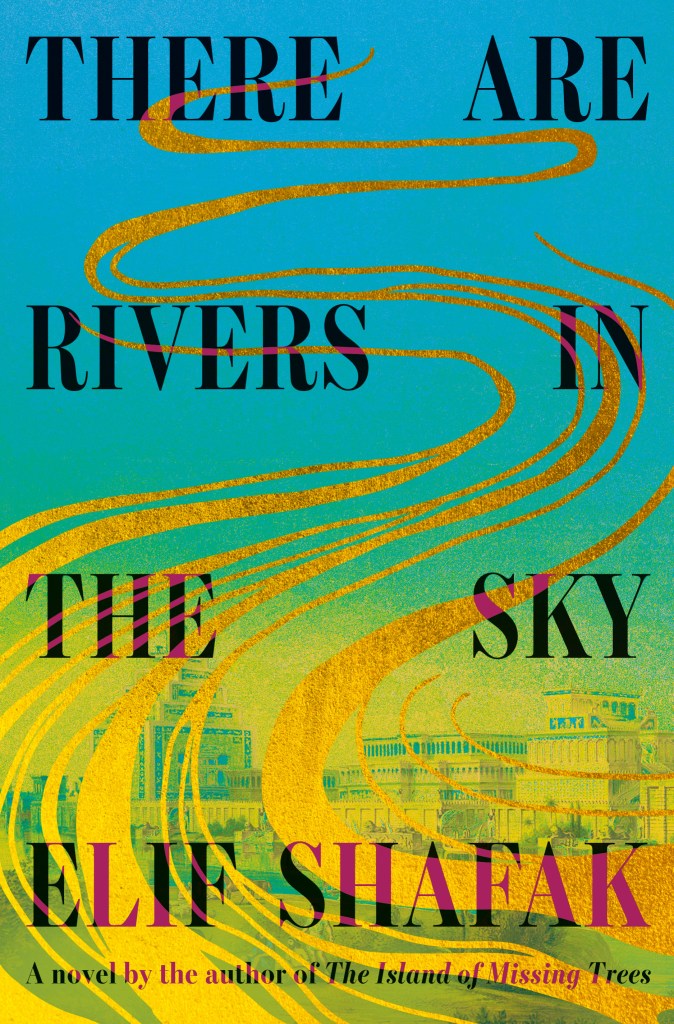

There Are Rivers In The Sky by Elif Shafak *****
(Contemporary fiction combining historical fiction, 446 pages)
This is the most extraordinary book – and a long one for me to find myself completing with great relish.
It’s difficult to summarise the plot but here goes:
After a prologue set in the ancient past, the novel follows three timelines focusing on three characters inexorably linked by a single drop of water.
We have Arthur, who was born and raised in the Victorian slums next to the Thames but possesses an incredible mind. He learns how to decipher ancient texts at the British Museum and becomes obsessed with the Epic of Gilgamesh, a poem written in Mesapotamia during the late 2nd millennium BC. He makes it his life’s quest to find the poem’s missing pieces, out in the dusty field.
And then there is Narin, a Yazidi girl living in Turkey in 2014, and Zaleekhah, a hydrologist who lives on a houseboat in London in 2018.
They lead entirely different lives but their stories are intertwined, with the past catching up with them all.
This is such a big concept book, but told intimately through the stories of the three protagonists. Beautifully written -a novel which will stay with me for a long time.
Lucie Dumas by Katherine Mezzacappa *****
(Historical fiction, 234 pages)
Katherine Mezzacappa is a voracious writer who has a real knack for finding fascinating true stories and characters from the past and turning them into literary gold, as her novel, The Virgin of Florence (2024), demonstrates.
Lucie Dumas was a real person, a young woman we would never have known were it not for Mezzacappa’s meticulous research and imaginative storytelling skills.
And it’s a good job, because Lucie’s story is important, particularly in an age where misogyny is still alive and well and living like a king, even in 2026.
Lucie is a ‘fallen’ woman, cast out of her native France and separated from the child she bore to become a prostitute in 19th century London.
She encounters many hardships and is then ‘rescued’ by a famous writer, Samuel Butler – to whom she refers as The Monsieur – who ‘keeps’ her in a modest house (with a maid) where she entertains him and other gentleman callers.
Lucie is never a victim but her tale unfolds quietly and with great dignity, a pawn in a world where men take centre stage and women are meant to fit in as they should.
The storytelling and writing are remarkable. I’d gone off historical fiction a bit but Mezzacappa has restored my faith in the genre.
This is a novel which means a great deal -it gives Lucie Dumas a voice and one with which we, the reader, empathise, giving us an unusual and important insight into the place of women in Victorian society.