So, was it worth driving an hour there and back to see The Odyssey on the big screen?
Yes. A definite yes.
I thoroughly enjoyed this Christopher Nolan version of Homer’s epic, with its monster-laden voyage to mythical Ithaka led by a grizzled Matt Damon.
When I read The Odyssey many moons ago, I really felt that yearning for home, the pull of place. However, in the film, Odysseus is reluctant to return, his battle scars heavy and his guilt at the decisions he has made pulling at his internal heart strings.
Classicists will point out deviations from the original poem but you wouldn’t know if you hadn’t read it. And it’s a film, which has a totally different way of telling a story.
Personally, I felt sorry for poor old Corfu in that the hero’s penultimate destination and the delightful Princess Nausikaa don’t put in an appearance.
Scheria, the home of the seafaring Phaeacians, is widely thought to have been Corfu and the Ionian island makes no secret of this connection with one of the greatest stories ever told.
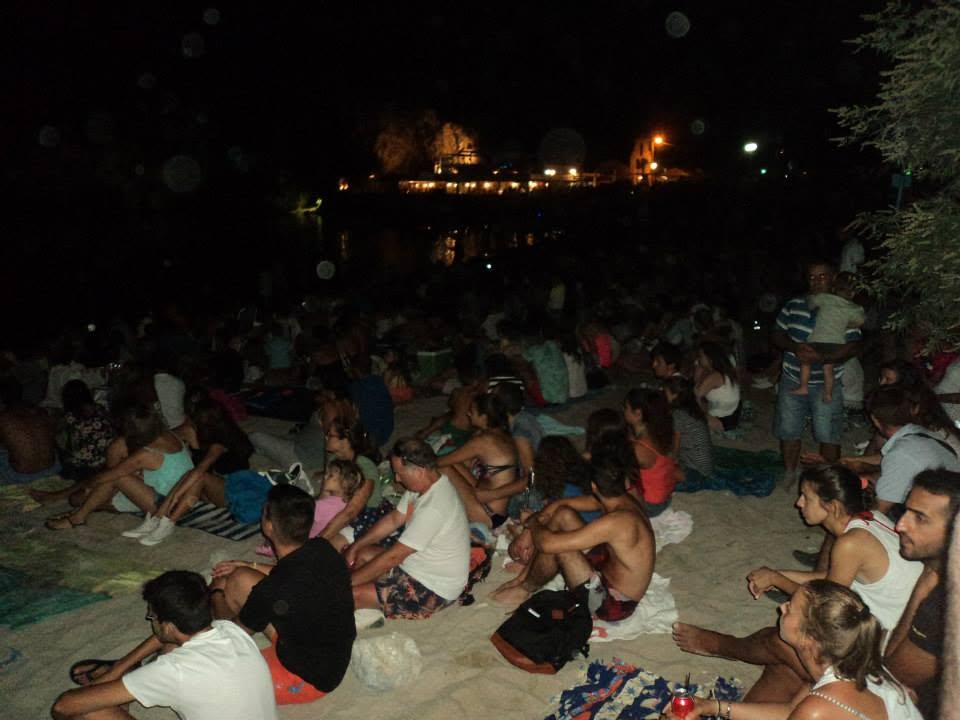
The beach at Paleokastritsa, Corfu, in August 2015 for the Varkarola re-enactment of Odysseus shipwrecked on Scheria
So Corfu won’t benefit from the film at all, while tiny, rocky, inaccessible Ithaka must be preparing itself for an influx of movie fans.
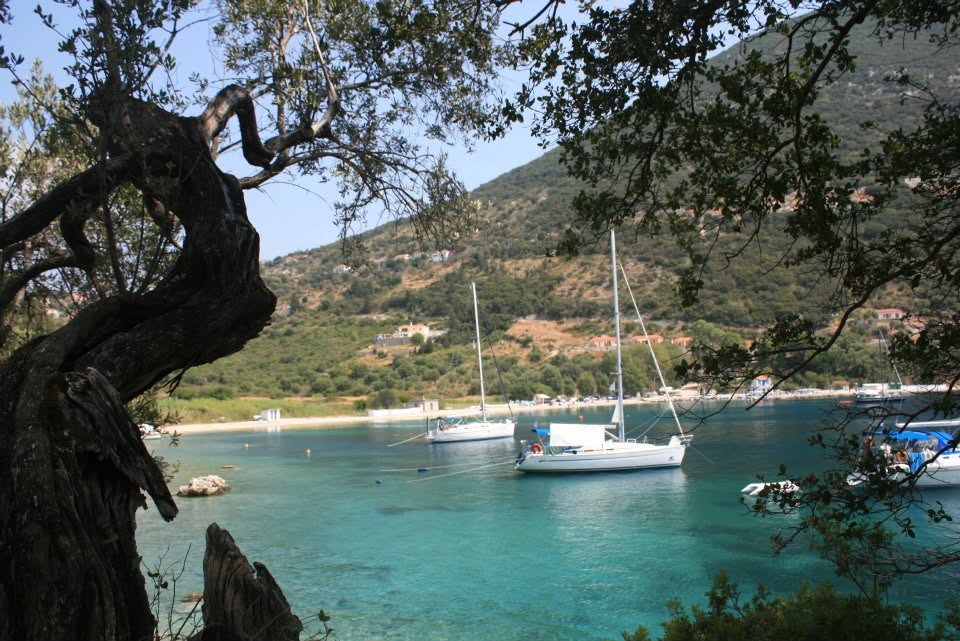
The beach at Polis, Ithaka.
There are many five stars reviews of The Odyssey and discussions over the peripheral role of women in the movie. I’m giving it four because nothing is perfect.
I take on board the complaints about the subordinate depiction of the female sex in the film and jettisoning some of Homer’s nuance, but it was ever thus.
If you went looking for a feminist angle in Nolan’s film then you’d be looking in the wrong place. However, I adored Samantha Morton’s portrayal of Circe and the way she dealt with Odysseus’s greedy crew. I won’t spoil it but the scene is a satisfying shocker.
While the women in the film don’t actually do very much, I did get the overriding sense of male selfishness, power and the endless search for dominance through senseless war, which hasn’t changed since ancient times.
There were a couple of wincing moments for me, such as Odysseus’s son talking about ‘my dad’ and the Laestrygonians emerging through the tall trees in the forest in a scene worthy of Monty Python and The Holy Grail and the Knights who say Ni.
But, all in all, The Odyssey is a story well told, both visually and orally, with the poem’s episodic scenes all working seamlessly from the outset, with Odysseus telling the tale of his voyage to Calypso until he is finally ready to leave her island after seven long years.
And despite the film lasting nearly three hours, the time just romped by.
If you do go and see it, let me know what you think.
It will be my last review for the HNS because I have other irons in the fire, which I must pull out at some time to check if they’ve reached the correct temperature.
I’m still a reviewer for NetGalley, and I’ve just finished this:
(Due to be published by Harper Collins 25 September 2025)
Set just after the First World War, The Naked Light tells a a dark story of life in a small rural village where the inhabitants feel protected by the Face, a simple and ancient chalk image on a hillside, which acts as a kind of amulet against evil.
We follow the fortunes of beautiful spinster, Florence, her precocious and unsettling niece, Phoebe, and a female artist called Kit, who is haunted by the disfigured soldiers from her war work and moves into an old cottage which used to be the home of the Bone family, who were custodians of the Face.
The Naked Light is a slow burner, but a fascinating story of womanly love, darkly Gothic in places and peppered with a heavy dash of country folklore, which serves as allegorical device bringing home the horror of war and its effects on a small community.
Bridget Collins is imaginative and writes beautifully. This is a novel that will stay with me for some time but I struggled to like or understand some of the main characters, hence my giving it three stars.
Films worth watching (or not)
I’ve watched three films recently, only one of which I actually enjoyed (in the main).
As you’d expect, Happy Gilmore 2 is the sequel to Happy Gilmore, a sports comedy film from 1996 which Mr Grigg particularly enjoyed because it involved lots of whacking. And I quite liked the original because of the underdog-conquering-stuffy-establishment-vibe (think Eddie the Eagle and Dream Horse, two excellent examples of the genre).
Happy Gilmore 2 sees Adam Sandler reprise his role but now as a winner down on his luck. He’s a widower, an alcoholic and hasn’t played golf for years but is forced into it because his talented daughter needs to go to dance school.
I’m not keen on anything with Sandler in it and this film relies heavily on in-jokes and characters from the first movie. If, like me, you’ve forgotten those, then you’ll probably sit in front of the screen po-faced and reaching for the fast-forward button.
I can’t recommend the film but I was fascinated that Sandler recruited his wife and two daughters for peripheral roles. Keeping it in the family led me down a long internet rabbit hole which was far more enjoyable than the film.
The fourth film in the slapstick crime franchise, in which the late Leslie Nielsen made the role of cop Frank Drebin his own back in the 1980s (I just loved Police Squad!, the American comedy crime series on which the films were based), sees Liam Neeson playing Frank’s son, Frank Drebin Jnr.
If you like corny jokes, seeing Neeson stumbling around in a ridiculous setting and a plot as far-fetched as the way in which politics is going all over the world, you’ll love this. The only similarity between the two actors is their names.
I’ve never been able to take Neeson seriously since I saw him as Zeus in the dreadful 2010 remake ofClash of the Titans, where he utters the immortal line: ‘Release the Kraken’ to unleash the monster onto poor, chained-up Andromeda.
This line has been used many times during lock-ins at the Lush Places pub, although I hasten to add that lock-ins there, now it’s a community pub, are a thing of the past.
Mind you, these days, Neeson, who was in the Oscar-winning Schindler’s List (1993), doesn’t seem to take himself too seriously either, playing recent roles with as much depth as a half-inch ruler.
But I did like him in the action thriller In The Land of Saints and Sinners (2023), set in a very beautiful and stark Donegal. He plays a quiet contract killer in this surprisingly moving film.
However, I digress. The Naked Gun is terrible, apart from having ex-Baywatch beauty Pamela Anderson in the same sort of role that Priscilla Presley (who makes a cameo appearance in the latest film) played in the original.
Pam is now 58 and still a stunner, embracing the ageing process both boldly and beautifully, a shining, make-up free beacon for older women rejecting the relentless barrage of turning back time.
So I’ll let them both off for having a laugh, even if the audience is not splitting its collective sides.
This takes a while to get going but it’s a lovely film, starring Naomi Watts as Iris, a writer coming to terms with the death of her friend and mentor, Walter, a louche author played by Bill Murray.
Set in New York, Iris finds it hard to grieve for Walter and is bottling-up her emotions. All around her, the women that were close to him have their own agendas when it comes to mourning, and seem to be expressing themselves much better than she can.
Iris has been tasked, along with Walter’s daughter, with putting together a book of his letters, but she’s struggling.
It’s not just writer’s block, but something that goes deeper.
Things begin to change when she finds herself having to look after Walter’s dog, Apollo, a Great Dane ‘the size of a pony’, which dominates her small apartment and her life.
The performances, sentiments and storyline, are lovely, particularly Bing as the massive, mournful dog.
I’ve never had a hankering for a Great Dane but I do now.
A long film (120 minutes), but definitely worth a watch. Gentle, heartwarming and touching on universal themes in a understated and layered way.