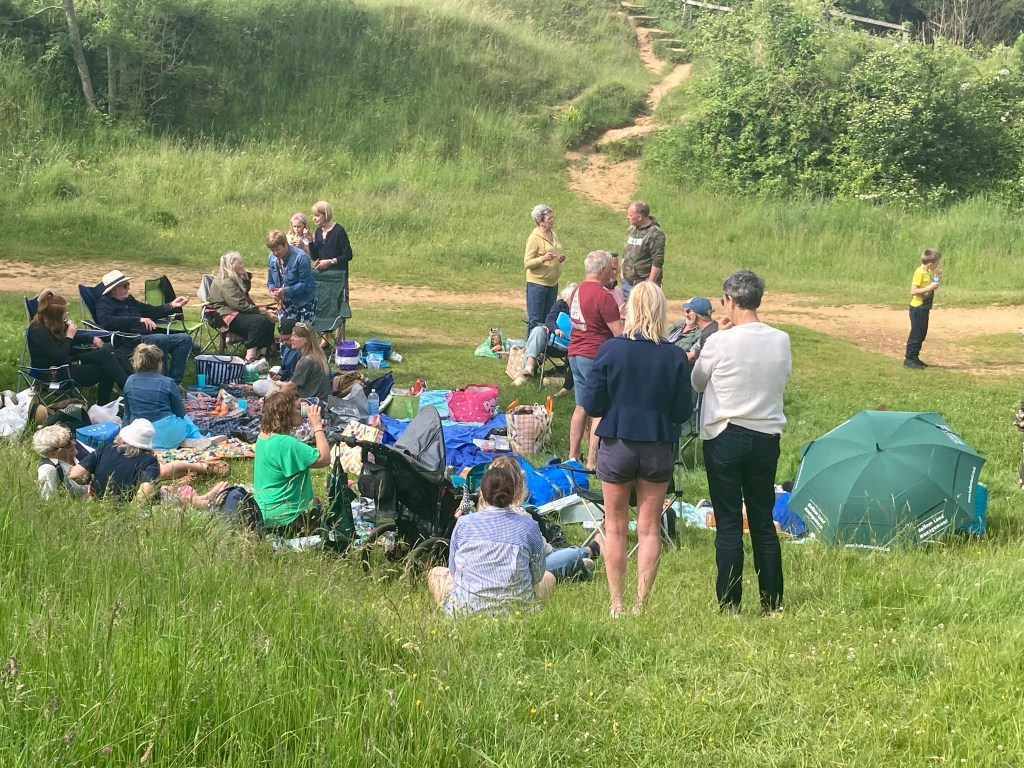
The annual family picnic

One day, many years ago, we were at a family funeral on my mother’s side when one of my cousins made a suggestion.

Instead of meeting up with our extended family only at weddings and funerals, why not have an annual family reunion?

Many people do something similar but it’s usually in someone’s garden or house, which can mean that one person or family spends hours getting the place spick and span and is then chained to a teapot all afternoon.

My cousin’s idea was to meet on the second Sunday in June for a picnic each year at Ham Hill Country Park in South Somerset.

This was always a favourite spot for us as children in the 1960s, back in the days when it wasn’t even called a country park but was just a place we knew where we could go and have fun, running up and down the paths or sliding down the hillocks in animal feed bags.

This ancient disused quarry, which was famous for its honey-gold hamstone, is now very popular, but there’s still plenty of space for everyone to enjoy.

My mother, who is 98, presides in a picnic chair over the proceedings, and hands around a clipboard for us to ‘sign in’. This year there were around forty of us in attendance.

Numbers have fluctuated over time – apparently seventy went one year -but there is no pressure. If you can be there, great. But if you can’t, it doesn’t matter.

All that’s required is for you to bring your own picnic, chairs or a rug, and make sure you’re wearing a hat, sunglasses and sun cream. We always meet in the same spot in a grassy hollow. Woe betide any outsider sitting there before the family arrives, like a Greek chorus emerging on to a stage in twos and threes and fours.

There have been years when we’ve shivered in the cold, sheltered under a gazebo in the rain or just chilled out.

This year, the weather was just right – cloudy sun, according to my weather app – and instead of molassine meal and cow cake sacks, the dog food bags came in handy for a bit of imprompt sledging down the hillocks

Every year I’m asked what time the pincic starts and every year I forget and have to ask my mum.

It’s a highlight of early summer, and I’m hoping that with new additions joining the extended family each year, we’ll all want to continue this very special tradition.

It’s very special to see second cousins being coy at first and then cosying up like they’ve known each other forever.

We are family.
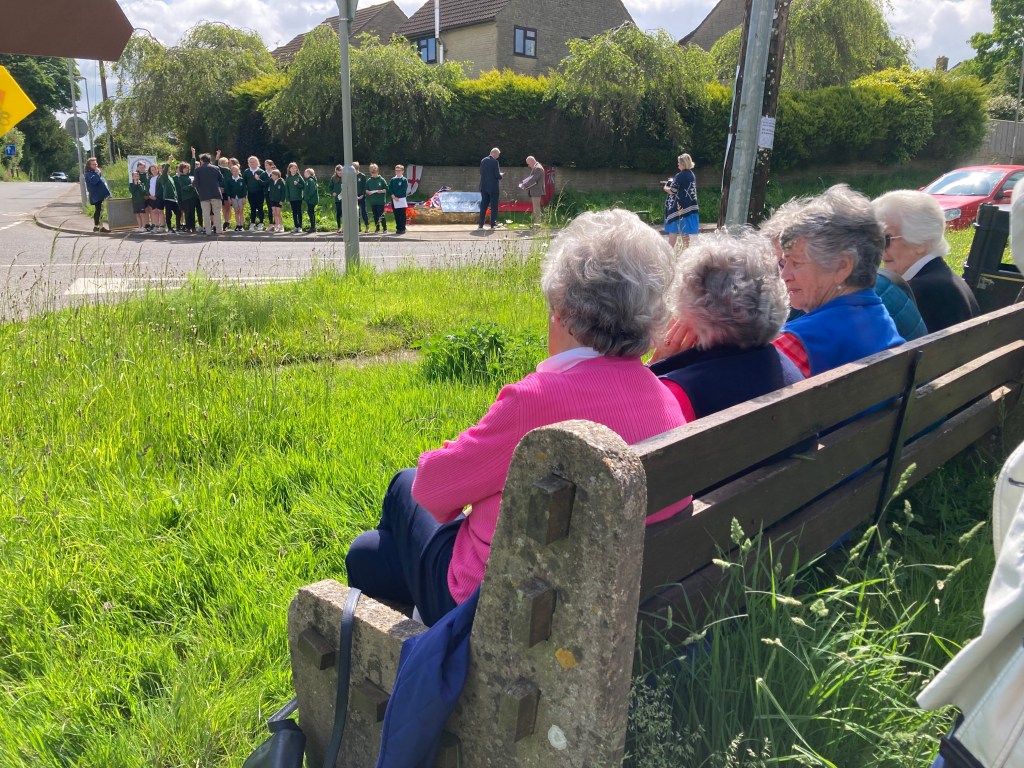
D-Day commemorations

Under a vivid blue sky, on the 80th anniversary of D-Day, children from the village primary school walked up with their headteacher to the new war memorial.

They stood at the corner of the crossroads as our parish council chairman spoke about the events that led up to the largest naval, air and land operation in history on 6 June 1944.

A crowd of villagers stood (and sat) on the other side of the road to listen.

And then four pupils took it in turns with a microphone to relay their own research about the momentous event which changed the course of the Second World War.

Codenamed Operation Overlord, the amphibious assault landed nearly 160,000 Allied soldiers and 10,000 vehicles on five Normandy beaches by the end of the day.

According to the BBC, as many as 4,400 troops died from the combined allied forces on D Day alone. Some 9,000 were wounded or missing.

Total German casualties on the day are not known, but are estimated as being between 4,000 and 9,000. Some 200,000 were captured as German prisoners of war. 

Thousands of French civilians died, mainly as a result of the bombing raids of the allied forces.

By August 1944, all of northern France had been liberated.

Today, a large crowd of villagers watched as the ceremony took place. Cars and vans drove past, birds sang in the bushes and trees. A gentle breeze blew the grass and wild flowers on the verges to and fro.

The outgoing chairman of the parish council read out the names of all those in our parishes who lost their lives in the two world wars. The litany echoed along the village’s streets.

Tonight at 6.30pm, church bells will ring out across the land. Beacons will be lit to commemorate and remember. Ours, which was put up on the village allotments for one of the late Queen’s jubilees, will be lit at 9.15pm.

Today, the world still faces tyrannical leaders and pointless wars.

World War II veteran Jack Hemmings, who attended the ceremony today at Gold Beach, summed it up when he said: ‘The older you grow, the more you realise human beings are pretty stupid really.

‘Today, national leaders are waging wars to gain land. It’s barmy, there are enough problems in the world without having to make your neighbour a problem.’

A taste for the grotesque

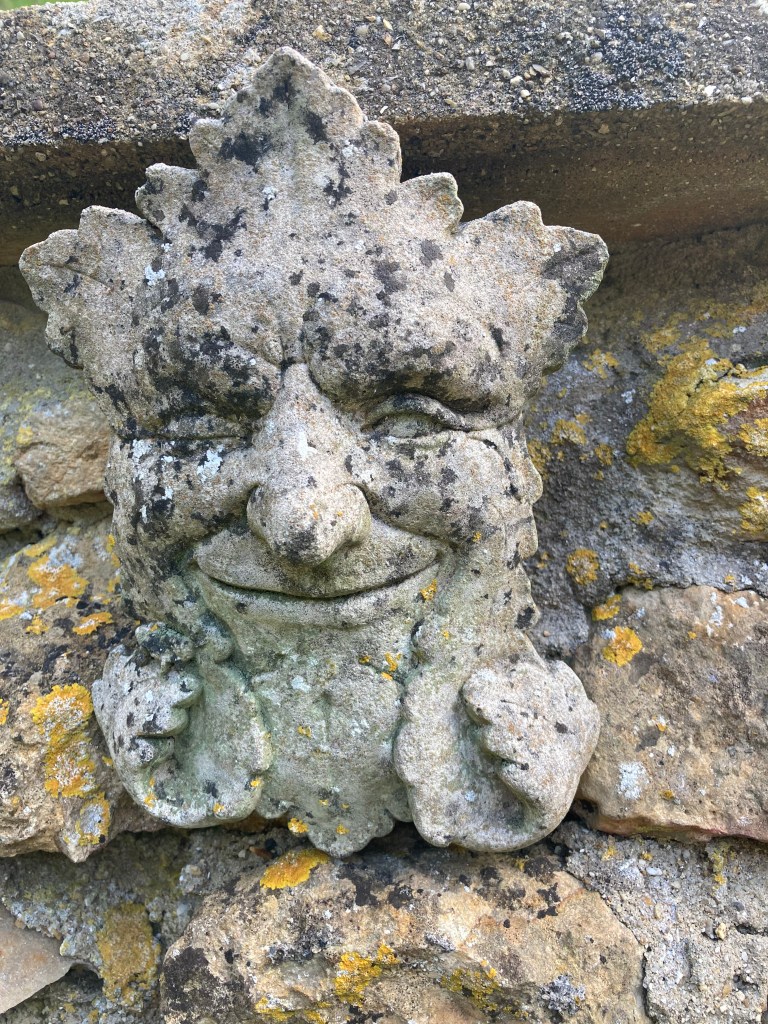
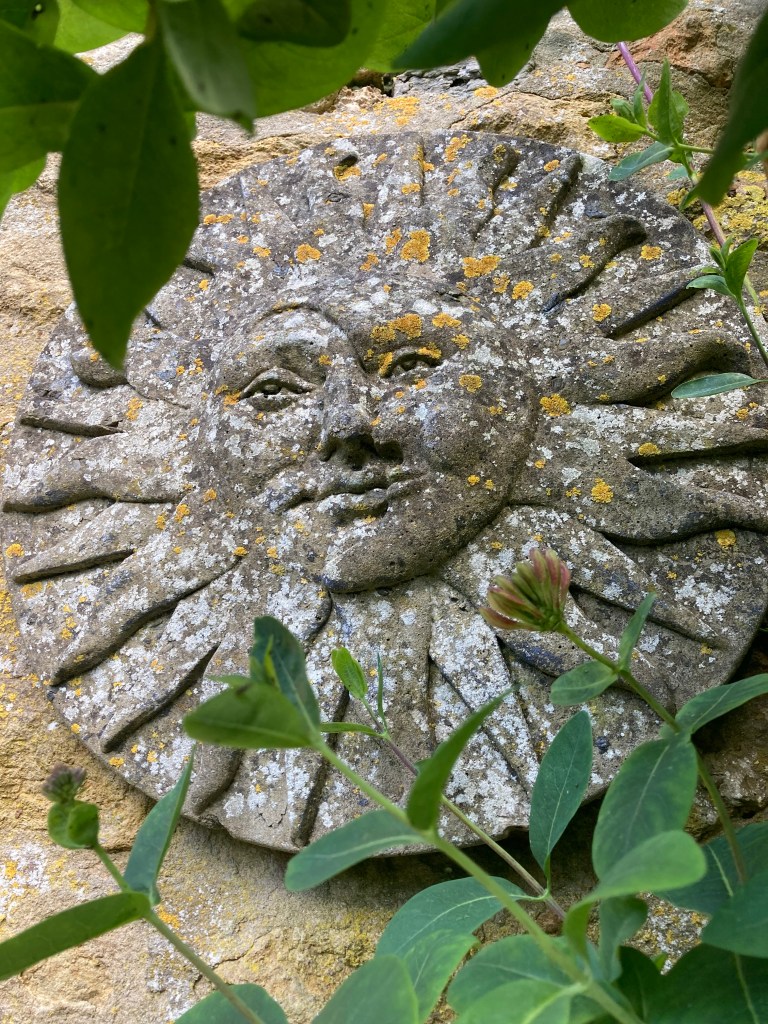
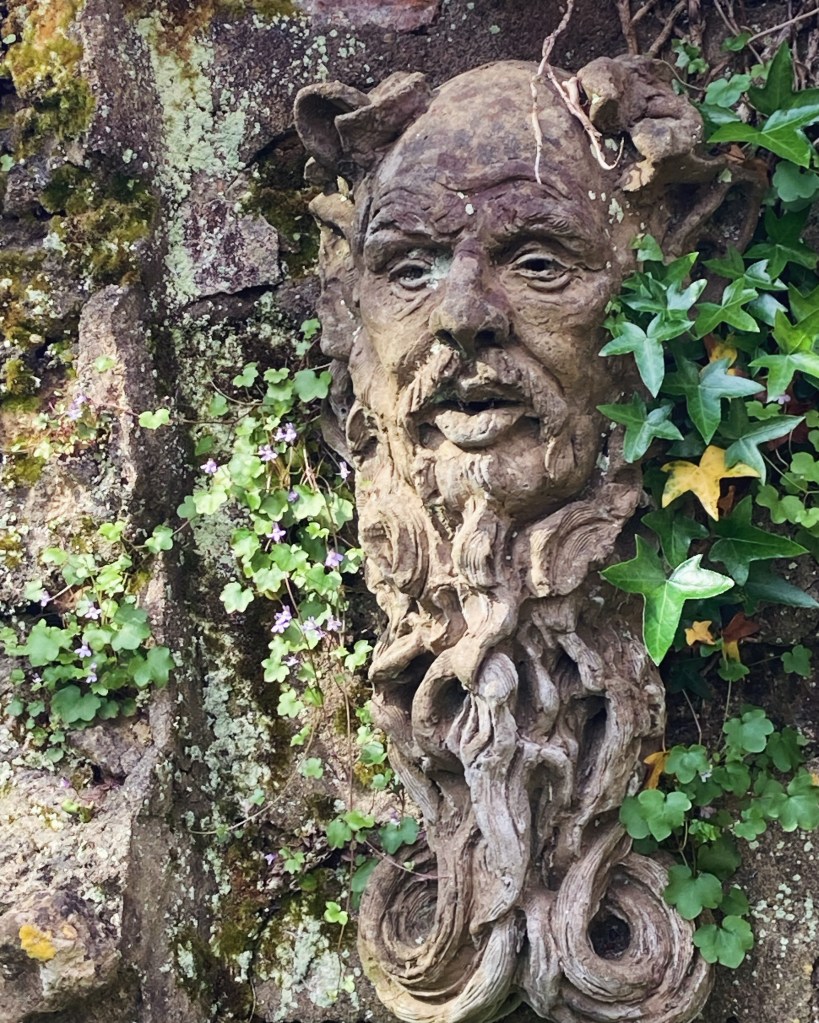
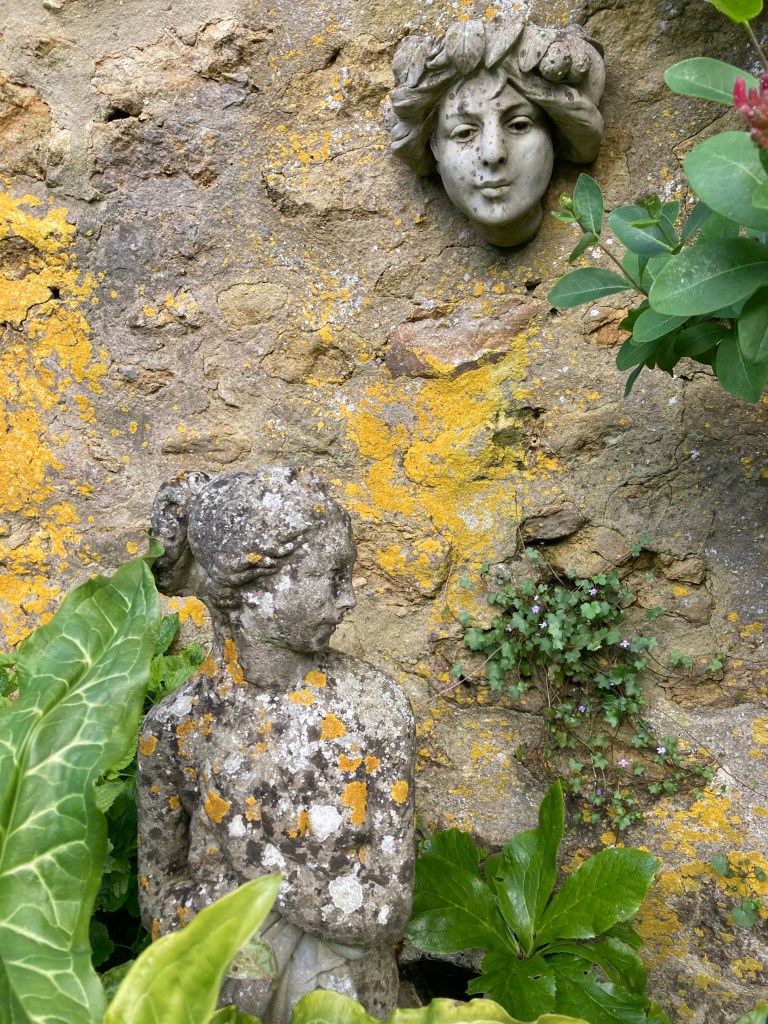
I’m partial to garden statuary, particularly things which are tucked away and surprise you as you wander around.

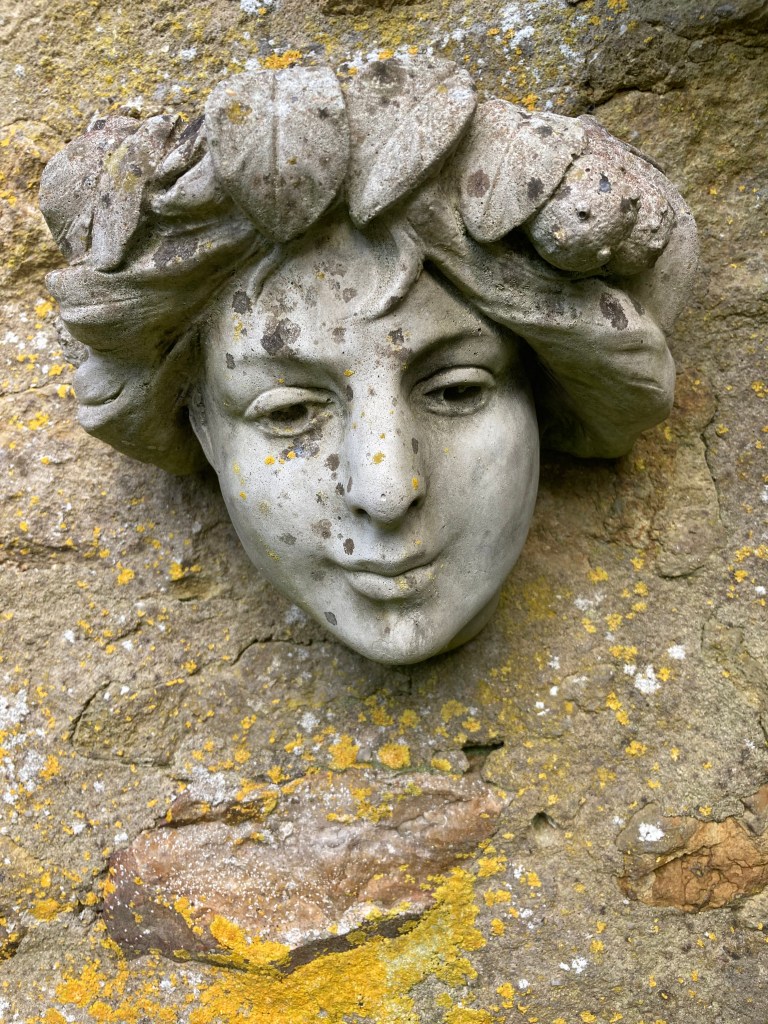
I love the way that stone – even reproduction stuff – weathers and how it looks against the colours and textures of blotchy yellow lichens, luxuriant green moss and glossy ivy.

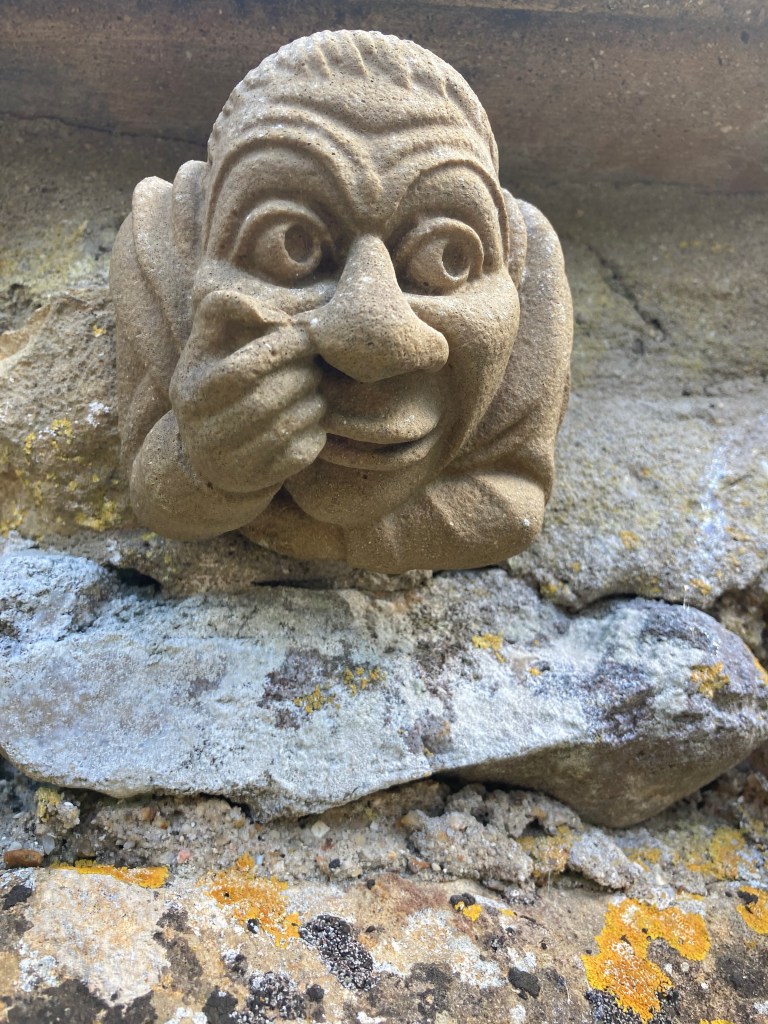
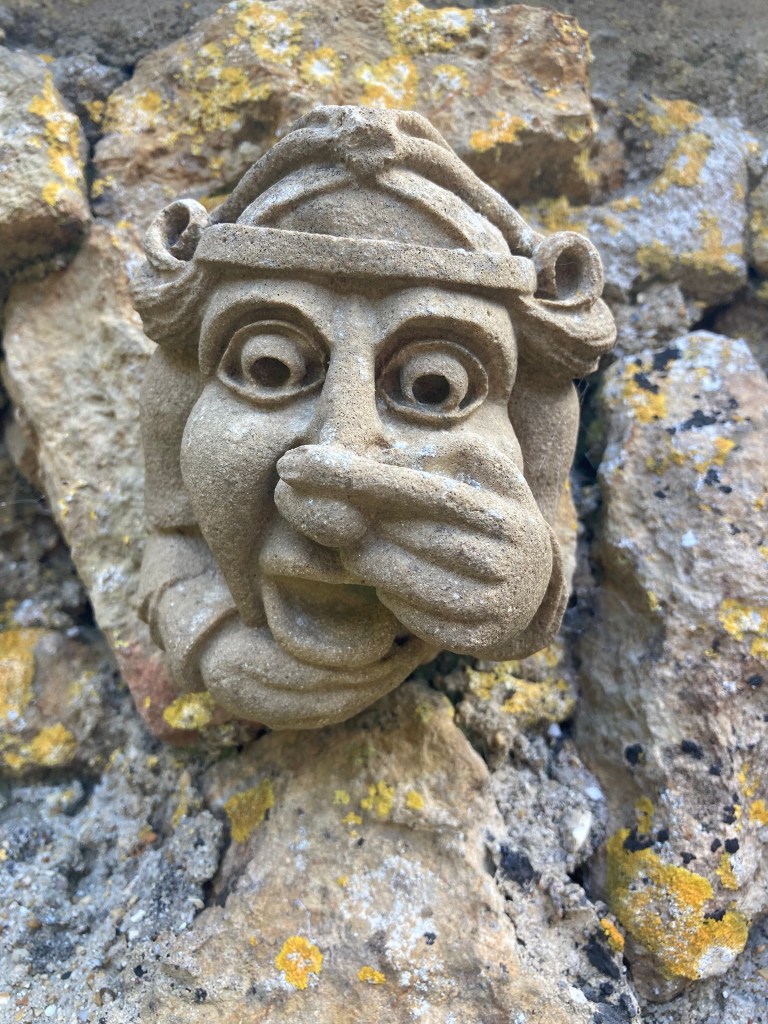
Here in Dorset, my garden includes a quiet courtyard where you’ll find numerous faces peeping out at you.

These faces are properly called ‘grotesques’ although in Somerset they’re known colloquially as hunky punks.

Years ago, I remember my mother telling me that an eye-level hunky punk on the west door of our village church was a former choirboy turned to stone. The thought terrified me so I religiously went to church every Sunday to sing with my four older siblings in the choir.

These days, I’m no longer frightened of hunky punks but I still make a point of singing loud and proud whenever the occasion calls for it.

According to Wikipedia, in architecture, a grotesque is a fantastic or mythical figure carved from stone and fixed to the walls or roof of a building. It includes the chimera, which depicts a mythical combination of multiple animals – like the centaur, with the upper body of a human and the lower body and legs of a horse, and the griffin, which has the body, back legs and tail of a lion and the head and wings of an eagle.

Grotesques in architecture are different from gargoyles as they’re purely decorative and don’t have a water spout.

Some scholars think grotesques are reminders of the separation of the earth and the divine.

They’ve been key elements of ecclesiastical architecture since medieval and renaissance times and are said to protect what they guard, such as a church, from evil or harmful spirits.

Despite the plethora of grotesques in my garden, their presence doesn’t seem to deter the slugs, which have made short work of my newly-planted marigolds.

Use your vote

It’s the local elections this coming Thursday and, for the first time ever, I won’t be voting.

Not for any reasons of self-righteousness, although my political fire has dimmed over the years to the point where it’s barely a spark. This is not surprising, given all the corruption and arrogance of our elected politicians in Westminster. That lot have ceased to have relevance to me, with so many of them only in it for themselves, which is something I never thought I’d hear myself say.

The local elections, though, are different. Or should be.

Our elected councillors are the women and men who can make a real difference to our everyday, local lives, although hamstrung by central government which has a habit of taking away funding and then blaming any shortcomings on the local council.

And, on the whole, local councillors get involved to make things better for their local area. It’s easy to criticise and make unfair assertions about their motives. It can be a thankless job but someone has to do it on our behalf. That’s what democracy is all about. They work for us (as do the MPs, but that’s another story).

This year, I’m in France, and, although I registered for a postal vote in good time, the paperwork hasn’t arrived. Time is ticking away and I fear I will not be able to cast my X in the box, as I have been doing since I was an eighteen-year-old firebrand.

These days, I am a lapsed revolutionary but I still make a point of visiting the polling station on election day, particularly as women fought so hard, all over the world, for the vote.

This year, however, I’ve been disenfranchised by the vagaries of the British and French postal system.

To be honest, though, it solves my dilemma. My heart would dictate I vote one way, which would be a waste of time. I could never vote another way, as it’s not part of my DNA although I am sure the candidate would and could do a very good job on behalf of the local community.

I would have been tempted to vote another way apart from the candidate, who, frankly, I would not go near with a proverbial bargepole, except perhaps to use it to knock their ego into touch.

So, at least I have an excuse for my lack of enthusiasm.

There’s also the vote for the police and crime commissioner which, I think, leaves most people cold because we don’t really understand the role. Now, if the candidate for police commissioner was Tom Selleck as Frank Reagan (below) in the American police procedural drama television series Blue Bloods, well, that might be different.

However, if you care about your local community and you’re registered to vote, please use it, and use it wisely. And don’t forget to take some form of photo ID with you, otherwise you won’t be allowed to cast your vote at all.

Church bell story chimes with petition organiser

Well, it seems neither the local newspapers nor the BBC is interested in the village bells debacle in my village.

It’s no longer newsworthy.

This is probably because the silencing of church clocks chiming is now commonplace all over the country. More of that later.

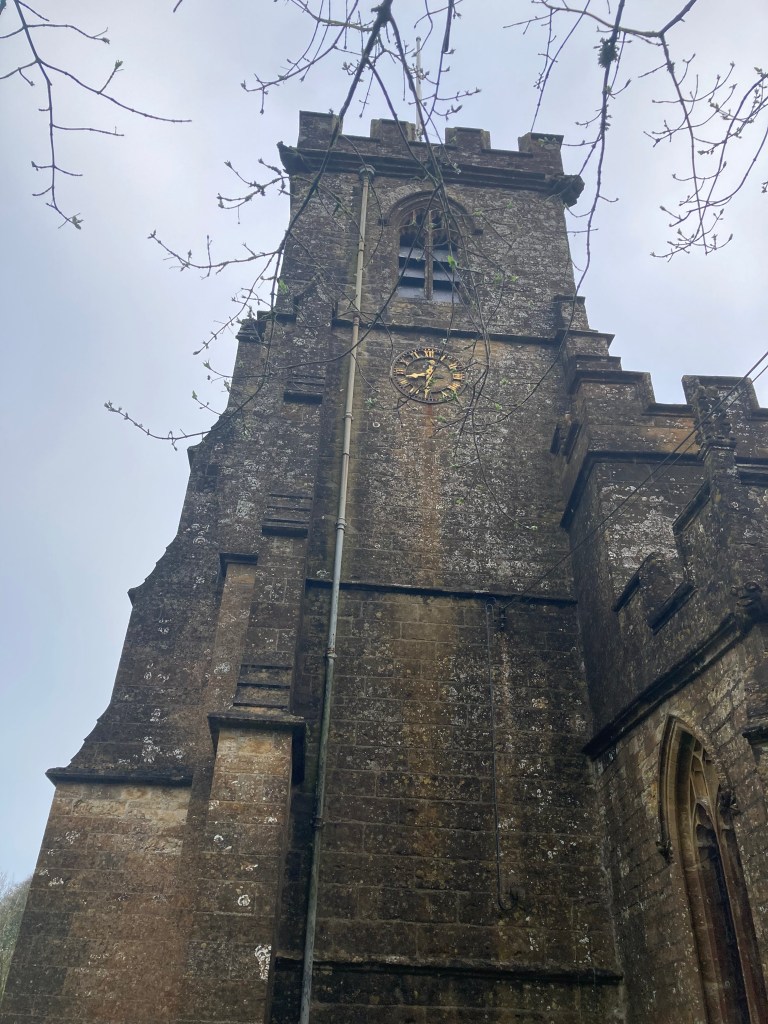
You’ll recall from my blog post of 18 March that the church clock stopped its hourly chiming, just two days after it was repaired.

A village resident complained about the hourly chiming – possibly having moved in when the clock wasn’t working – so the church stopped it completely.

The parochial church council has now reached a compromise solution to fit a silencer so that the clock chimes only between the hours of 6am and 9pm. This will be at a cost of around £800 rather than the original estimate of well over £2,000.

‘The feeling by many members of the PCC that, although the aim of the Church in the village was to “make Jesus known,” it was not felt necessary to remind everybody of his presence throughout the night,’ the PCC said in a statement.

So all’s well that ends well. Or not, as many local people are still unhappy that one complaint can stop the village clock chiming at all.

Without getting all Wicker Man and pitchforks at dawn – and there are far bigger problems and threats to democracy in the wider world – it can seem like rural life is under threat when some newcomers complain about things like the sound of church bells, animal smells, mud on the road and farmers working through the night.

The chiming of church bells is an ongoing problem. There was a similar issue recently in Witheridge, Devon, and also just down the road in the same county at Kenton in 2021.

All over the country, the church powers-that-be are worried about being slapped with noise abatement orders by their local councils. More and more clocks in towns and villages have stopped chiming .

I’ve just been contacted by a woman in Sandwich, Kent, where the night-time chiming of the bells was stopped in 2017 after one complaint by a neighbour.

June Summerhayes saw my blog and asked me to support her petition to the government calling for clock chimes to be exempt from noise abatement regulations.

I’ve signed it and told her I would help publicise her campaign. Understandably, she’s rather dismayed that, at the time of writing, only 85 people have signed so far.

You can add your signature to the petition here.

Mrs Summerhayes says: ‘Recognise the special place that clock chimes have in British life and history. Many churches have had to silence night time clock chimes because a single person, or a few people have complained. We believe this is unjust if the majority support the chimes.

‘We want noise abatement regulations to be amended so that they do not apply to clock chimes. This should also mean that any previously issued noise abatement orders in respect of clock chimes cease to have effect.’

At 10,000 signatures, the government will respond to this petition. At 100,000 signatures, the petition will be considered for debate in Parliament.