How does your garden grow?

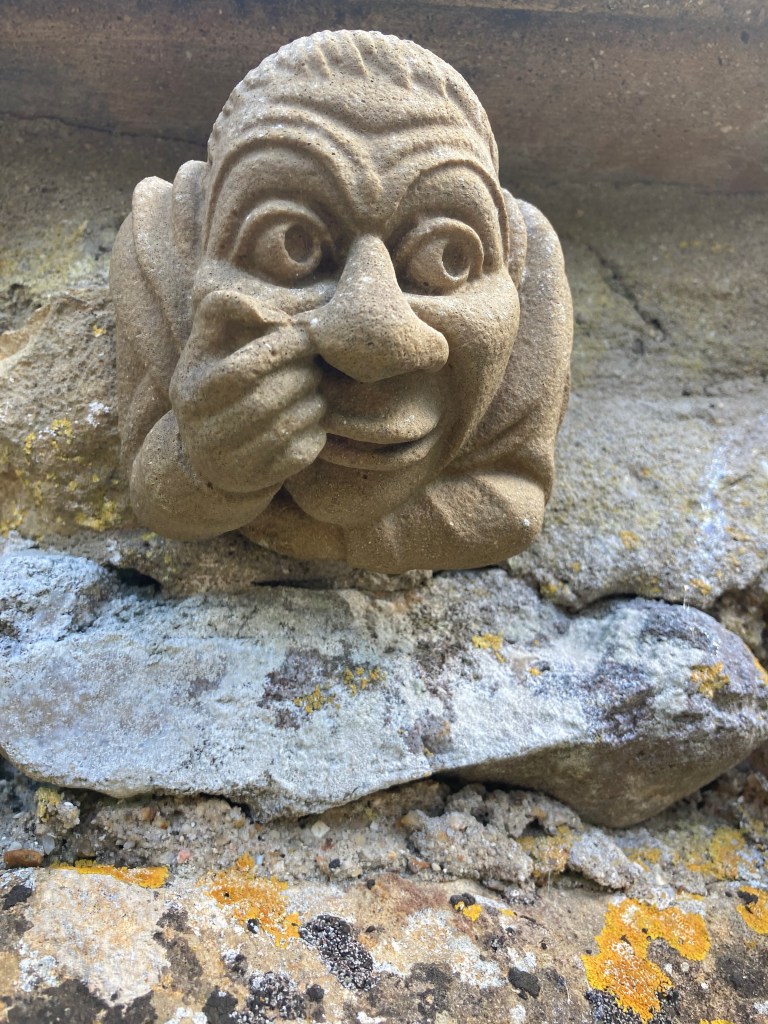
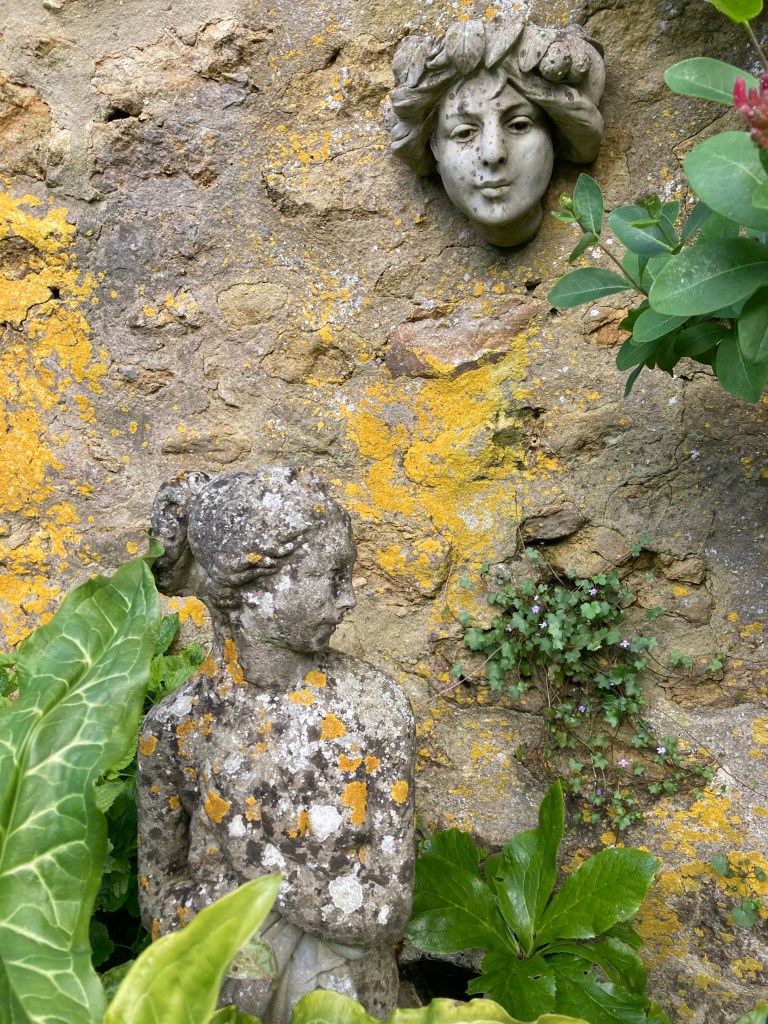
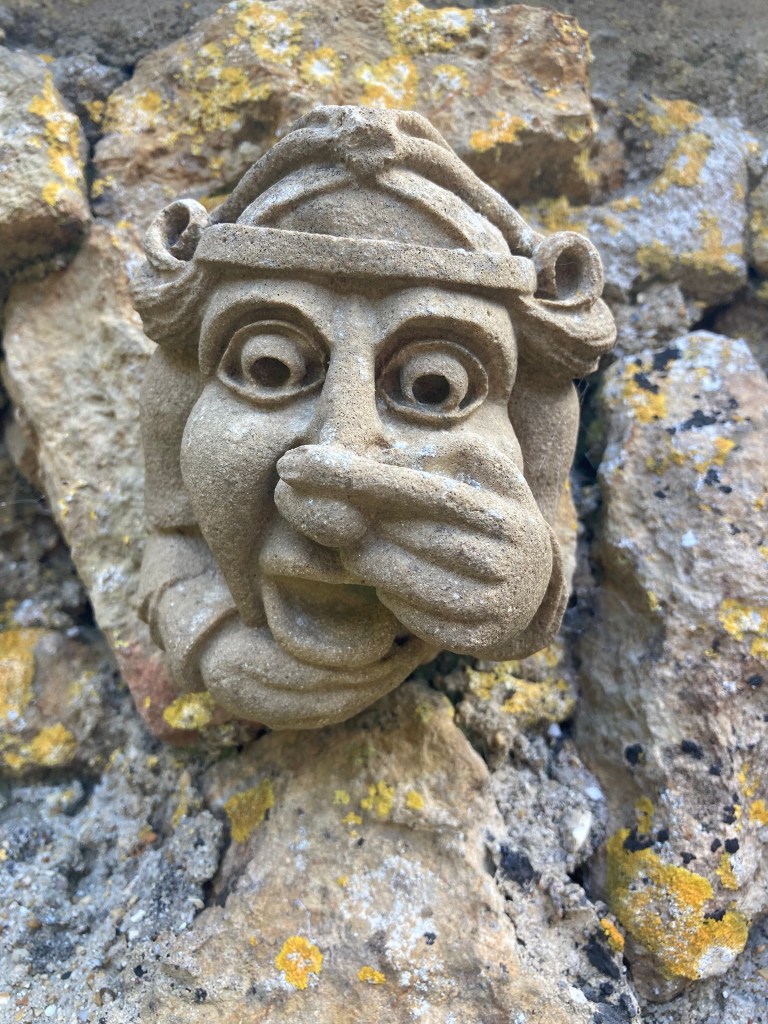
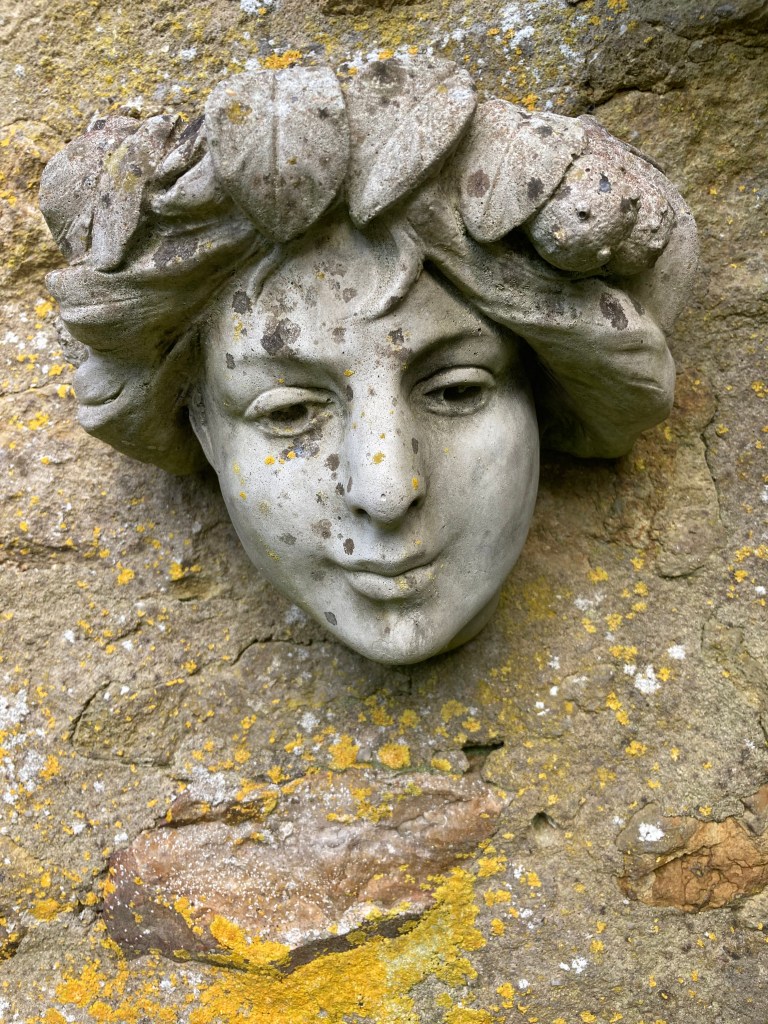
Well, the daffodils are poking their heads up but there’s no sign yet of the four-hundred-and-ten tulip bulbs my son and I planted a few months ago.

They were on offer and I got a bit carried away.

To be fair, mid-December was a bit late to be planting tulips but, by the time they’d arrived, I was out of the country for two weeks, so, other than asking the dogsitters if they fancied a bit of gardening (they didn’t), there wasn’t much choice.

I’m hoping the little blighters are happily in the warm earth, thinking about greeting the outside world when things are a bit warmer.

And, who knows, maybe by planting them so late, they’ll put on a brilliant show in late May when I’ll actually be around to appreciate them.

The problem is, I get carried away when I see adverts for plants and bulbs. That eternal prospect of a magical garden is just too tempting.

I’ve got carried away with dahlia tubers too. Don’t tell Mr Grigg but a whole load of them are about to arrive in the next week or so.

Still, if I stick to old favourites like roses, herbaceous perennials, along with the tulips and dahlias, and forego annuals, I should be all right.

It’s when I start ordering begonias that I have to worry.

Can’t stand them. They give me the creeps.

I’m not sure why, because some of them are very pretty. I think I was psychologically damaged when my older brother once broke the heads off my mother’s red begonias. The petals bled all over the floor.

There’s something fleshy and human about begonias I just don’t like.

Watching and listening: Slow Horses and Bad Women: The Ripper Retold

We’ve finally got around to watching Slow Horses, the Apple TV drama that everyone’s been talking about.

Picture: Wikipedia

Set against the backdrop of the iconic London skyline, the series has just finished its third season. We’re only two episodes into that, so please don’t tell me what happens.

It’s British drama at its best. This spy thriller centres on a dysfunctional team of MI5 agents who have been thrown together because each of them has mucked up one way or another.

Heading this bunch of misfits is Gary Oldman, whose portrayal of the seedy Jackson Lamb, with greasy hair, fag hanging out of his mouth and a terrible wind problem, is masterful, especially when set against the ice queen coolness and poise of Kristin Scott Thomas as his nemesis in an A-line skirt.

The script is excellent, the characters believable and the cast superb. The series carries just the right weight of tension, comedy, gore and mystery. We’ll be very sad when we reach the end.

I’m currently listening to Bad Women: The Ripper Retold, a BBC podcast by author and historian Halle Rubenhold about the untold story of the victims in the Whitechapel murders of 1888.

I’ve always been interested in the story – who isn’t? – and remember looking through the 1888 file of my own local newspaper at the columns and columns devoted to the grisly details of these terrible crimes.

The story is known all over the world and various theories have sprung up over the years. We think we know all about it, but Rubenhold looks at it from a completely different perspective. It’s shocking, really, that this hasn’t been done before.

A few years ago I read her book, The Five, on which this podcast is based, and it was a real eye-opener. A terrific amount of research went into this work of non-fiction.

‘Ripperologists’ will tell you otherwise, but it doesn’t matter that we don’t know the identity of the murderer or probably never will. The thing that has been overlooked in this story, time and time again, are the women he killed.

In Rubenhold’s hands, they become real people, who lived and loved, with early aspirations and hopes. They married, had children. And then they fell on hard times and met a dreadful end.

Batten down the hatches

Mammatus storm clouds, San Antonio. Picture: Wikipedia Commons

The storm tickled us here in west Dorset, with high winds and rain but nothing we couldn’t handle.

We were lucky. Other parts of the country have had it much worse than us.

Storm Isha is the ninth named storm this season. We have Storm Jocelyn just around the corner. Batten down the hatches.

I don’t know about you but there are so many named storms, I lose track of them all.

Someone told me yesterday that the storms are named by European countries jostling for position in the naming stakes.

I didn’t think that could be right. But there was something in the back of my mind about storm names alternating between male and female.

So I turned to the internet and looked it up.

Thanks to a very comprehensive (and, thankfully, short) article on the BBC website, I am now considerably the wiser.

The male/female names were indeed a thing, but not any more. (And to digress, when did the words any more become anymore? I must have missed that memo.)

The US began naming storms in the 1950s.

Here in the UK, it’s a much more recent phenomenon.

According to the BBC, ‘in the UK, the Met Office names any storm when it has the potential to cause disruption or damage.

‘It believes that it is easier to follow the progress of a storm on TV, radio, or social media if it has a name.’

So how are storms named?

Over to the BBC article again:

The UK Met Office and Irish service Met Éireann launched their first Name our Storms campaign in 2015.

Most years, they draw the names from a shortlist of favourites submitted by the public. Since 2019, they have been joined by the national weather service of the Netherlands, which also chips in a few suggested names each year.

In previous years, storms have alternated between male and female names.

However, for the 2023-24 season, the Met Office has altered this, naming a number of storms after prominent scientists, meteorologists and others “who work to keep people safe in times of severe weather”.’

So, this season, it will be mostly:

Agnes, Babet, Ciaran, Debi, Eli, Fergus, Gerrit, Henk, Isha, Jocelyn, Kathleen, Lilian, Minnie, Nicholas, Olga, Piet, Regina, Stuart, Tamiko, Vincent and Walid.

(Storm Minnie!)

We might not get through the whole alphabet and the letters Q, U and Z don’t get a look in. But over the coming months, you may hear some names which aren’t on the British/Irish/Dutch list.

Explains the BBC: ‘That is because storms are named where they originate. Storms that reach the UK are occasionally the tail end of one that started in the US several days earlier – and may have been downgraded from hurricane or cyclone status.’

Keep safe.

It’s our wassail

It was down into Bridport today for the annual wassailing ceremony in the community orchard.

‘Wassailing? What’s that?’ a friend of mine said when she asked about my plans for the weekend.

So, stiltedly (because I wasn’t absolutely sure), I rambled on about blessing the cider apple trees and scaring away evil spirits to ensure a good crop later in the year.

I ought to know, being the daughter of many generations of Somerset farmers.

My father had a small orchard full of Tom Putt apples, Morgan Sweets and Dabinetts. There were other varieties, I’m sure, but these are the names I remember.

Small orchards were part and parcel of farming life for years, certainly in my part of south Somerset. My late grandfather was renowned for his cider. The American troops stationed locally during World War II were regular callers to Grandpa’s Saloon.

But then cider fell rather drunkenly off the wagon and the small orchards were scrubbed out. It took enthusiasts like Nick Poole of West Milton Cider in Dorset for the amber nectar to regain its popularity.

He and pomologist Liz Copas hunted down long-forgotten cider apple varieties and wrote a book, The Lost Orchards: rediscovering the forgotten cider apples of Dorset. It’s a fascinating journey of discovery and, as publishers Little Toller Books say: ‘This hopeful story will resonate widely and inspire others around the country – and around the world – to look closely at their surroundings and take steps to rediscover, celebrate and conserve the orchards that make their locality special.’

These days, as well as the big producers, there are hundreds of makers across the country crafting exceptionally good cider, and, quite rightly, the distinctive drink has a new fan base.

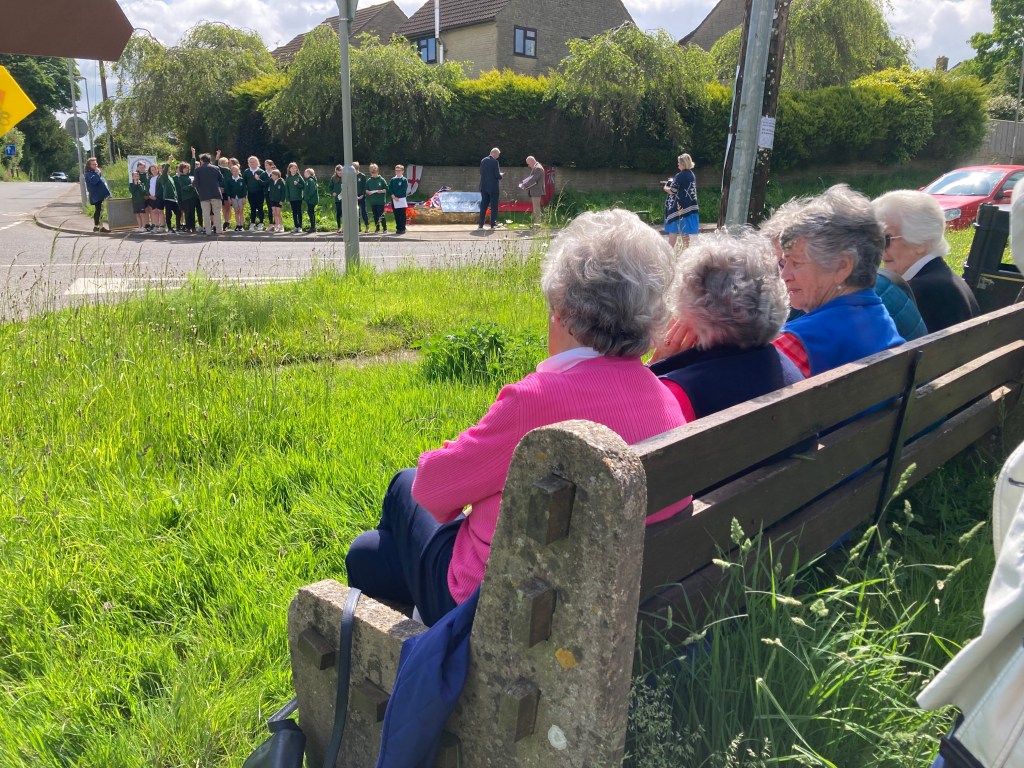
Today, in Bridport’s community orchard, there were morris dancers, mulled cider, storytelling and the biggest audience yet for the annual event, who joined in the wassailing songs to promote a good harvest for the coming year.

The Dorset Ooser also made an appearance but, luckily, there were so many people gathered around that my two-year-old grandson didn’t spot this terrifying creature from local folklore.

The wassailers didn’t sing this one, which is not surprising as Bridport is in Dorset. However, it’s the only such song I know, so here you go:

Here’s to a great week.

That’s about it.

Love, Maddie x

We loved Wonka – pure imagination (and a lovely coat)

We’ve just been to see the film Wonka, the prequel to Charlie and the Chocolate Factory.

As the opening credits began, along with the very familiar tune to Pure Imagination, which Gene Wilder sang in the original, Mr Grigg turned to me from the next seat and glowered. My thirteen-year-old granddaughter was yawning on my other side.

‘I thought you said it wasn’t a musical?’ he said.

‘I didn’t know it was.’

It’s true, I didn’t.

However, his grumpiness was not very charitable, considering he’d loved The Greatest Showman and I’d hated it. I would have walked out of that film had he not been sitting next to me in the cheap seats, his eyes fixed in delight on the screen. (My singing friends, the Vicar and Mrs Reed, have never forgiven me for my dislike of this movie.)

‘Just give it a chance, please,’ I whispered, as Wonka began.

It had been a long day and, to be honest, a night out at the cinema probably wasn’t my greatest idea. A night in, falling asleep in front of the telly would have been more relaxing.

But I’d been determined to see the film before it left the big screen, especially as parts of it were filmed on The Cobb at nearby Lyme Regis. I’d even paid for luxury seating (still cheap at Dorchester’s Plaza cinema, believe me) just to persuade Mr Grigg he needed to come along too.

In Wonka as in life, The Cobb was a magical location, made astonishing by the computer generated backdrop of a city with even more beauty and majesty than Lyme Regis itself. This is going some, considering the seaside resort is known as ‘The Pearl of Dorset’.

Lyme Regis. The Cobb is in the background.

The three of us soon settled into the swing of the film. We found ourselves enchanted, even though the posh seats were so shiny that, when mine was in the reclining position, I kept slipping out of it like a baby banana being born, and with the speed of the explosive seeds of the Himalayan Balsam plant when someone brushes past it. Whoosh.

After the third vertical ejection, I glanced around and noticed two patrons at the end of our row who were using booster seats as foot rests. I decided to give it a go, which made for a much better viewing experience, and no shooting out of the seat. Oh, the joys of little legs.

Talking of little legs, the hit of the film for me was Hugh Grant as the prototype Oompa Loompa. Brilliant. This man gets better with age.

As the final credits rolled and we stayed for the accompanying bonus scenes, we all agreed it was a film well worth seeing. Timothee Chalamet makes a charming Willy Wonka and the actors, set and story were very fine indeed.

I fell asleep only momentarily, as did Mr Grigg – but not at the same time, so we were able to fill each other in on the blanks.

As well as Hugh Grant, the highlight for me was Willy Wonka’s coat. I could see myself in something like that.

‘Yes,’ my granddaughter agreed. ‘It’s exactly like something you would wear, Granny.’

I’m not sure that was a compliment.

That’s about it.

Love Maddie x