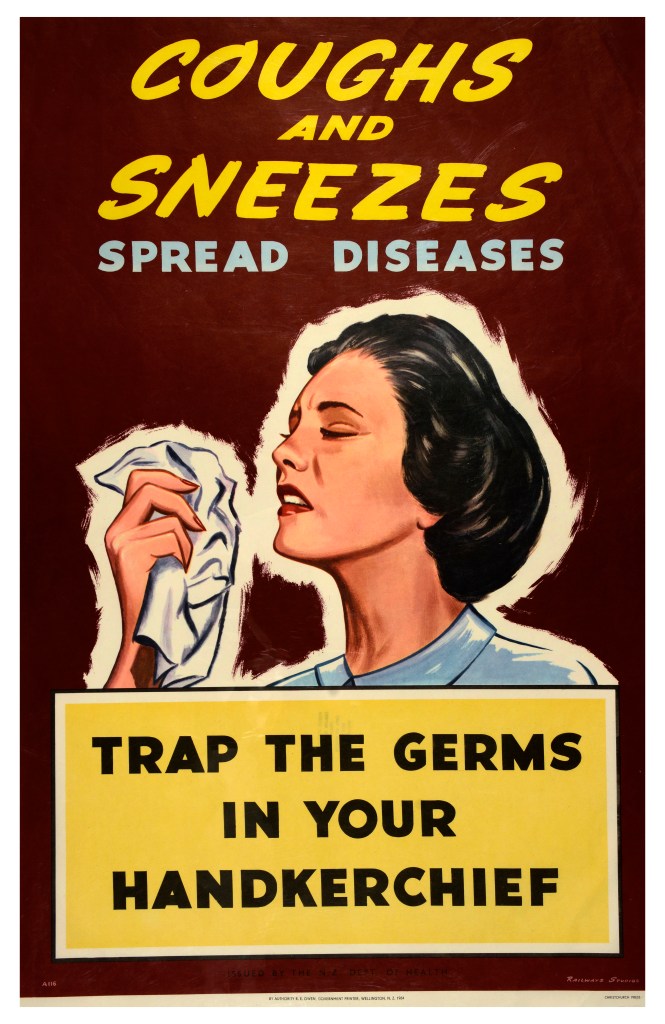
Goodbye, Covid.

I’ve been a bit under the weather lately, attacked by the virus that is covid.

I can’t believe I’ve been laid so low by something that ought to be mild by now.

It’s been nearly a fortnight and I’m still not over it yet.

After running the gamut of symptoms like sinusitis, conjunctivis, aches and pains and non-stop coughing fits and having to sleep sitting up, now the lethargy has set in.

I wouldn’t wish what I’ve had on anyone. What I had in 202o was a walk in the park compared to this.

It’s pretty much ripped my mojo to shreds, I can tell you. It’s like my internal drive is a piece of pulled pork attacked with a hundred tiny forks.

It’s going to take some piecing together.

Still, things must be looking up because I’ve at long last started ticking off all the tasks on my to-do list, which has never been so satisfying.

Back to normal soon. Whatever that is.

Photo from Archives New Zealand poster.

Ironing made easy

It’s bizarre really.

I always used to hate ironing, really hate it, but since the advent of podcasts, I love it.

There is nothing finer, especially when it’s raining outside and you’ve caught up on all your freelance work and you’re not feeling particularly creative, than popping the pile of unironed clothes on one side and churning out neatly pressed garments on the other.

And all with the aid of the latest podcast.

There are several on which I’m hooked at the moment, with many more in the listened to and recommended pile.

The Rest is Politics is one of them, with Alastair Campbell and Rory Stewart but particularly the US version with broadcaster Katty Kay and Anthony Scaramucci, who was Trump’s director of communications for ten days in 2017 and is now a candid opponent of the former US president.

My brother put me on to that one. It’s laugh-out-loud brilliant, and hugely informative. The latest episode, in which the listener learns of Scaramucci’s surprising role behind the scenes for the Democrats at this week’s big debate, is revelatory.

From there, I went to The Rest is History, a programme hosted by two very amiable historians, Tom Holland and Dominic Sandbrook, whose banter is delightfully schoolboyish in its delivery.

I was glued to their series about The French Revolution, and also the one about the Piltdown Man. But the latest one about beards through history is astonishing.

For example, in 1698, Peter the Great of Russia brought in a beard tax, which men had to pay for the privilege of wearing a beard. To prove they’d paid, they had to wear a beard token featuring the lower part of a face with a beard.

Who knew?

I certainly didn’t.

Other fascinating podcasts to which I’ve listened in recent months include the BBC’s To Catch a Scorpion, a real-life search for a people smuggler who transports migrants from the European mainland into the UK; The Ratline, a story of love, denial and the Nazis, and Worse Than Murder, about the kidnapping and murder of Muriel McKay in 1969. The men who took her thought she was the wife of media tycoon Rupert Murdoch.

Then there’s Marianna in Conspiracyland, about the rising tide of misinformation on social media, and The Gatekeepers, a truly terrifying account of ‘how social media allowed a new digital elite and their platforms to conquer the planet and control what we see’

I get through a lot of ironing.

Women Ironing, by Edgar Degas (1834-1917). I suspect the woman on the left is drunk on podcasts and the other one has earphones hidden under bonnet.

Good morning starshine

I’m not sure what it was that woke me up.

It was before sunrise and still dark.

But when I looked out the window to the east, there was a stirring sight I hadn’t seen for months.

The constallation of Orion the Hunter, with his distinctive starry belt and dagger, the ghost of the shimmering summer dawn.

According to the website EarthSky, that apt description comes from a poem by Sophia C Prentice which was published in Popular Astronomy magazine in 1924, and is reproduced below. The poem celebrates the mighty hunter, whose distinctive shape figures prominently in the winter night sky of the northern hemisphere.

Orion is one of the easiest constellations to spot, a reassuring presence on crisp and cold nights in winter, yet a surprise summer visitor for those, like me (who could sleep through a herd of elephants traipsing through the bedroom), who are not usually awake before the sunrise.

The sight of Orion right outside my window reminded me of an encounter I had a few years ago. I’d made contact with an astronomer during what turned out to be an unsuccessful campaign to remove a plethora of dazzingly bright street lights in my village, which had been imposed suddenly by the local authority with no consultation with residents.

I sought help from a man called Bob Mizon, an active member of the Wessex Astronomical Society. He was a dark skies champion.

We arranged an appointment to meet a few days later in the village square.

‘How will I recognise you?’ I asked on the phone.

‘Oh, you’ll know me,’ he said.

As I stood on the pavement waiting for him, a van came into sight, signwritten with the words Mizar Travelling Planetarium emblazoned across the side.

It was like a scene from a Ray Bradbury short story and something I have never forgotten

Bob was a gentle man, knowledgeable and passionate about the night sky, and kind and generous with his time.

His involvement didn’t do much good in getting the local countil to adjust or get rid of the new streetlights, but the long campaign did lead to an apology for the lack of consultation in the first place.

Sadly, Bob Mizon died suddenly last year. Here’s a tribute to him from Dark Sky International.

If you’re fascinated by stars, planets and moon phases, I thoroughly recommend Bob’s beautifully written and fascinating monthly guide to the night sky, The Stargazer’s Almanac.

In the meantime, here’s the poem about Orion by Sophia C Prentice:

Across the winter sky by night
Orion proudly strides;
The rising moon in silver state
His splendor scarcely hides;
His jeweled belt, his glittering sword,
In brilliancy combine,
Great Sirius and Procyon,
His loyal followers shine,
The Book of books records his name,
Of him the poets write;
From nursery windows, children’s eyes
Greet him with gay delight.

The soft breeze stirs to greet the dawn,
The summer stars grow dim,
When lo, a mystic shape appears
Above the Ocean’s rim.
The form so faintly shining there
No royalty can boast,
Yet with a thrill my heart proclaims,
‘It is Orion’s ghost!”

Alone and pale he trembles there
A moment and is gone,
While radiant couriers of the sun
Announce the coming morn.

Orion, greatest of the tribe
That pace the starry heights.
Ghost of the shimmering summer dawn,
King of the winter nights!

The last hurrah

I’m in France and today, after high temperatures and hot, close, sticky weather, it’s Il pleut comme vache qui pisse.

Like a cow peeing.

In England, we’d say it’s raining cats and dogs. But not here. And, to be fair, a cow peeing is much more descriptive. I have never seen cats and dogs coming down from the sky like stair rods, have you? Imagine being hit on the head by a dalmatian or a ginger tom.

There are breaks in the cloudbursts and I’m hoping it’ll be fine this afternoon because we’re off for afternoon tea, a late birthday present to me from Mr Grigg.

And then in the evening, there is our village’s Fete de Voisins – a gathering of neighbours on the green next to the boulodrome.

We’ll bring food and drink to share but, if it carries on peeing like the proverbial cow, we might just have to go under cover to eat it.

At the moment, the birds are cowering in the trees, and the occasional soggy blue tit ventures out to peck at the fat balls.

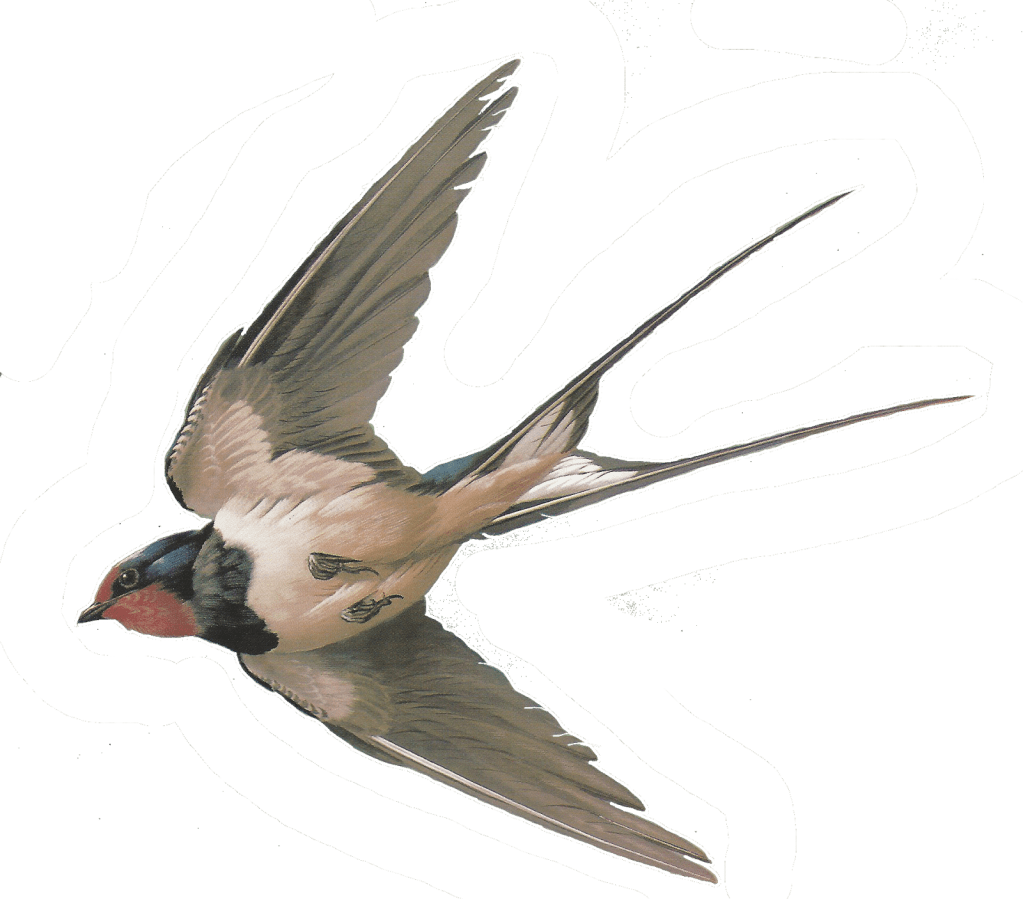
Here, as in other parts of Europe, the swallows have made the most of the hot days of late summer, swooping in great swarms, hollering in between the rainstorms, before gathering on the telephone lines to contemplate the long journey south for the winter.

Although, apparently, a run of mild winters in recent years has seen small numbers of swallows attempting to spend the winters in Britain instead of migrating 6,000 miles.

With September here today and children going back to school or starting college and university, there is a change in the air.

The last hurrah.

National Cinema Day

It’s National Cinema Day in the UK on Saturday.

Hundreds of participating cinemas are offering tickets to all shows for just £4, to celebrate the joy of experiencing movies on the big screen.

National Cinema Day promotional video.

In Dorset, I’m a great fan of Dorchester Plaza, an independent cinema which offers you the chance to see up-to-date films at a fraction of the price of the big multiplexes. The Plaza is just one of the hundreds of venues taking part in National Cinema Day.

It’s a bit of a hike from Lush Places to Dorchester. But it’s so worth seeing a film on the big screen, rather than waiting for it to appear on TV or watching it on a hooky Firestick which keeps buffering.

In the part of France where I’m lucky enough to spend several months of the year, we used to have the most wonderful cinema showing VO – version originale – films with French subtitles.

It’s where I saw Elvis, Rocket Man and the Aretha Franklin documentary.

Sadly, the cinema closed because the couple running it retired. I did have a fleeting notion that perhaps Mr Grigg and I should take it over but then I thought better of it.

There is nothing quite like sinking into a comfortable seat and watching a film unfold. You are transported to another time and another place, which is so much more intimate than watching it at home, even if you have a popcorn cruncher or Coke slurper sitting beside you.

With a good film, you can totally immerse yourself in the onscreen action.

In Lush Places, we have a film club which is brilliant value for money. I’ll never forget seeing a spider scuttling across the village hall’s wooden floor in embarrassment as we all sat open-mouthed at a racy scene in La Spagnola, a 2001 comedy drama directed by Steve Jacobs.

I have never looked at courgettes since without wincing.

And then there was the time a handful of us watched The Shining (Stanley Kubrick, 1980) at Halloween. It was surreal seeing Jack Nicholson prowling the scary corridors of the Overlook Hotel, with axe in hand and a terrifying grin on his face, while half a dozen of us sat on village hall chairs, with the curtains closed to the outside world where children were tricking and treating.

I love going to the pictures and always have. The first film I remember seeing is Walt Disney’s The Jungle Book at the old Taunton Odeon with my big sister in 1967 when I was six years old.

My contemporaries always say they cried when Bambi’s mother was killed by a hunter. I didn’t, but I wept buckets when Mowgli went back to the Man Village.

I felt so sorry for Baloo. It was just how imagined my mother feeling (she didn’t) when I first went to primary school at the age of five. How would she cope without me, the baby of five, helping with her daily chores on the farm?

I had the joy of studying film and television history as part of my Open University degree in humanities. I struggled with some modules but I slam dunked that one.

In no particular order, here are ten classic film sequences from some of my favourite films (I will endeavour to do a post on British films and foreign language ones at some point. I love them all):

The Hula Hoop scene in The Hudsucker Proxy (Coen brothers, 1994)
Dance scene, Witness (Peter Weir, 1985)
Random Harvest ending (Mervyn LeRoy, 1942)
The King Louie scene, The Jungle Book (Walt Disney, 1967)
Do-Re-Mi, The Sound of Music (Robert Wise, 1965)
Ride of the Valkyries helicopter assault, Apocalypse Now ( Francis Ford Coppola, 1979)
Roller skate chase, The Big Store (Charles Reisner, 1941)
Binary Sunset, Star Wars: A New Hope (George, Lucas, 1977)
Chunk confesses to the Fratellis, The Goonies (Richard Donner, 1985)
Meeting Frau Blucher, Young Frankenstein (Mel Brooks, 1974)