
I’m partial to garden statuary, particularly things which are tucked away and surprise you as you wander around.
I love the way that stone – even reproduction stuff – weathers and how it looks against the colours and textures of blotchy yellow lichens, luxuriant green moss and glossy ivy.
Here in Dorset, my garden includes a quiet courtyard where you’ll find numerous faces peeping out at you.
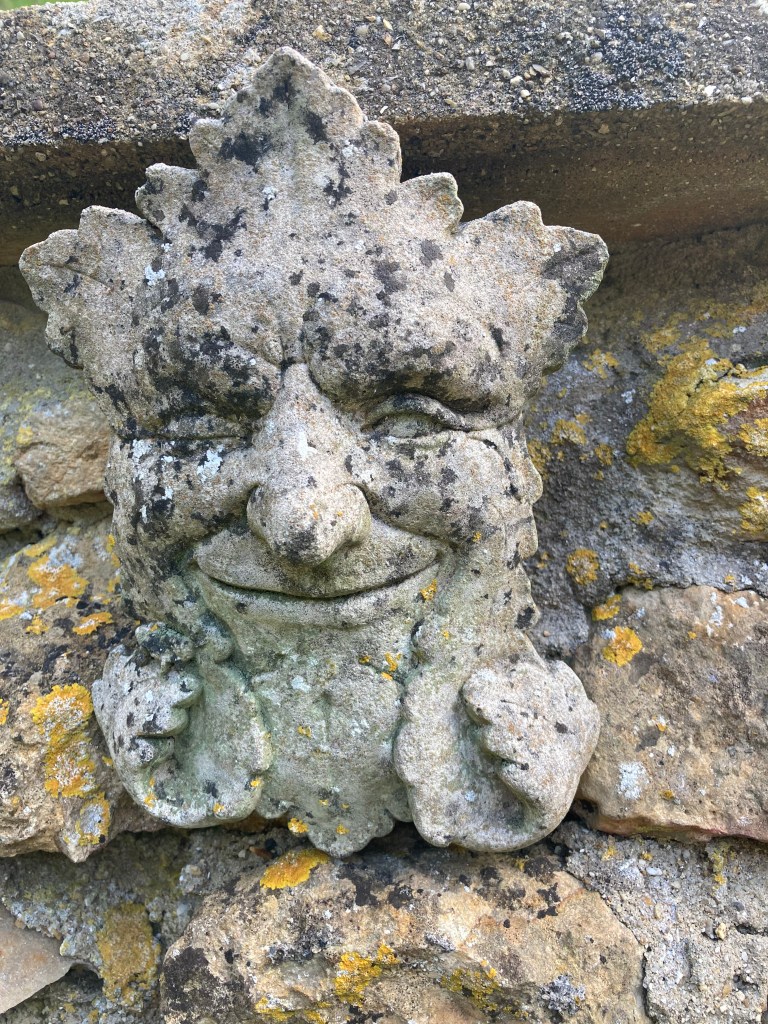
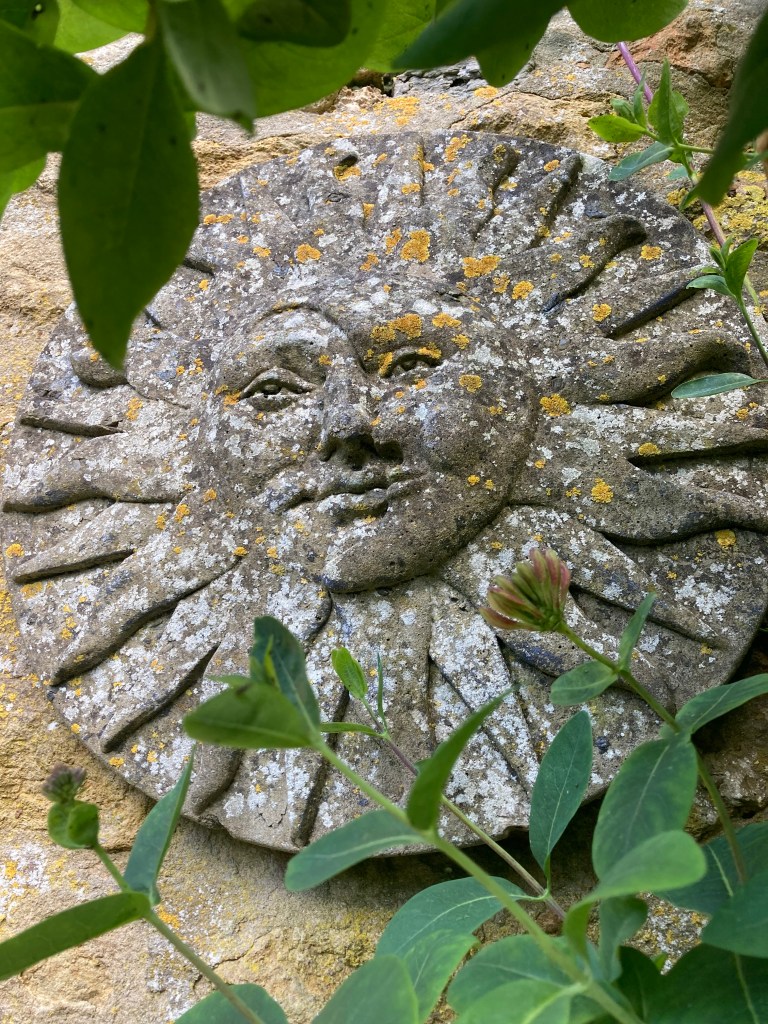
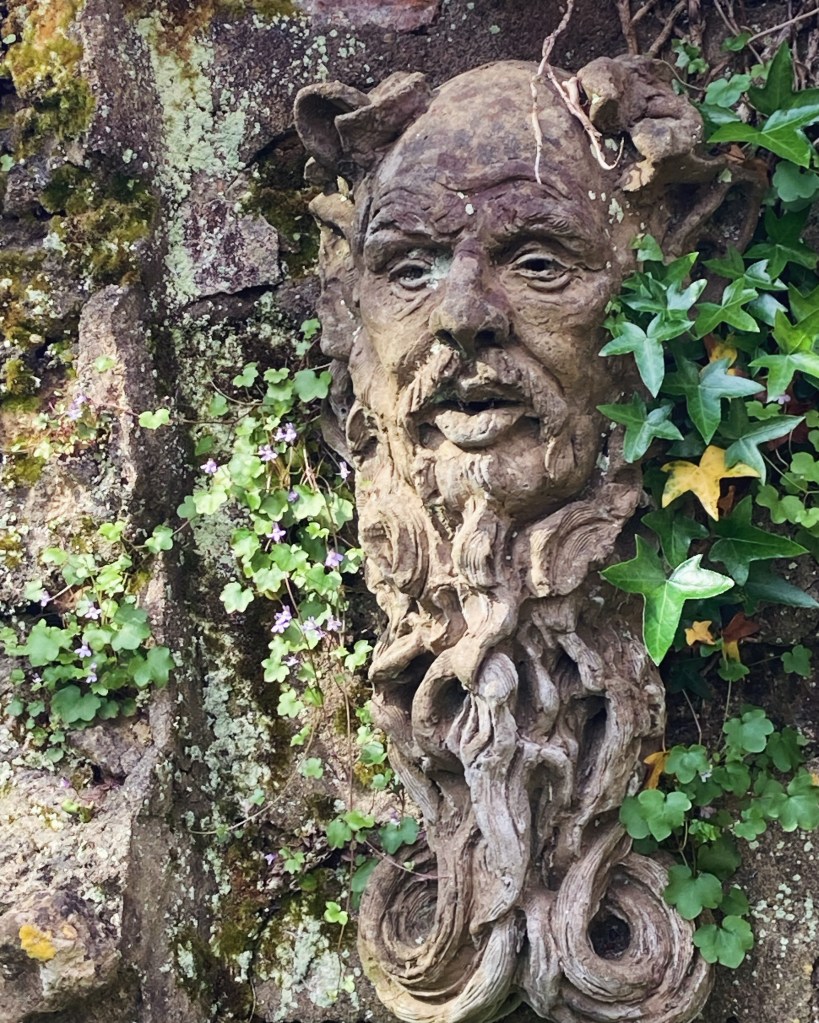
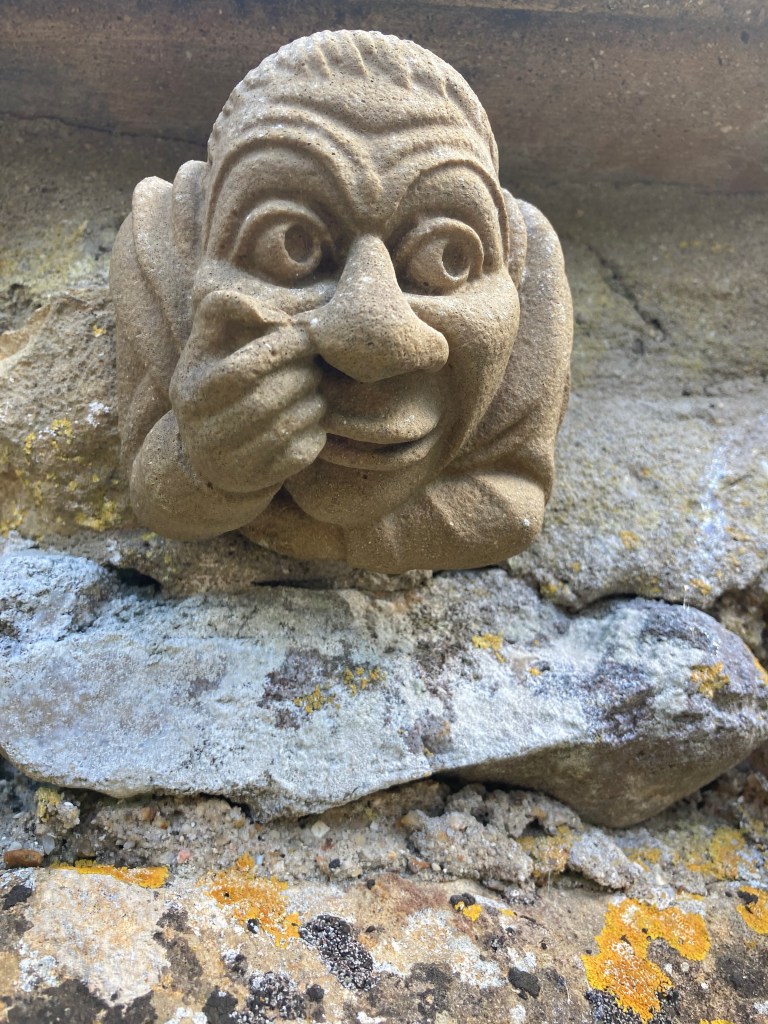
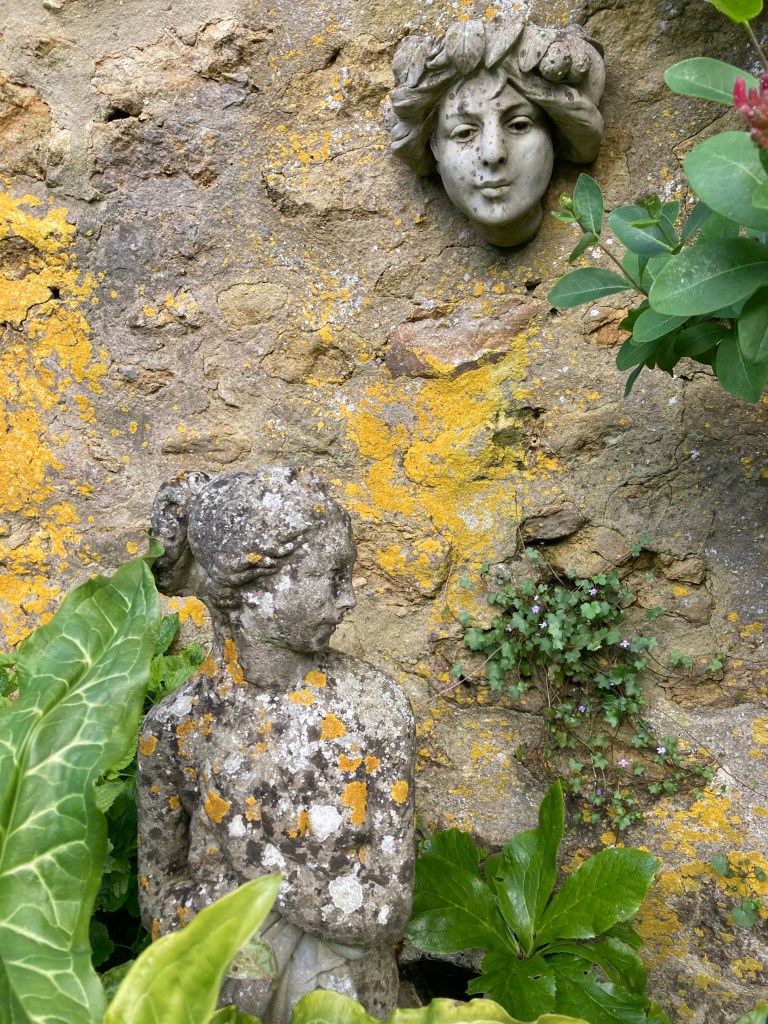
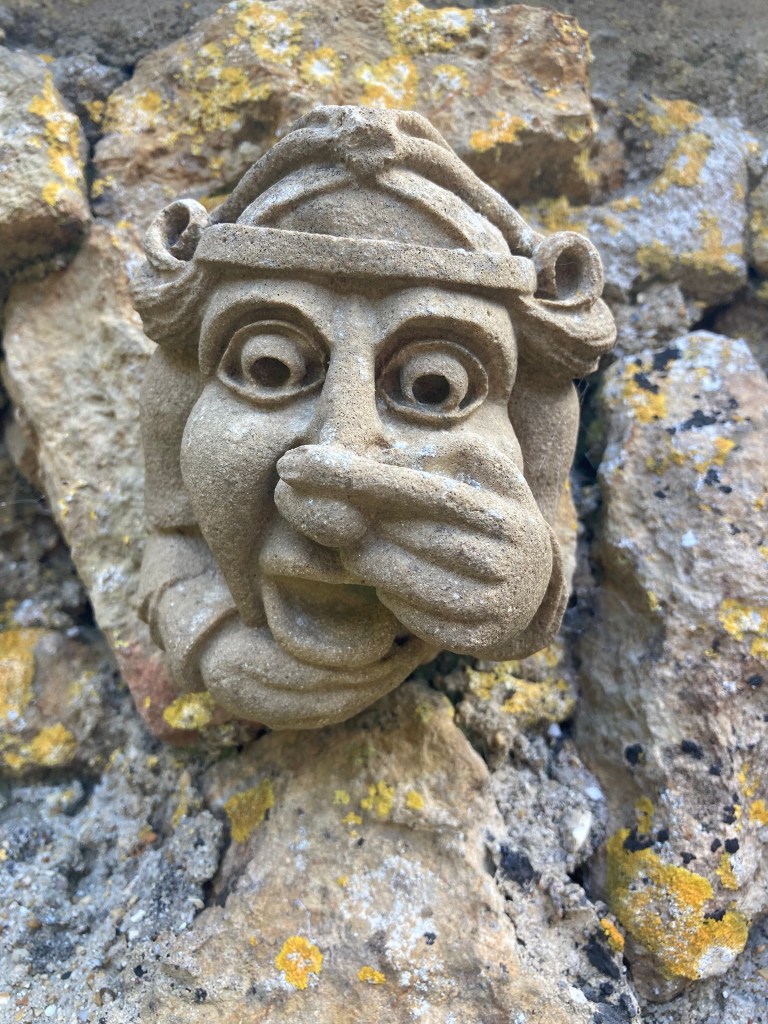
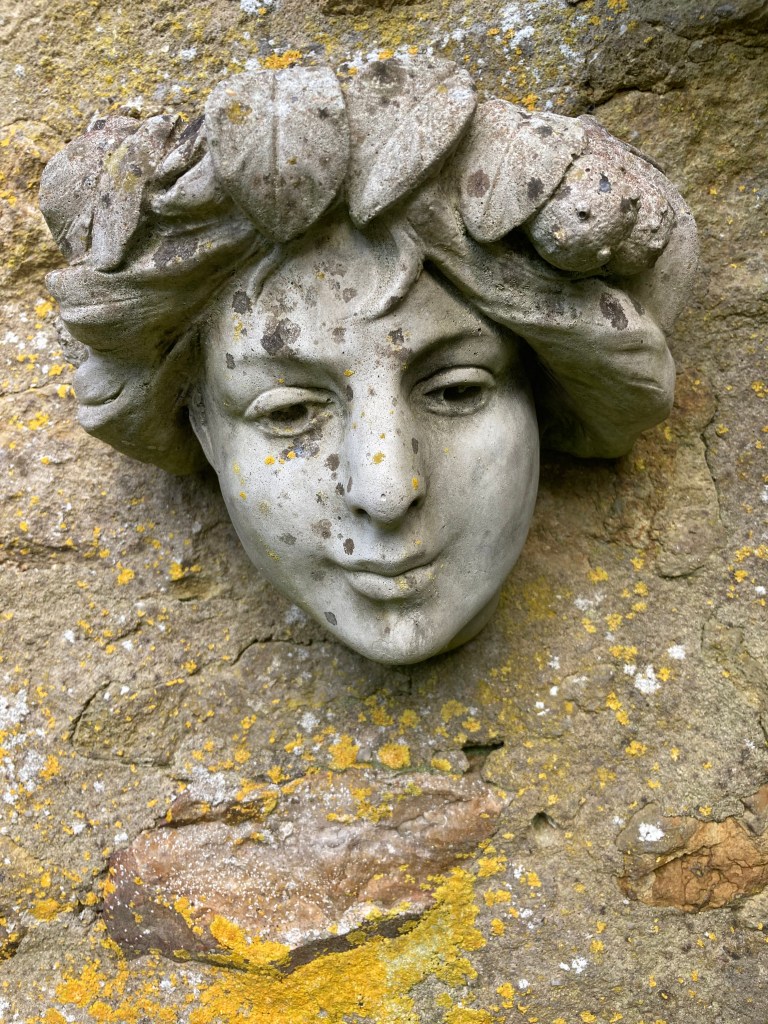
These faces are properly called ‘grotesques’ although in Somerset they’re known colloquially as hunky punks.
Years ago, I remember my mother telling me that an eye-level hunky punk on the west door of our village church was a former choirboy turned to stone. The thought terrified me so I religiously went to church every Sunday to sing with my four older siblings in the choir.
These days, I’m no longer frightened of hunky punks but I still make a point of singing loud and proud whenever the occasion calls for it.
According to Wikipedia, in architecture, a grotesque is a fantastic or mythical figure carved from stone and fixed to the walls or roof of a building. It includes the chimera, which depicts a mythical combination of multiple animals – like the centaur, with the upper body of a human and the lower body and legs of a horse, and the griffin, which has the body, back legs and tail of a lion and the head and wings of an eagle.
Grotesques in architecture are different from gargoyles as they’re purely decorative and don’t have a water spout.
Some scholars think grotesques are reminders of the separation of the earth and the divine.
They’ve been key elements of ecclesiastical architecture since medieval and renaissance times and are said to protect what they guard, such as a church, from evil or harmful spirits.
Despite the plethora of grotesques in my garden, their presence doesn’t seem to deter the slugs, which have made short work of my newly-planted marigolds.

 Maddie Grigg